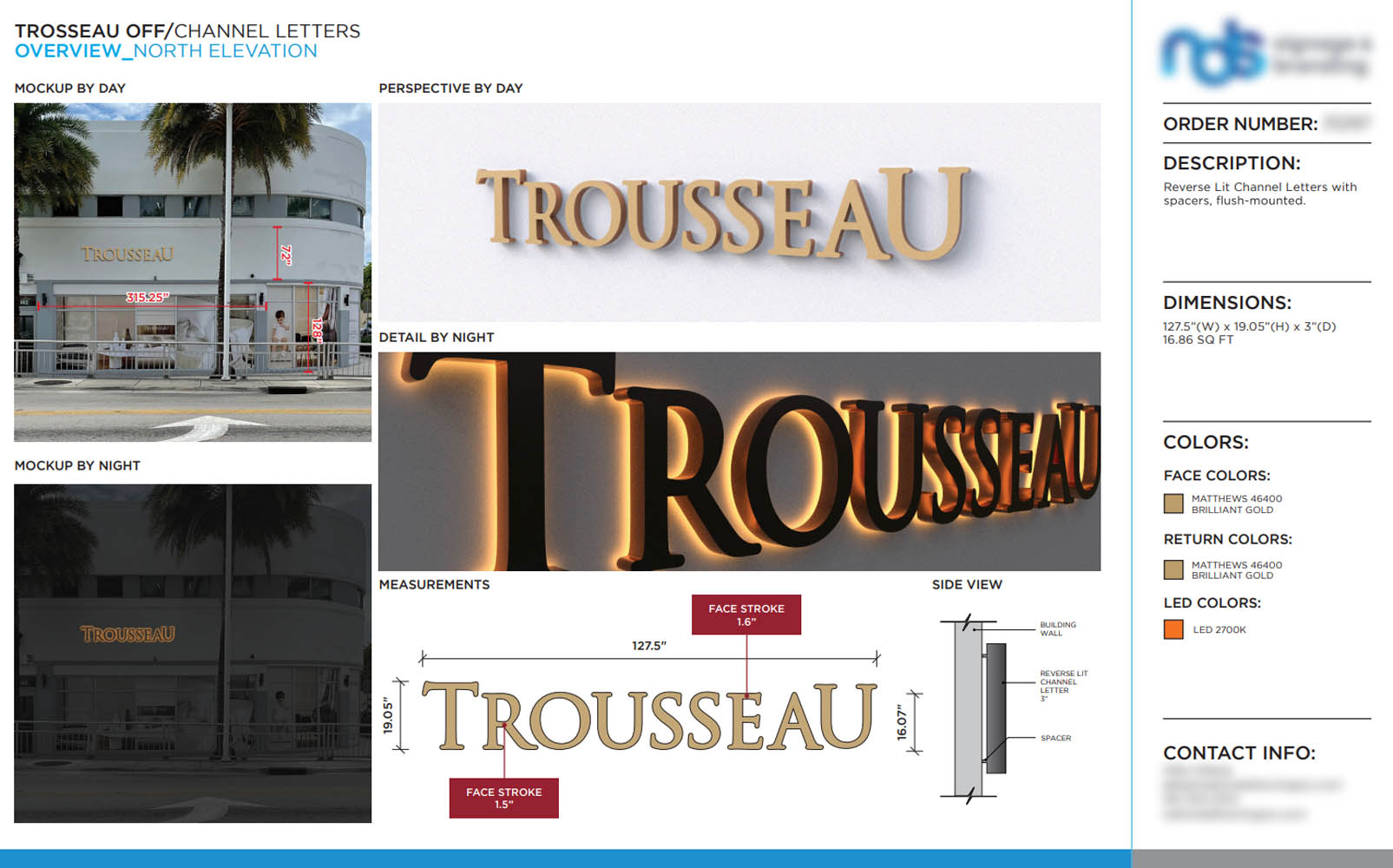
Implementing consistent brand signage is a strategic undertaking that extends well beyond great design or updating a few storefront logos. It requires a holistic approach that aligns brand expression with operational realities across every location.
In multi-location signage programs, challenges may not be immediately apparent when managing just 10 to 20 sites.
But as the scope grows to dozens or even hundreds of sites, maintaining consistency, controlling budgets, and ensuring predictable timelines become exponentially more complex.
Even with detailed prototype storefront guidelines and robust signage standards in place, brands often find that outcomes become inconsistent as they expand into new markets.
As discussed in our previous article, How Brands Maintain Signage Consistency Across Every Location, having brand guidelines alone is not enough.
Not when brands begin navigating the growing complexity of production, permitting, fabrication, and installation.
At that point, the challenge shifts.
It is no longer simply about creating standards that can be replicated across every location.
Instead, the true challenge is safeguarding brand consistency while adapting to real-world conditions, without sacrificing operational efficiency or creating confusion.
This happens because brands inevitably encounter what we refer to as the Reality of Variability, including:
- Physical variability
- Regulatory variability
- Production variability
- Human and process variability
As brands expand into new locations, they encounter entirely different combinations of challenges, such as:
- Façade width and proportions
- Building height limitations
- Municipal or council regulations
- Landlord requirements
- Pedestrian and vehicle traffic patterns
While each variable may seem manageable on its own, they quickly compound at scale, creating a complex environment for brand implementation.
Below are four critical reasons why maintaining brand consistency becomes increasingly difficult at scale.
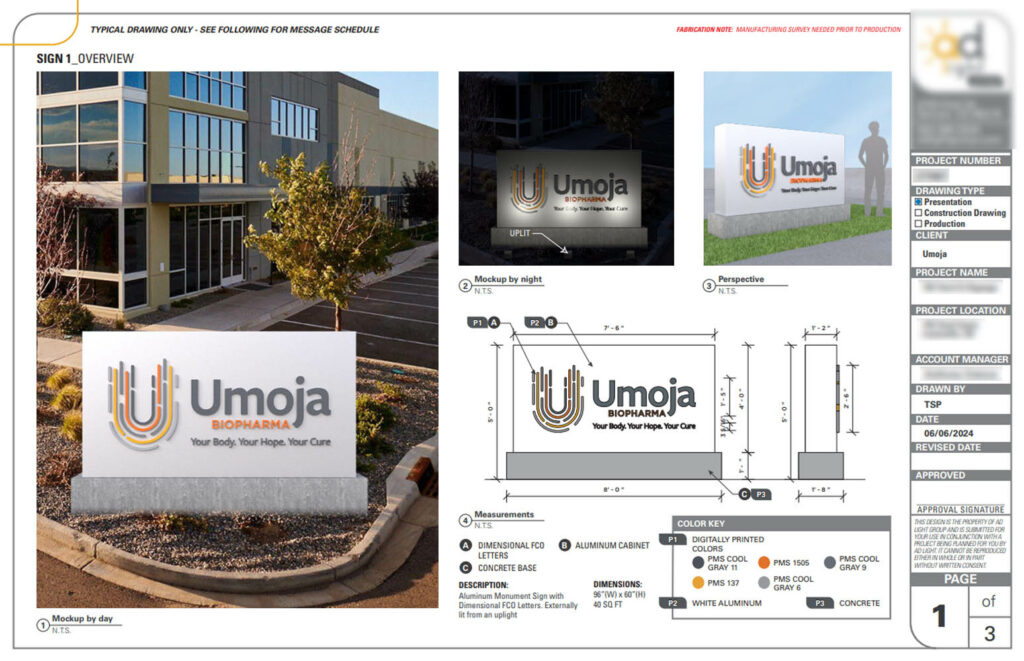
Physical Variability: No Two Locations Are Built the Same
One of the most underestimated reasons brand consistency breaks at scale is simple: no two locations are built the same.
Many brands assume that once they have a polished prototype store and a well-developed signage package, the process becomes a matter of replicating the same system across every new location.
In reality, physical variability introduces challenges that are often far less predictable.
No two sites are truly identical. Each location brings its own combination of architectural conditions, environmental context, pedestrian patterns, and traffic behavior.
As a result, signage that feels perfectly balanced in one location may appear awkward, less visible, or even technically impossible to install in another.
A signage package that looks flawless at a flagship store may not translate seamlessly across regional sites, making brand signage consistency increasingly difficult to maintain at scale.
Below are some of the most common factors that force brands to adjust the size, placement, or even type of signage from one site to another:
- Façade Proportions: Façade width, building height, and the rhythm of windows or architectural elements all influence the amount of visual breathing room a logo or letterset realistically has.
- Viewing Distance: Signage composition must adapt to its environment. Locations with fast-moving vehicle traffic typically require larger letter heights and shorter messaging for readability. In contrast, mall corridors or pedestrian-heavy environments allow for more detailed signage because viewers have more time to engage with the message.
- Architectural Limitations: Architectural features such as canopies, high windows, parapets, balconies, or structural columns often limit available signage zones. Some buildings permit signage only in designated areas, while others restrict wall penetrations in structural sections.
- Tenant Requirements and Multi-Tenant Environments: In multi-tenant properties such as shopping centers, office buildings, and mixed-use developments, signage requirements are often more restrictive. Property managers frequently prioritize visual harmony across tenants, requiring brands to adapt logo sizes, sign types, or placements to fit established signage grids.
- Street Visibility and Traffic Flow: Traffic direction, pedestrian crossings, sightlines, and movement patterns within the site all influence where signage will actually perform best, not simply where it looks ideal in elevation drawings.
- Mounting Restrictions and Safety Compliance: Some buildings impose projection limits, require specific mounting methods, or limit structural loads on façades for engineering and safety reasons.
Taken together, these factors make it unrealistic to implement a single, “perfect signage package” in every location. Adaptation is not a compromise; it is essential for success.
When brands insist on rigid duplication, they risk producing signage that meets the letter of the standards manual but fails to deliver on the intended brand experience in practice.
How Brands Can Overcome Physical Variability
We recommend prioritizing brand expression and customer experience over strict visual replication. The objective is to achieve consistency in how the brand is perceived, not just in its appearance on paper.
This includes protecting core brand elements such as:
- Logo execution
- Color consistency
- Sign hierarchy
- Illumination style
By focusing on brand expression rather than exact replication, signage can create a more unified customer experience, even as it adapts thoughtfully to each site’s unique conditions.
In other words, effective signage systems are intentionally designed with flexibility in mind. This approach ensures the brand remains unmistakable and cohesive, even when physical constraints require different configurations.
This becomes especially important for brands operating across airports, campuses, healthcare environments, mixed-use developments, and other high-complexity sites.
We explore this topic further in our guides to Signage System Design and Managing Complex Signage Projects Without Costly Breakdowns.
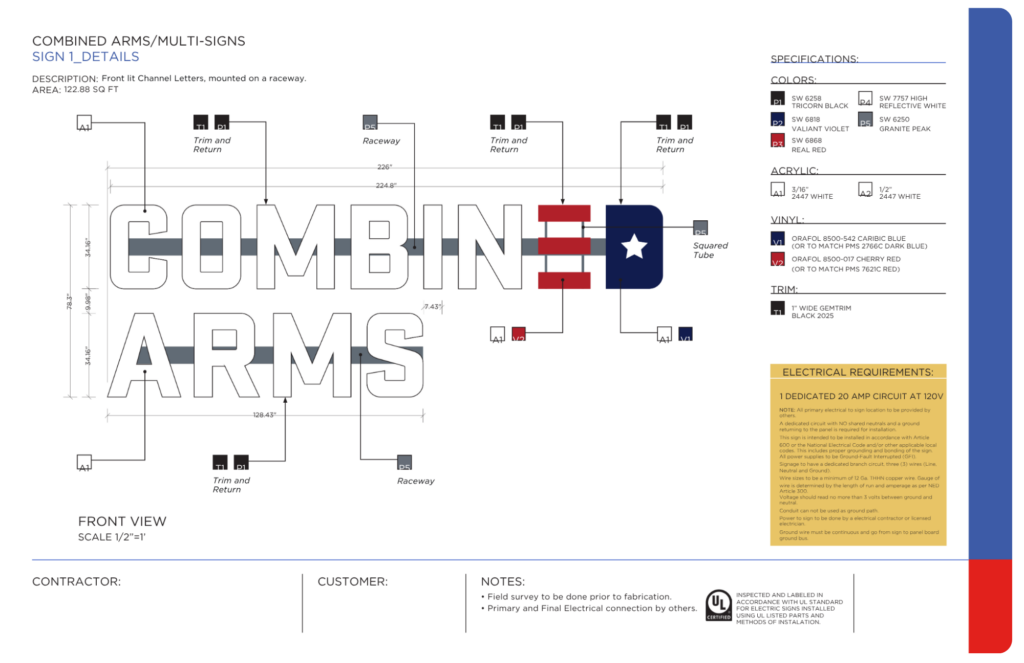
Regulatory Variability: Local Sign Regulations Can Significantly Change Outcomes
Another reason brand consistency quietly breaks at scale is regulatory variability.
Many brands assume their signage guidelines are strong enough to be applied universally. In reality, every signage program eventually encounters one major variable that is often underestimated: local regulation.
Every City Has Its Own Sign Code
As discussed in our other articles, every city, municipality, county, or local council typically enforces its own sign code governing:
- Maximum sign size and height
- Permitted sign area and installation methods
- Illumination brightness levels
- Allowed signage types
This means signage that is fully compliant and easily approved in one city may be rejected outright in another, even when the design remains exactly the same.
These differences exist because every local authority interprets what is considered safe, appropriate, and visually compatible with the surrounding environment differently.
Some jurisdictions restrict sign area based on zoning classifications, while others impose stricter controls on monument signs, ground signs, or storefront visibility.
Historic Districts Often Come With High Restrictions
In historic districts and heritage-sensitive environments, regulations are often far more restrictive.
Many municipalities prohibit or heavily restrict illuminated acrylic signage, digital displays, and other highly visible sign types to preserve the area’s architectural character.
As a result, signage standards that feel internally consistent and well-designed do not always survive external regulatory review, particularly in high-restriction environments.
For example, a brand may standardize illuminated channel letters across all storefronts to create a unified national appearance.
However, once that same brand enters a city with restrictions on letter height, sign area, or brightness levels near residential zones, adjustments become unavoidable. Signage may need to be downsized, illumination reduced, or construction methods modified altogether.
How Brands Can Overcome Regulatory Variability
Strategic signage programs proactively address regulatory variability early in the process, rather than reactively responding to issues after they arise.
Design and implementation teams should proactively:
- Map high-restriction regulatory zones
- Understand limitations related to size, height, and brightness
- Develop design variants that are strategically pre-approved for different site conditions, such as commercial districts, mixed-use environments, residential areas, or historic districts
When managed strategically, local adaptation affects only the technical aspects, not the core brand expression.
Elements such as logo hierarchy, color palette, and illumination character should remain consistent, even if size, structure, or mounting requirements change.
Ultimately, technical specifications may shift to meet local requirements, but the customer’s experience with the brand should remain consistent and instantly recognizable across all locations.
That distinction is essential for maintaining a recognizable customer experience across multiple locations, especially when local regulations force unavoidable adjustments.
We explore this topic in greater detail in our article, How to Fix the Sign Permit Drawing Bottleneck and Keep Projects Moving Forward.
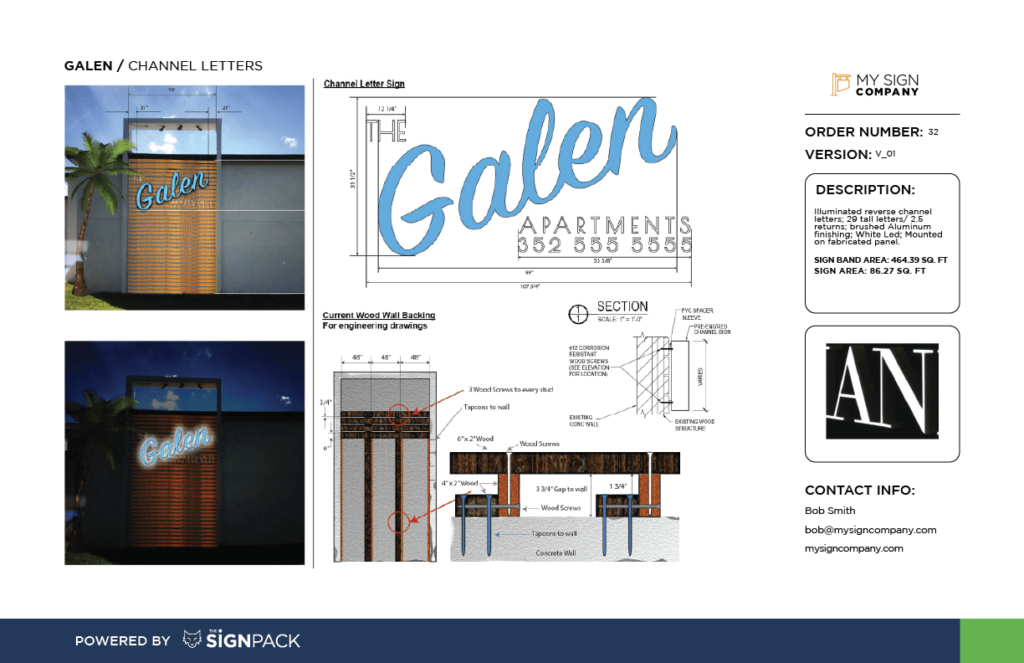
Production Variability: Even Approved Designs Can Look Different After Fabrication
Another reason brand signage implementation becomes increasingly difficult at scale is the gap between approved drawings and the realities of fabrication.
Many brands assume consistency is already secured once the artwork, shop drawings, and technical specifications have been approved.
In practice, however, one of the largest sources of inconsistency often begins after approval, when the design moves into production.
This is where production variability starts to surface.
Variability can emerge from multiple points throughout the fabrication process, including:
- Acrylic Variation: Differences in acrylic brands, grades, or thermoforming methods can create subtle shifts in gloss, clarity, and light diffusion from one location to another.
- Paint and Coating Variation: Even paint batches with the same color code can produce slightly different tones, ranging from warmer to cooler and from glossier to more matte, depending on production conditions.
- LED Color Temperature: Variations between LED batches can cause signage illumination to feel slightly warmer or cooler, subtly shifting how brand colors are perceived.
- Brightness Inconsistency: Differences in illumination intensity may cause some signage to appear brighter, whiter, or more muted compared to other locations.
- Material Substitution: Alternative materials that technically remain compliant, such as different acrylics, aluminum grades, or finishing systems, can still alter texture, reflectivity, and the perceived quality of the signage.
- Fabrication Workmanship: Differences in fabrication methods and craftsmanship can lead to inconsistencies in finishing details, edge quality, alignment, and overall execution.
As a result, signage may fully comply with approved specifications on paper yet still look and feel noticeably different once installed across multiple locations.
This reality is not unusual.
In large-scale production, materials such as paint, metal, acrylic, and LEDs naturally exhibit tolerances and minor variations, even when all parties follow the same specifications.
What makes this challenge more difficult is its cumulative effect.
A slight acrylic variation may seem insignificant on its own. A minor paint batch difference may barely be noticeable. A slightly cooler LED strip may feel acceptable in isolation.
But when these small inconsistencies multiply across dozens of locations and multiple sign types, from storefront signage to pylons and wayfinding systems, the brand gradually begins to lose its sense of uniformity.
How Brands Can Reduce Production Variability
To minimize production variability, we recommend considering several practical safeguards early in the signage program:
- Supply Chain Standardization: Standardizing materials, components, and production processes across locations helps reduce visual inconsistencies caused by supplier or sourcing differences.
- Approved Vendor Lists: Restricting fabrication to vendors that meet quality standards and understand the brand’s signage guidelines can significantly improve implementation consistency.
- Material Batch Control: Maintaining consistency across critical material batches, including paint, acrylic, LEDs, and coatings, helps reduce unwanted variation in color, gloss, texture, and illumination performance.
- Physical Sample Reviews Before Rollout: Reviewing physical samples before mass production allows evaluation of color accuracy, materials, brightness, and finishing quality in real-world conditions, helping identify deviations early.
Without rigorous controls during production, even the most thoroughly approved designs may not translate into a consistent brand experience for your customers.
On paper, signage across multiple locations may appear fully compliant with brand guidelines. In reality, small variations in materials, lighting, and workmanship can quietly shape a customer experience that feels noticeably different from one location to another.
| Also Read: 7+ Common Challenges in Multi-Location Signage Programs and How to Overcome Them |
Human and Process Variability: Consistency Becomes Harder as More Teams Get Involved
When a brand operates only a handful of locations, signage decisions are typically managed by a small, centralized team.
However, as the number of locations grows, signage implementation rarely remains under the control of a single group.
Suddenly, multiple stakeholders become involved, each with their own priorities and responsibilities:
- Brand teams are responsible for protecting brand identity
- Architects designing the façade and integrating signage into the built environment
- Facilities and operations teams focused on maintenance, durability, and serviceability
- Fabricators and regional vendors are responsible for production
- Permit coordinators manage local approvals and code compliance
- Installers executing work in the field under real-world site conditions
As more stakeholders enter the process, the number of points where interpretation can drift increases, even when everyone genuinely believes they are following the same brand standards.
This is the reality of human and process variability, and its impact is often underestimated.
In most cases, inconsistencies are not created intentionally. They happen because every team naturally adapts its decisions to the priorities of its role and the realities of the site.
For example:
- Architects prioritize integration with the building and overall aesthetics
- Facilities and operations teams focus on maintenance access, durability, and lifecycle costs
- Fabricators think about manufacturability, material availability, and production efficiency
- Permit coordinators prioritize compliance with local sign codes
- Installers must adapt to field realities such as wall structures, electrical access, equipment limitations, and unforeseen site conditions
None of these perspectives is wrong.
The real risk emerges when independently made adjustments occur without centralized oversight or clear process alignment.
Viewed individually, these changes may seem minor and easy to justify. A slightly different panel material. A subtle shift in placement. A similar but outdated file version. A small visual enhancement intended to improve visibility.
On their own, these decisions rarely feel consequential.
But across dozens or hundreds of locations, small changes accumulate.
Over time, inconsistencies become increasingly visible. One location starts to feel brighter and more contemporary. Another feels older or visually muted. Others begin to look like customized interpretations of the same brand rather than part of one unified system.
How Brands Can Reduce Human and Process Variability
To reduce human and process variability, we recommend implementing:
- A centralized signage management system
- Clear and actionable brand signage guidelines
- Ongoing cross-functional communication between stakeholders
Stronger communication and alignment across teams significantly reduce the risk of information gaps, misinterpretations, and inconsistent execution.
When stakeholders operate from a shared understanding, the final signage experience is far more likely to align with brand expectations.
These are some of the most important reasons why maintaining brand consistency becomes increasingly difficult at scale.
In a future article, we will explore this challenge in greater depth in Why Brand Signage Consistency Breaks Despite Strong Brand Standards.
Why Design Capacity Becomes the Biggest Bottleneck in Brand Signage Rollouts
Ultimately, maintaining brand signage consistency across a multi-location program is not simply about having detailed brand guidelines or reliable fabrication partners.
As discussed throughout this article, large-scale signage implementation is always influenced by physical variability, local regulations, production realities, and coordination challenges across multiple stakeholders.
Even with highly detailed brand standards in place, consistency can erode over time when implementation lacks the structure needed to translate those standards into real-world conditions.
Design Capacity Bottlenecks Are the Real Challenge
As production technologies advance, many fabrication-related challenges have become more predictable and manageable.
Precision manufacturing, CNC routing, LED systems, digital printing, and improved material sourcing have significantly matured the signage production process compared to years past.
However, one challenge continues to emerge as the critical bottleneck in national signage rollouts: technical design capacity.
This term stands for the ability to produce scalable, technically accurate signage design packages for rollout execution.
In large-scale signage programs, design is no longer simply a visual or creative task. Instead, it becomes the process of translating brand standards into a production-ready implementation system.
Within these programs, standardized signage designs must be flexible enough to adapt to a wide range of real-world variables, without sacrificing brand consistency. These variables include:
- Different façade conditions
- Landlord requirements
- Permitting restrictions
- Visibility constraints
- On-site installation realities
And this is often where many signage programs begin to experience friction.
There are simply not many signage designers with the technical expertise needed to manage the complexity of large-scale multi-location rollouts.
Especially when every site requires thoughtful adaptation without compromising consistency, timelines, or budget expectations.
While fabrication is increasingly becoming a capacity challenge supported by advancing technology, design implementation remains a coordination challenge that depends on experience, structured workflows, and the right level of design capacity.
For that reason, brands and national account teams that successfully maintain signage consistency across every location typically invest in more than just brand standards.
They also invest in the design capacity needed to stabilize technical workflows and implementation systems, ensuring execution quality remains consistent at scale.
How to Turn Design Bottlenecks Into Stable, Scalable Operations
As we discussed in our Signage Industry Trends article, experienced sign designers are naturally scarce. A key factor is the lack of specialized educational programs focused on developing professionals in sign design.
This reality has created a significant design capacity bottleneck across many sectors of the signage industry.
And when signage programs begin to experience the same challenge, the best solution is rarely to simply increase headcount.
Instead, the more sustainable approach is to build a scalable operational foundation. An operational layer that integrates with your internal team and contributes as a:
- Workflow stabilizer
- Production enabler
- Capacity engine
- Quality standard
These are not freelance designers, outsourced creative resources, or traditional design studios.
They are signage specialists with deep experience in the sign industry. They are professionals who understand the complexity of national signage programs and multi-location rollouts.
Their role is to help translate brand guidelines into production-ready signage packages across different site conditions while maintaining brand consistency at scale.
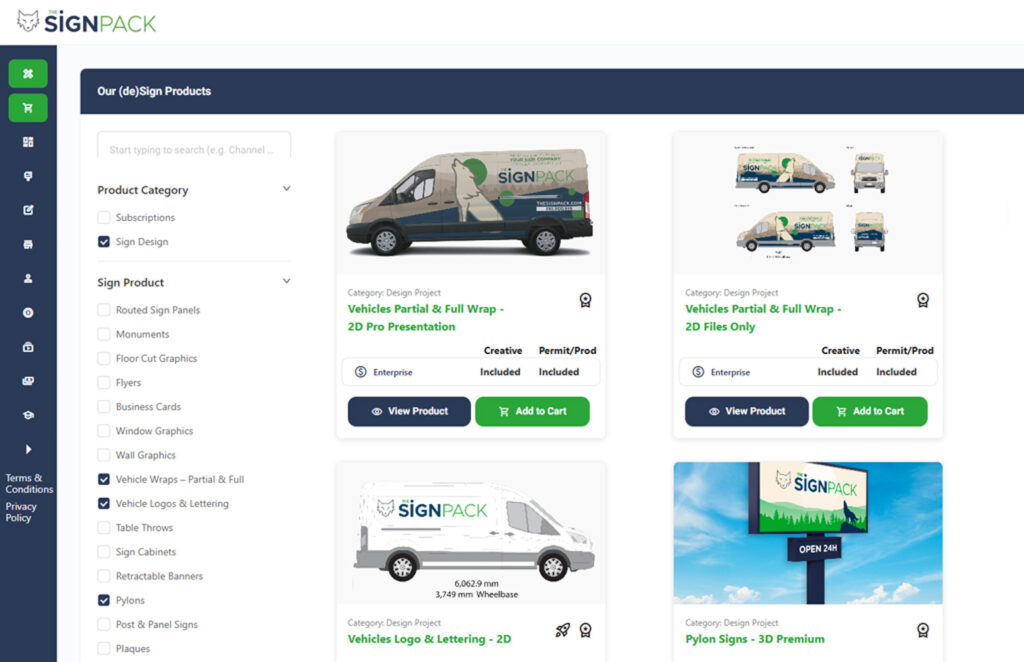
At The Sign Pack, we recognize that design consistency and scalability are the foundation of successful brand signage programs. This enables brands to grow with confidence and clarity across every location.
Because signage is a highly specialized discipline that sits at the intersection of:
- Creativity
- Brand experience
- Fabrication awareness
- Technical expertise
- Regulatory compliance
Built around this understanding, we developed a specialized sign design team composed of professionals with deep expertise in the sign industry.
We also built TSP Platform 3.0 as a centralized system designed to support signage projects across a wide range of rollout scales, from regional implementations to complex national programs.
Through this competitive advantage, hundreds of sign companies and National Accounts trust us to provide support that helps them:
- Scale design capacity based on project demand
- Access professional support for 2D, 3D, ADA, production-ready, permit-ready, and other complex signage design projects
- Maintain consistent design file quality and structured workflows
- Deliver pre-production and permit-ready files that help accelerate fabrication and installation timelines
With access to these capabilities, National Accounts, Rollout Managers, and Environmental Branding Partners can strengthen design capacity, stabilize workflows, and maintain brand signage consistency across multiple locations.
If your organization is currently facing a design capacity bottleneck while managing a signage program, partnering with The Sign Pack can become a strategic operational advantage.
Our team can partner with your organization to strengthen your operational foundation and ensure consistent delivery of brand signage programs at every location.
Let’s explore the best approach to overcoming your signage design bottleneck and advancing your projects with greater efficiency and confidence.
Connect with us to discuss how The Sign Pack can serve as your strategic partner in signage design and implementation.