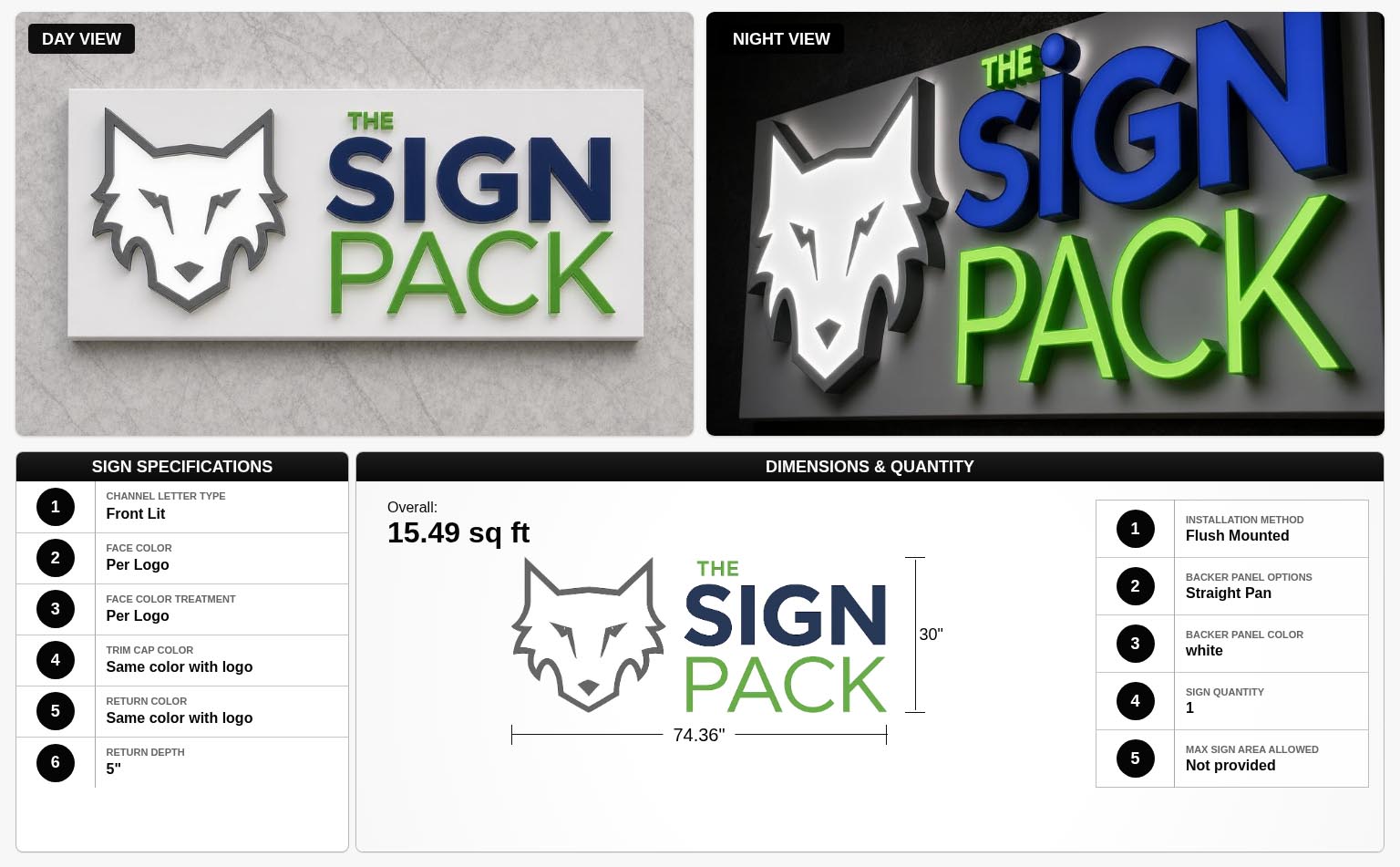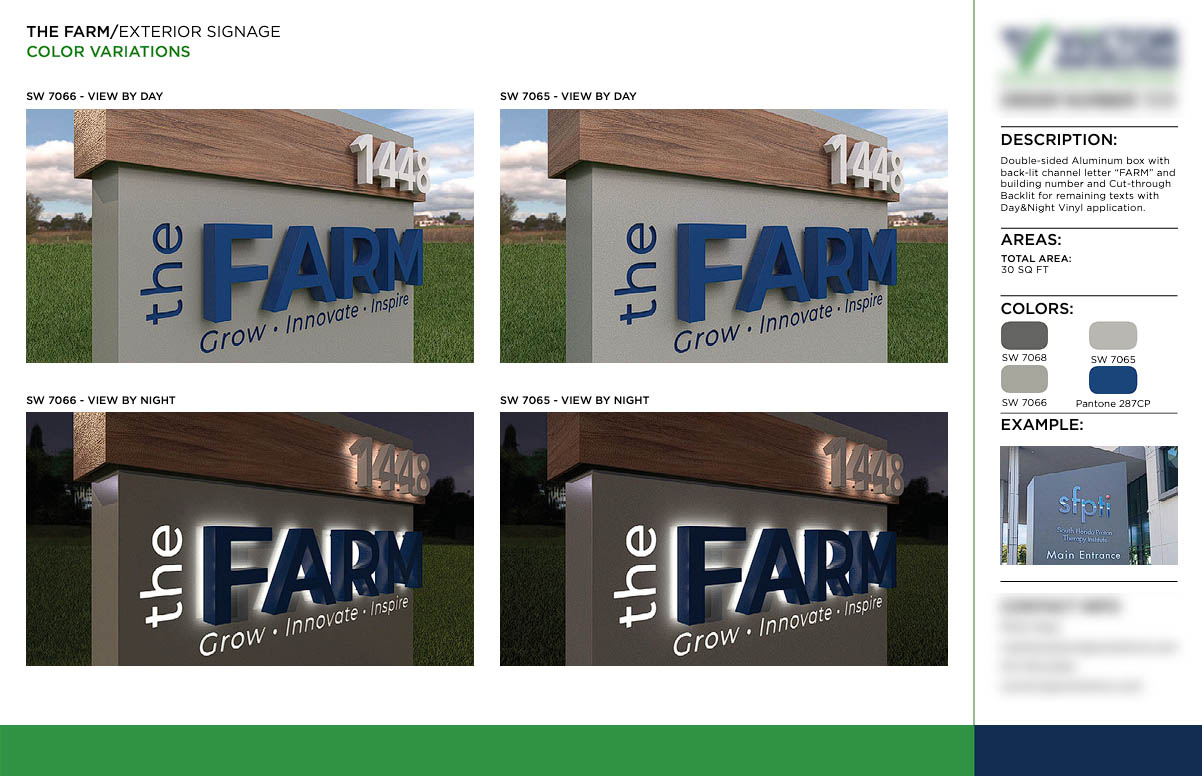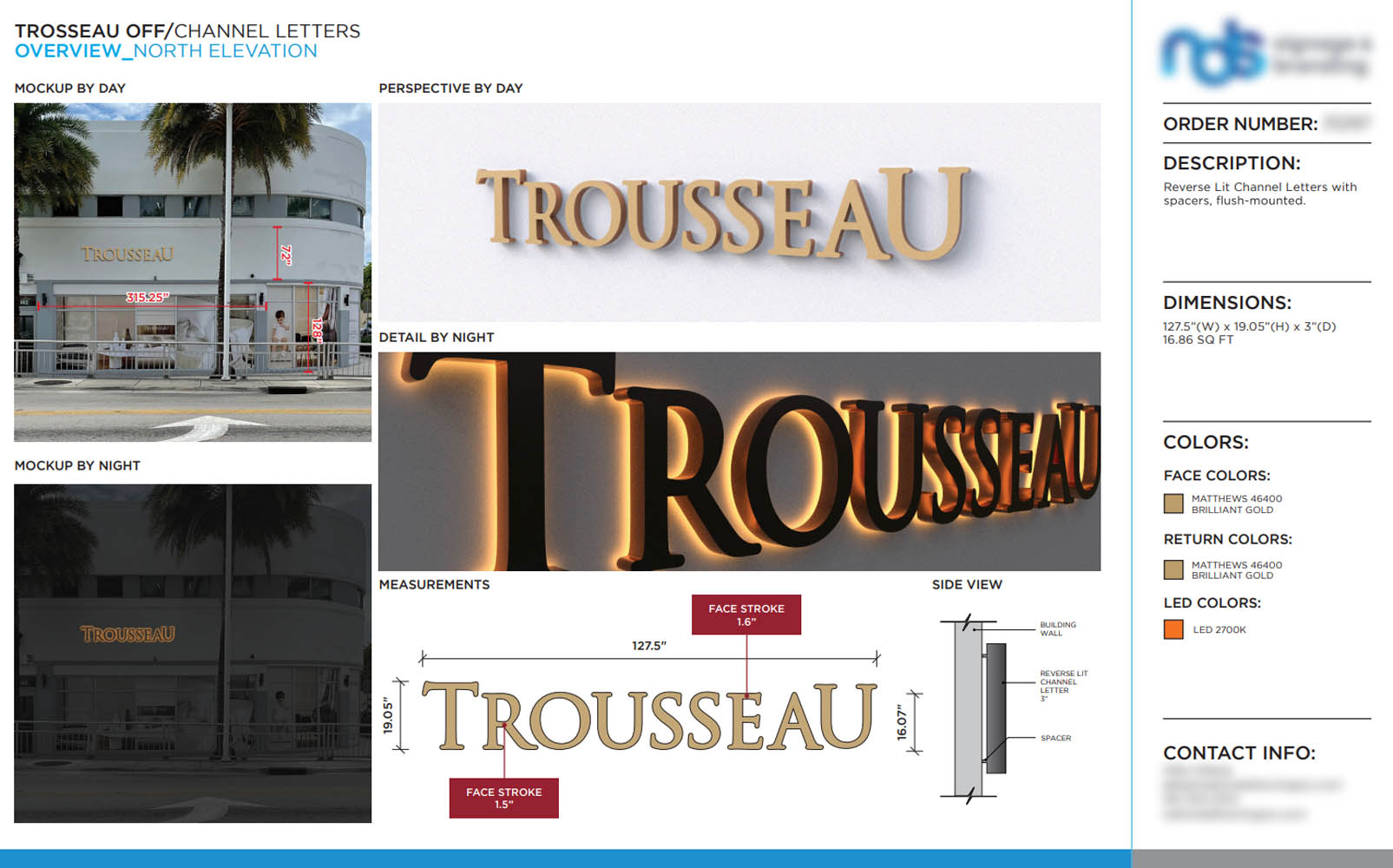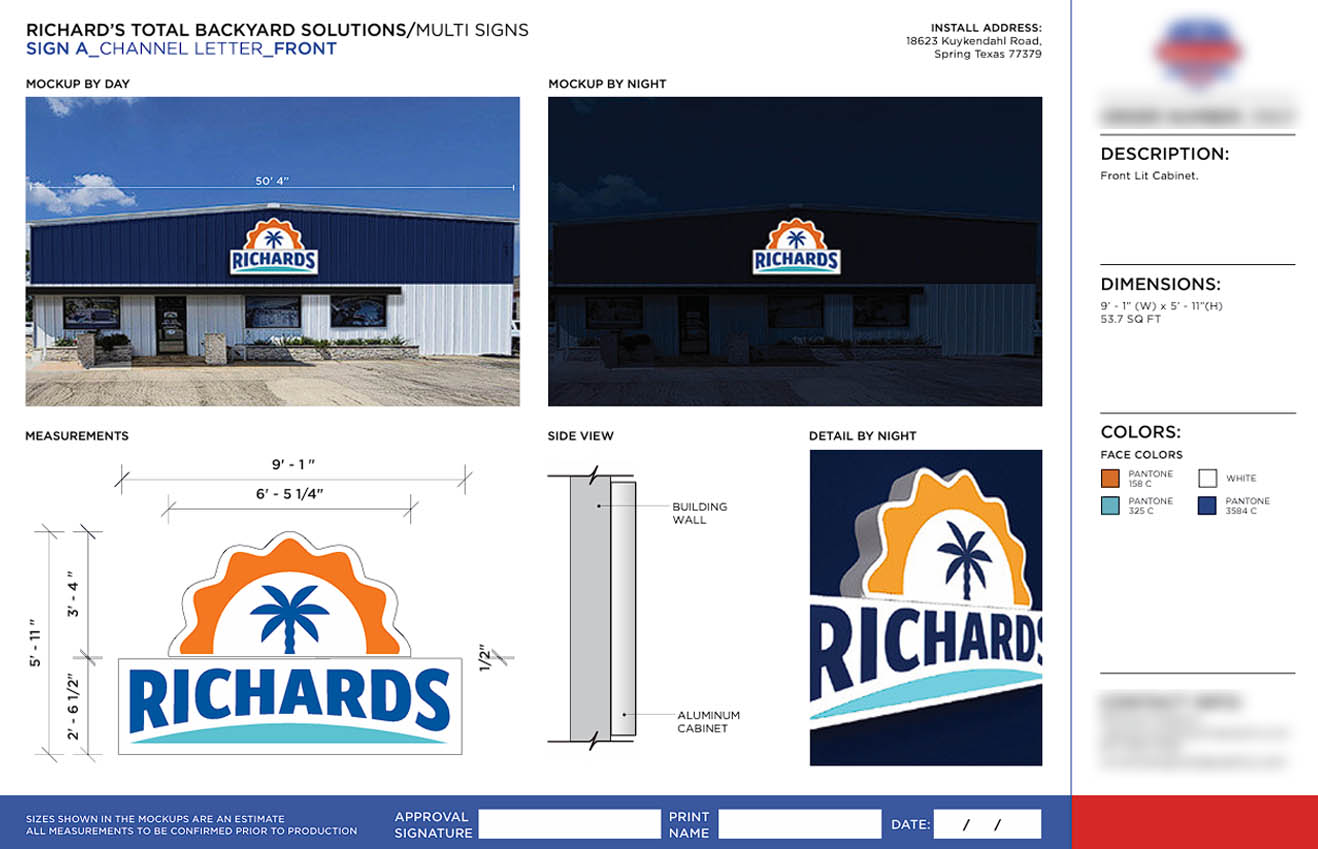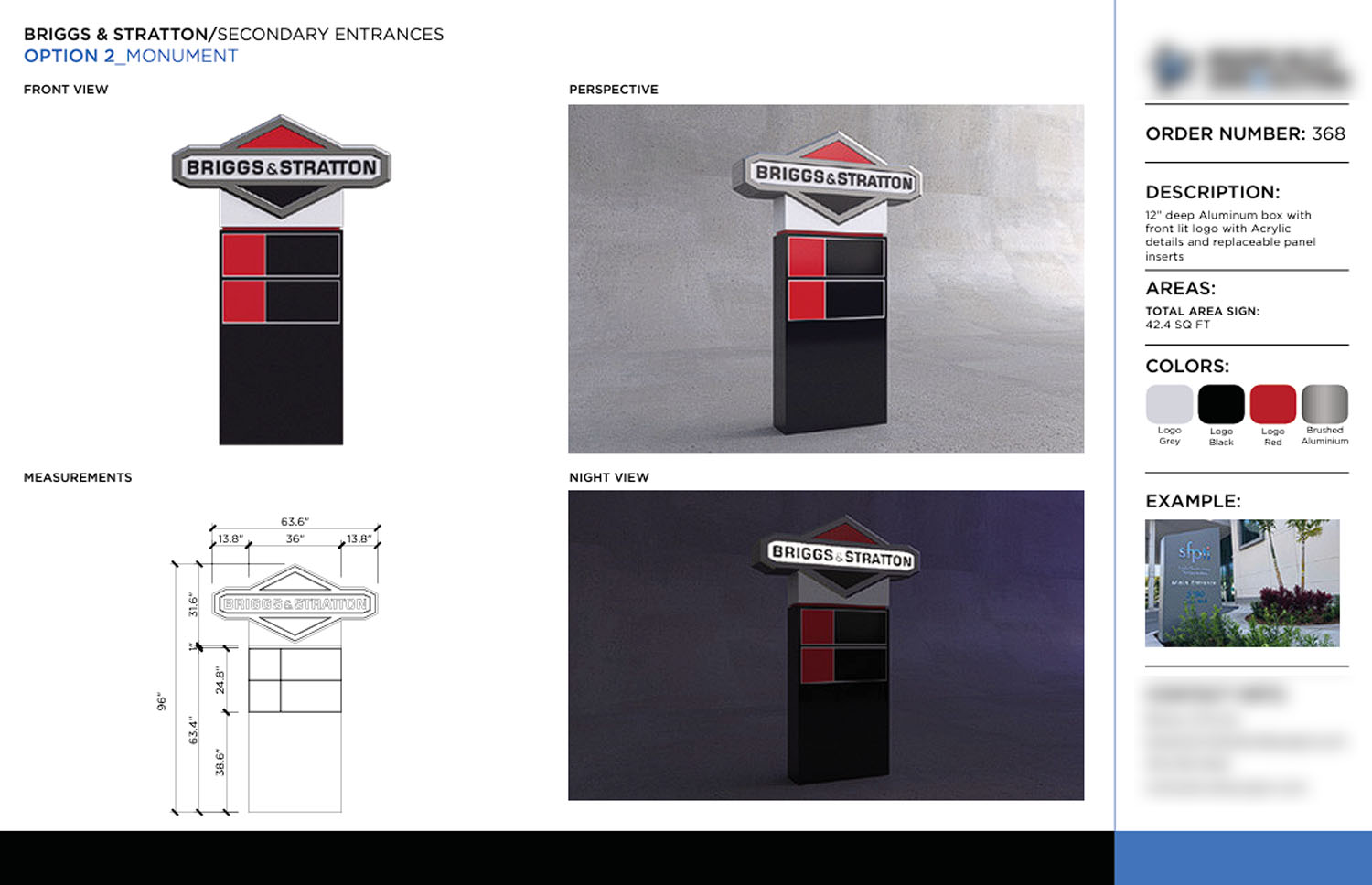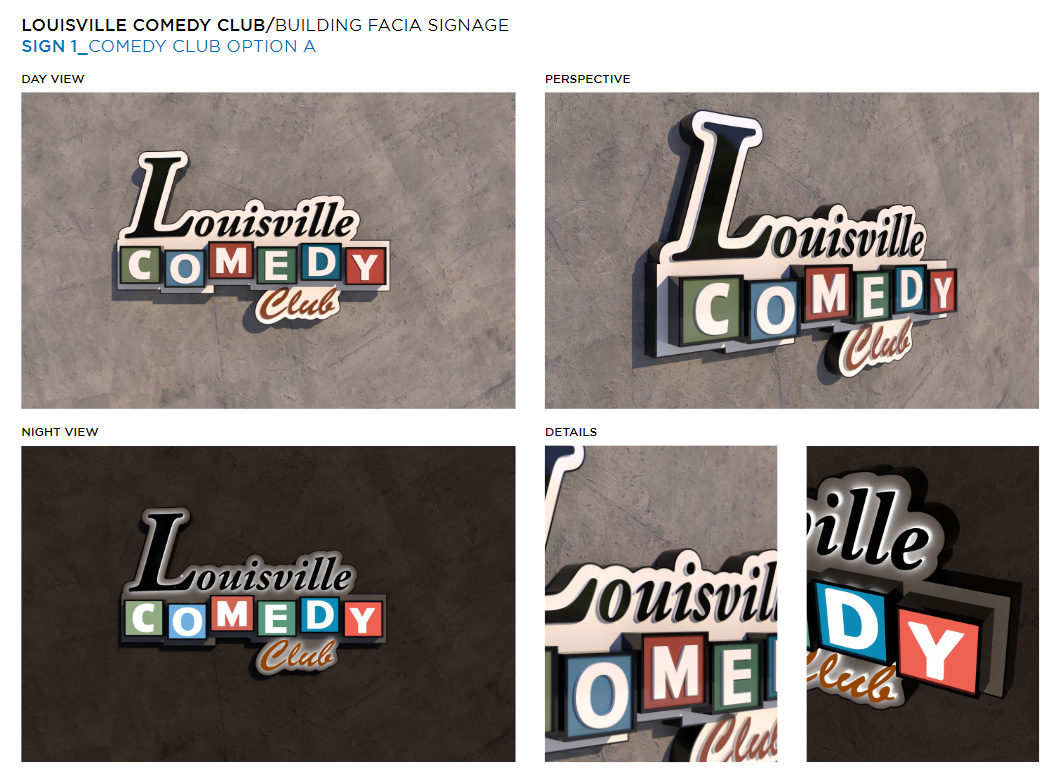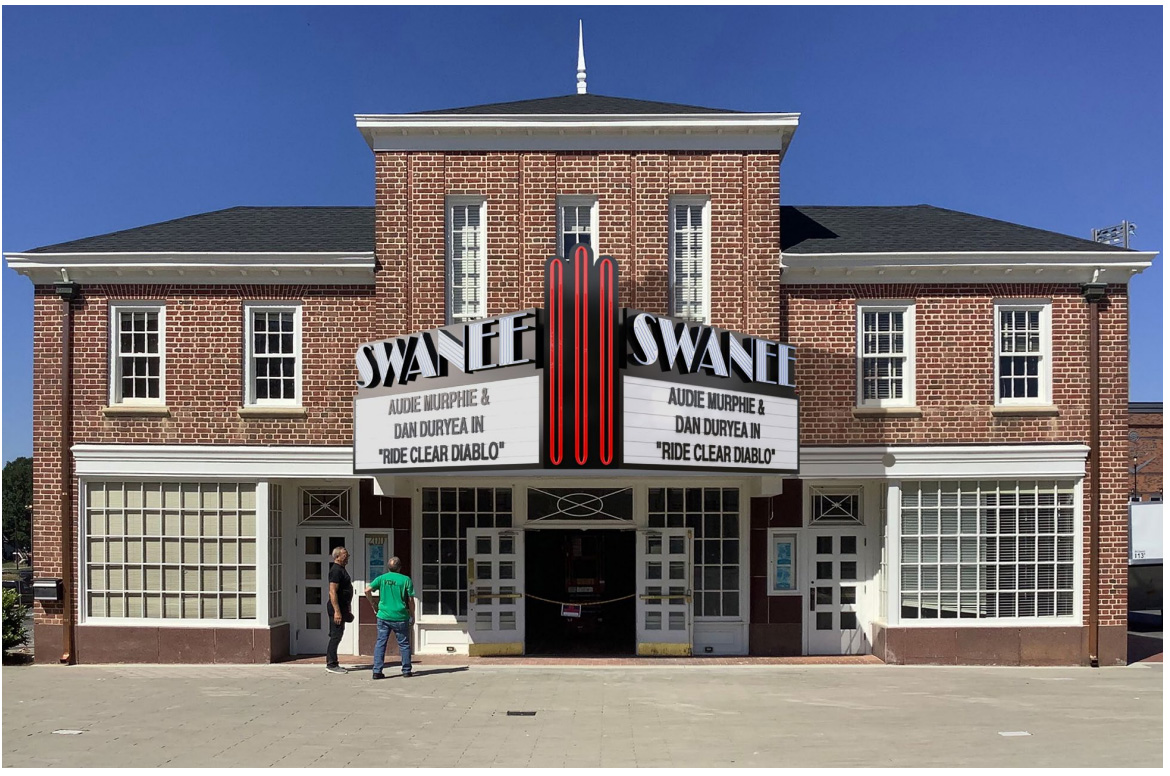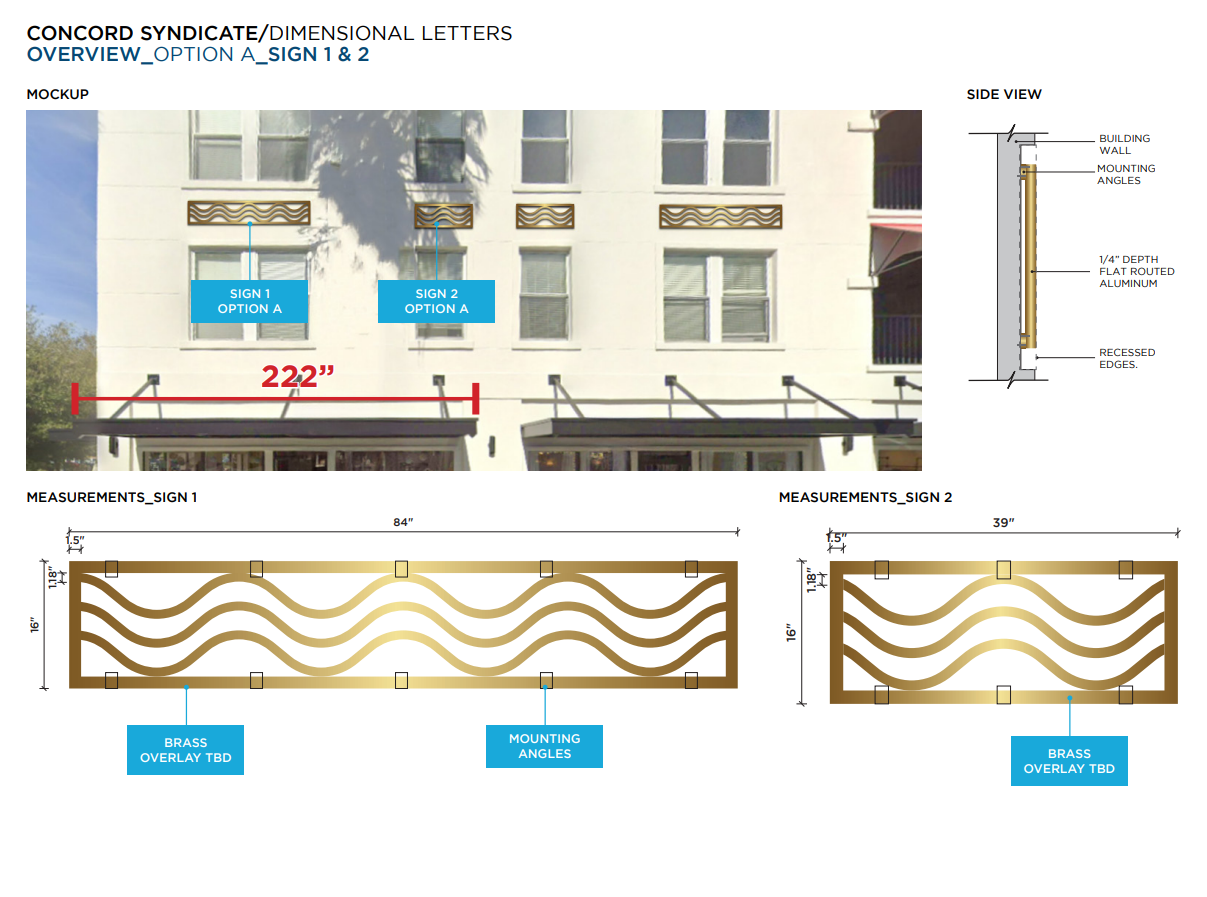
Brand signage consistency can begin to drift even when a company has well-defined brand standards in place.
To be clear, strong brand standards remain the foundation of a recognizable and trusted brand. They establish the visual framework that helps customers identify the same brand experience across multiple locations.
However, many factors affecting consistency fall outside the scope of brand standards. Changes are often required due to site-specific conditions such as:
- Different facade widths from one location to another
- Property owners who restrict signage size and placement
- Local zoning regulations that limit signage height or sign types
- Architectural constraints such as columns, canopies, balconies, and other structural elements
- Traffic patterns and sightlines are affected by trees, neighboring buildings, or parked vehicles
This is why brand standards alone rarely ensure signage consistency across multiple locations.
Consistency typically does not break down due to lack of commitment from brand teams, sign companies, or vendors. More often, implementation realities gradually move execution away from the original guidelines.
As signage programs expand across various municipalities, landlords, vendors, permitting authorities, and unique building conditions, small adjustments with significant visual consequences become increasingly difficult to avoid.
In this article, The Sign Pack explores why brand signage consistency can break down despite strong brand standards. We will examine the points in the implementation process where consistency is most vulnerable and explain why even well-managed programs can experience gradual drift over time.
This article builds on our previous discussion, Why Brand Signage Consistency Becomes Difficult at Scale, and addresses additional implementation challenges not previously covered in detail.
Below are five common breakdown points that contribute to drift in brand signage consistency in multi-location programs.
The Five Sources of Signage Consistency Drift
Before examining the individual breakdown points, it helps to understand where consistency drift typically originates during a multi-location signage rollout.
While every program is different, most consistency challenges can be traced back to five primary sources:
- Prototype Assumptions: When success at the prototype stage creates unrealistic expectations for large-scale implementation.
- Site Variability: When local building conditions require adaptations that gradually alter the intended brand expression.
- Regulatory Constraints: When permitting requirements, zoning regulations, and landlord restrictions force design modifications.
- Production Variability: When fabrication processes, materials, and workmanship introduce visual differences across locations.
- Information Management Failures: When documentation gaps, revision control issues, and communication breakdowns create inconsistent execution.
Together, these five factors represent some of the most common sources of drift in signage consistency across multi-location programs.
Understanding where these breakdowns occur is the first step toward building a more consistent and scalable signage implementation strategy.
Breakdown Point #1: Prototype Success Creates False Confidence
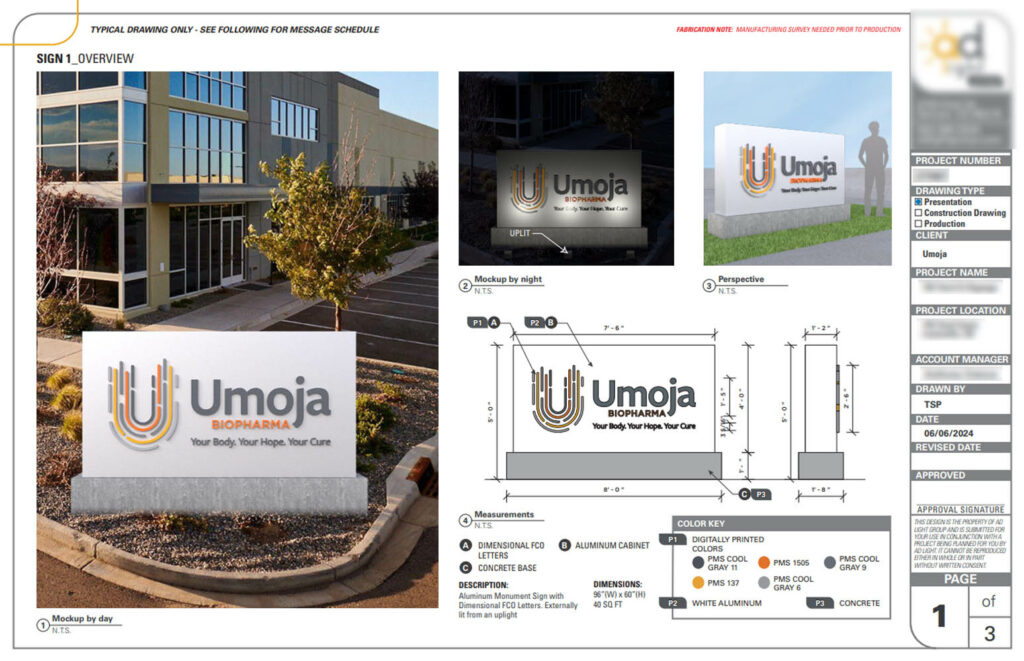
In many multi-location rebranding programs, developing a signage prototype is a critical step in bridging the gap between a 3D rendering and what stakeholders ultimately expect to see in the real world.
A prototype allows teams to identify design issues that may not be apparent on a screen before large-scale signage production begins, such as:
- Letter spacing that feels disproportionate at full scale
- Logo angles or proportions that appear visually awkward
- Color tolerances that become more noticeable in physical form
- Material combinations and design compositions that do not perform as expected
Once signage is installed at full scale on a building facade, stakeholders gain a much clearer understanding of how the brand will actually appear in the built environment. This often helps uncover potential issues early, before they become costly rollout problems.
However, there is an important reality that many organizations overlook:
Prototype success does not guarantee rollout consistency.
According to Brand Active, prototype development in signage rebranding programs can reduce overall signage implementation costs by up to 25% by helping prevent costly mistakes later in the process.
However, prototype success can create a false sense of confidence, as it rarely reflects the full complexity of implementing signage across multiple locations.
When a brand deploys the same signage package elsewhere, new challenges often arise. Many sites do not match the conditions of the prototype location.
Different locations often introduce challenges that were not apparent during the prototype phase, including:
- Significantly smaller facades
- Sightlines obstructed by trees, vehicles, or surrounding structures
- Shopping centers that restrict signage size and placement
- Zoning requirements that limit sign height or illuminated signage
- Building architecture with substantial physical constraints
A design that works well at a prototype or flagship location can be difficult, or even impossible, to replicate exactly across the entire portfolio.
This is where the first breakdown in consistency often begins.
The prototype storefront may appear clean and well-executed, with a complete signage package and consistent final photography. Stakeholders may leave the approval process believing they have established a universally applicable standard.
Then the rollout begins.
As the program expands into new locations with different site conditions, the assumptions created by the prototype are tested against reality. Small adaptations become necessary, and what once appeared to be a universally applicable solution gradually diverges from location to location.
The challenge is not prototype failure, but the assumption that a successful prototype will automatically ensure consistency at scale.
The Hidden Gap Between Prototype Success and Rollout Success
A prototype storefront remains one of the most valuable tools in a multi-location signage program. It helps align stakeholders, validate design decisions, and identify issues before large-scale production begins.
However, its value depends on recognizing that a prototype represents only one location, while a rollout must succeed across many different environments.
When a brand successfully completes its first prototype, teams can sometimes underestimate the variability they will encounter during implementation. These variables often fall into four categories:
- Physical conditions
- Regulatory requirements
- Production realities
- Human and process-related factors
This first breakdown often occurs when a successful prototype creates the illusion that the rest of the rollout will be straightforward.
As confidence grows, internal teams, program partners, and vendors may begin to view implementation as a simple replication exercise. The mindset shifts toward:
“We’ve already solved the design. Now we just need to repeat it everywhere else.”
In reality, every new location introduces its own set of challenges.
Facade dimensions vary. Local regulations differ. Landlord requirements change. Traffic patterns, sightlines, and customer viewing angles are rarely identical from one site to another.
What seemed simple at the prototype stage often becomes much more complex as the program expands.
How to Prevent Signage Consistency Breakdowns Caused by False Confidence
Preventing this type of breakdown starts with viewing the prototype appropriately.
Rather than treating it as a final template, brands should use the prototype as a testing environment and validation model for the larger rollout.
A successful prototype or flagship location should be built around three key principles:
- A signage design system that is intended to scale
- Clearly defined adaptation rules for varying site conditions
- An implementation process that extends beyond the flagship location
One of the most important insights for brand teams is recognizing that a prototype is not the finished answer. It is the beginning of the validation process.
Successful signage programs use the prototype to test the system, refine adaptation strategies, and prepare for implementation across different site types and environments, rather than treating it as a rigid standard.
Even when brands successfully overcome the prototype stage, consistency challenges rarely end there. The next source of drift often emerges when the signage system encounters the realities of individual site conditions.
| Also Read: 7+ Common Challenges in Multi-Site Signage Rollouts and How to Overcome Them |
The Design Extension for National Signage Programs
Turn complex brand guidelines into scalable real-world structures.
We partner with National Account and Program Managers to transform brand standards into permit-approved, fabrication-ready files. Maximize your project efficiency and margins while we handle the technical design complexity.
Breakdown Point #2: Local Site Conditions Create Unplanned Variations
Implementing brand signage across multiple locations is far more complex than simply replicating a design or prototype from one site to another.
Often, signage consistency is affected not by major design changes, but by unique constraints and challenges at individual locations.
As site teams work through these conditions, small adjustments are frequently made to ensure signage remains functional, compliant, and visually appropriate for the environment.
Over time, these minor modifications can cause consistency drift across the program.
For example:
- At a location with a narrower facade, the logo may be slightly enlarged to maintain visibility from a distance.
- At another site, the sign may be shifted a few inches higher or farther to one side to avoid windows, architectural features, or structural elements.
- In a shopping center environment, property management may require tenant signage to align with neighboring storefronts, forcing changes to the brand’s preferred placement strategy.
Individually, each decision appears reasonable and site-specific. Local teams may argue they are still operating within the intent of the brand guidelines.
The challenge arises when these adjustments accumulate across dozens or hundreds of locations.
Why Small Site Adjustments Create Large Consistency Problems
A small change may seem insignificant at a single location.
The impact becomes more apparent when similar adjustments are repeated throughout the rollout.
As these variations multiply, customers begin to experience subtle but noticeable differences from one location to another:
- Some locations feel visually crowded.
- Others appear undersized or less prominent than expected.
- In some cases, the placement of signage simply feels slightly off.
Based on our experience, even minor inconsistencies can gradually weaken brand recognition.
Customers may not identify specific changes, but they often sense when the experience feels different from locations they recognize and trust.
This is the core challenge behind the second breakdown point.
A common misconception is that local optimization automatically preserves brand consistency. Collectively, these adjustments can create meaningful differences in brand experience across the network.
Varying site conditions are not problems to eliminate; they are a reality of multi-location implementation.
The objective is not to avoid adaptation, but to manage it in a controlled and intentional way.
How to Prevent Consistency Breakdowns Caused by Local Site Conditions
To prevent site-specific adjustments from causing widespread consistency drift, brand teams and sign companies should manage adaptation through a centralized, measurable process.
This begins with establishing a clear adaptation framework that defines acceptable adjustments, the circumstances under which they may be made, and how they should be documented and reviewed.
Without this structure, individual locations may make independent decisions, leading to ad hoc variations that gradually move the program away from the original brand intent.
The most successful multi-location signage programs recognize that adaptation is inevitable. What separates consistent programs from inconsistent ones is not whether changes occur, but whether those changes are governed by a defined system.
We will explore practical strategies for preventing breakdowns in signage consistency in greater detail in a future article referenced at the end of this guide.
In the meantime, we invite you to read our article, How Brands Maintain Signage Consistency Across Every Location, which outlines a step-by-step approach for translating brand standards into physical signage across diverse locations while maintaining consistency, compliance, and functionality.
Site variability is only one source of adaptation. In many cases, even when a design works perfectly for a location, local permitting requirements may still require modifications before the signage can move forward.
Breakdown Point #3: Permits Quietly Reshape Signage
Many brands assume that issues with signage consistency arise near the end of the process, during fabrication or installation.
In reality, significant changes often begin much earlier.
In many multi-location signage programs, consistency drift often begins during the permitting phase.
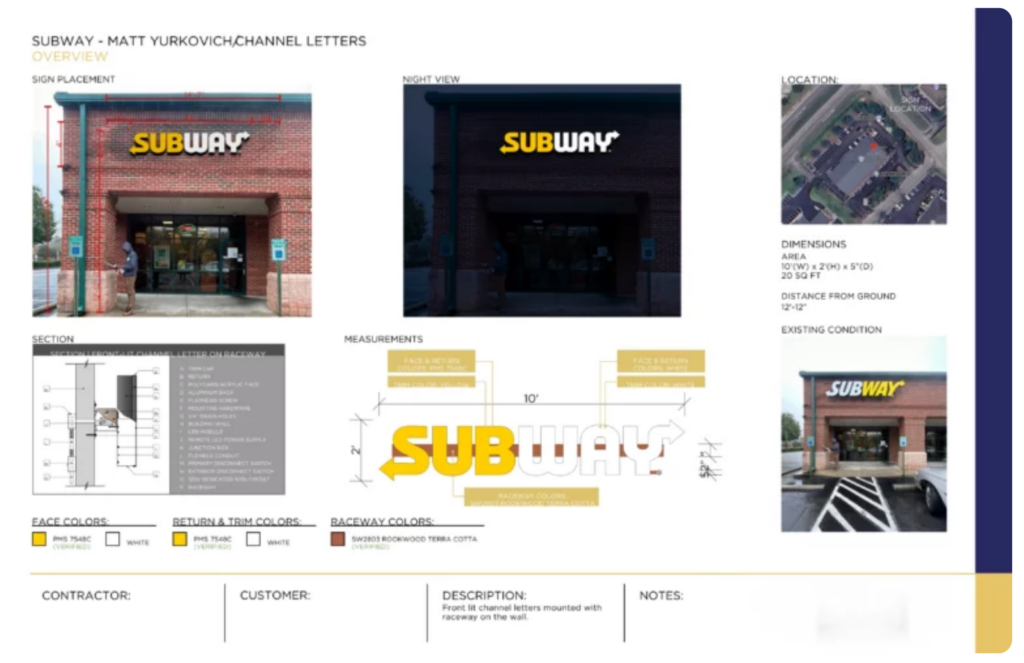
Once an internally approved design is submitted to local municipalities, planning departments, or permitting authorities, teams often discover that local sign codes require modifications to elements such as:
- Sign size or height
- Sign placement and positioning
- Illumination methods
- Approved materials and construction requirements
- Other location-specific compliance factors
This reality highlights an important truth: Permitting often forces design changes.
Every city, county, or jurisdiction maintains its own set of signage regulations governing issues such as:
- Maximum sign dimensions and allowable height
- Installation methods and placement restrictions
- Illumination levels and brightness requirements
- Approved sign types and material specifications
- Additional local compliance requirements
As a result, a signage design that receives approval without issue in one jurisdiction may be rejected entirely in another, even when identical.
This is why brands cannot assume that strong signage guidelines alone are enough to ensure successful implementation everywhere. Likewise, there is rarely a single signage design that can move unchanged across every jurisdiction.
Every rollout must navigate a major, often underestimated variable: local regulation.
Why Permit Approvals Often Change the Signage You Originally Designed
When brands do not establish standardized adaptation rules, local teams are often forced to make adjustments whenever permitting challenges arise.
In most cases, these changes are made for practical reasons, including:
- Securing permit approval
- Avoiding delays, rejections, or penalties
- Preventing costly redesigns or forced sign removal
Individually, these adjustments may seem reasonable and necessary.
The challenge arises when similar decisions are made repeatedly across multiple locations without a consistent framework to guide them.
Over time, these uncoordinated adaptations begin to accumulate, making the brand experience feel less uniform from one site to the next.
The result may look something like this:
- One location features signage that appears large, bright, and highly visible.
- Another location displays a noticeably smaller or less prominent version.
- Elsewhere, the sign’s shape or layout changes to conform to landlord requirements or architectural sign bands.
Without strong implementation oversight, brands can gradually come to accept signage that is merely “close enough” rather than maintaining a consistently recognizable brand expression.
For growing brands, this highlights an important reality.
Signage consistency is not solely a design challenge. It is also an operational challenge.
As the number of locations increases, so does the complexity of coordinating brand teams, national account stakeholders, sign vendors, landlords, permitting authorities, and local regulatory requirements.
The ability to manage these competing constraints in a structured way often becomes a defining factor in maintaining brand consistency at scale.
How to Prevent Consistency Breakdowns Caused by Complex Permitting Requirements
Given the realities of implementing multi-location signage, brand teams and sign companies should establish a clear governance structure before the rollout begins.
Successful programs recognize that permitting challenges are not exceptions. They are a normal part of implementation that must be anticipated and managed proactively.
Several best practices can help reduce the risk of consistency drift caused by permitting constraints:
- Map regulatory requirements by region, jurisdiction, or market before implementation begins.
- Develop alternative design templates for common site and compliance constraints.
- Maintain a controlled documentation system so all stakeholders work from the same approved specifications.
- Conduct centralized reviews of design variations before they move into production and installation.
By implementing these controls, organizations can significantly reduce the risk of unintended deviations across dozens or even hundreds of locations.
The goal is not to eliminate adaptation. The goal is to ensure that adaptation occurs within a structured framework that preserves the brand’s integrity.
From our experience in the sign industry, one reality becomes clear: small, seemingly reasonable adjustments at individual locations can gradually reshape how a brand is perceived across an entire network.
What appears insignificant at a single site can become highly visible when repeated at scale.
That is why maintaining signage consistency requires more than strong design standards. It requires a disciplined implementation process that can manage the operational realities of multi-location rollouts.
Regulatory approval may determine what can be built. However, maintaining consistency presents another challenge: ensuring that approved designs are produced consistently across different vendors, materials, and production environments.
Breakdown Point #4: Fabrication Creates Visual Drift
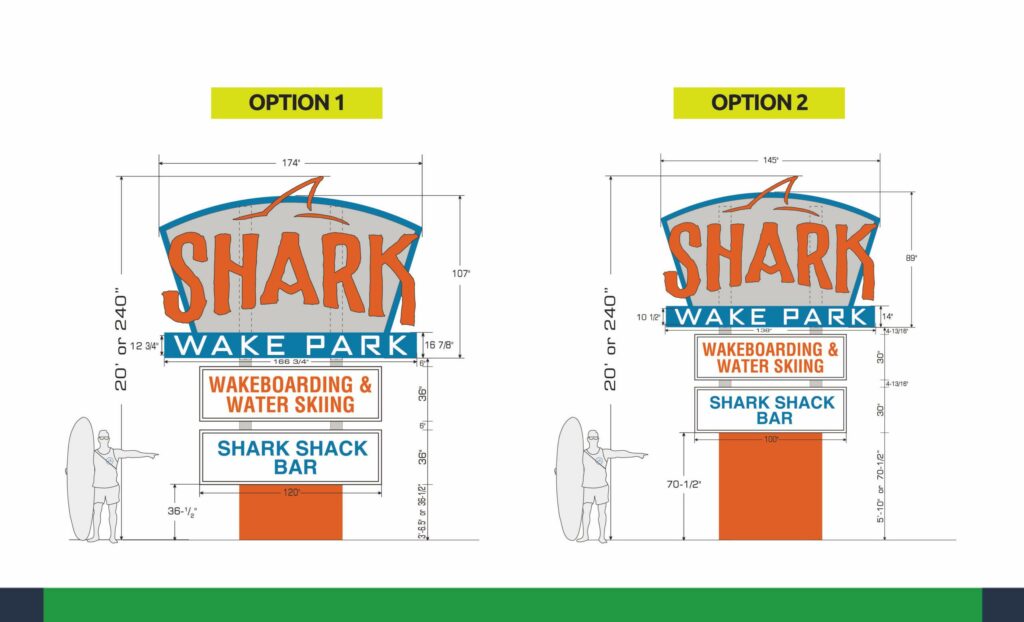
Fabrication can be one of the most significant sources of visual drift in a corporate signage program, even when all vendors work from the same artwork, shop drawings, and technical specifications.
Across multiple locations, signage may begin to look subtly different due to variations in:
- Materials
- Finishes
- Production methods
These differences are rarely obvious in project documentation, yet they are often highly visible to customers.
While customers may not be able to identify the exact cause, they frequently notice that some locations feel cleaner, brighter, or more aligned with the brand than others.
This is a classic example of the production variability challenge we discussed in our previous article.
The key takeaway is that strong brand standards alone do not guarantee signage consistency. In many cases, fabrication differences go unnoticed until visual inconsistencies begin appearing across the network.
Why Identical Specifications Don’t Always Produce Identical Signage
One of the challenges with fabrication-related consistency issues is that they emerge after the design has already been approved.
The artwork is complete. The drawings have been finalized. The technical specifications have been signed off.
Yet consistency drift can still occur during production.
Unlike major design changes, fabrication-related inconsistencies rarely appear as a single obvious mistake. Instead, they develop gradually over time as additional vendors, material batches, production facilities, and projects are introduced into the program.
Some of the most common sources of visual drift include:
1. Acrylic Variations
Differences in acrylic brands, grades, manufacturing processes, or thermoforming techniques can affect gloss levels, optical clarity, and light diffusion, creating subtle visual differences between locations.
2. Paint and Coating Variations
Even when the same color code is specified, different paint batches can produce slight shifts in tone, gloss level, or finish appearance. Colors may appear marginally warmer, cooler, glossier, or more matte than intended.
3. LED Color Temperature Differences
Variations in LED batches and color temperatures can significantly influence how signage is perceived.
A sign illuminated at 3000K may appear warmer, while a 6500K installation can create a cooler and more modern appearance, potentially altering how brand colors are perceived.
4. Brightness Inconsistencies
Differences in illumination intensity can cause signage at some locations to appear brighter, whiter, or more vibrant than others, even when the underlying design remains identical.
5. Mounting Depth Variations
Changes in how far a sign projects from the wall can affect shadows, light distribution, and viewing angles, altering how the signage is perceived from different perspectives.
6. Material Substitutions
Alternative materials that remain technically compliant with specifications may still create noticeable differences in texture, reflectivity, durability, or perceived quality.
7. Fabrication Workmanship
Differences in production techniques and craftsmanship can affect edge quality, finishing details, alignment, and overall consistency of execution.
Taken individually, these variations may appear minor.
Collectively, however, they can have a meaningful impact on how a brand is presented across multiple locations.
This is what makes fabrication-related drift particularly challenging to manage.
It rarely appears as a single major failure that can be quickly identified and corrected. Instead, it emerges through dozens of small production decisions and technical variations that accumulate across an expanding signage program.
Over time, those seemingly insignificant differences can begin to reshape the consistency of the brand experience itself.
How to Prevent Consistency Breakdowns Caused by Fabrication and Process Challenges
Preventing fabrication-related consistency breakdowns requires a disciplined approach to quality control throughout the production process.
While many factors can influence fabrication outcomes, one of the most effective strategies is to establish standardized quality assurance procedures that align with stakeholder expectations and brand requirements from the outset.
Brand teams and sign companies should pay particular attention to the following areas:
1. Supply Chain Standardization
Standardizing materials, components, and production processes helps reduce the risk of visual inconsistencies caused by differences in suppliers, manufacturing methods, or finishing techniques.
2. Approved Vendor Programs
Limiting production to qualified vendors who understand the brand’s standards and quality expectations helps improve consistency across multiple locations and markets.
3. Material Batch Control
Implementing strict testing and verification procedures can help identify potential variations in color, gloss, texture, and illumination performance.
Particular attention should be given to critical materials such as paint, acrylic, LEDs, and coatings, where batch-to-batch differences can affect the final appearance.
4. Physical Sample Reviews Before Rollout
Evaluating physical samples before full-scale production allows teams to validate color accuracy, material selection, illumination levels, and finishing quality in real-world conditions.
This process can help identify potential issues before they become widespread across the rollout.
Applying these controls consistently can significantly reduce the risk of visual drift during fabrication.
The earlier inconsistencies are identified, the easier they are to correct before they begin affecting multiple locations.
Without these safeguards, even the strongest signage design can gradually lose consistency as it moves through production.
This highlights an important reality of multi-location signage programs: maintaining consistency depends not only on design standards but also on the operational systems that support production and execution.
Ultimately, the quality of a brand’s physical signage experience is shaped as much by fabrication discipline as it is by the design itself.
Even when fabrication quality is carefully managed, consistency can still be compromised if stakeholders are not working from the same information. As signage programs expand, documentation and communication often become the next source of drift.
Breakdown Point #5: Communication and Revision Chaos
One of the most common challenges in multi-location signage rollouts is that communication and documentation become increasingly difficult as the program grows.
In the early stages, the process is often relatively straightforward. There may be only one approved drawing package, one vendor, and a small group of stakeholders working from the same set of files.
As the rollout expands across dozens of locations, however, the operating environment changes dramatically.
Additional teams become involved, including:
- Brand teams are responsible for protecting brand identity.
- Architects designing site-specific facades.
- Facilities and operations teams are responsible for maintenance and long-term performance.
- Fabricators and regional vendors producing signage
- Permit coordinators manage regulatory approvals.
- Installation teams are executing work in the field.
As these groups begin sharing files, issuing revisions, and adapting designs for individual locations, the complexity of coordination increases significantly.
Now imagine this process operating without a structured communication and documentation system.
Questions quickly begin to emerge:
- Which version is the most current?
- Which revisions have been formally approved?
- Which dimensions should be used at a specific location?
- Which files should be considered the official source of truth?
This is where information gaps begin, creating real implementation problems.
In large-scale signage programs, it is not uncommon for revised files to be distributed inconsistently, for stakeholders to reference outdated drawings, or for field teams to remain unaware that a newer version has already been approved.
As a result, small documentation gaps can create disproportionately large rollout challenges.
The issue is rarely a lack of effort or commitment from the teams involved. More often, it stems from the absence of a centralized system to manage information consistently across a growing network of stakeholders.
When that happens, signage consistency can begin to drift, not because the standards are unclear, but because different teams are working from different versions of those standards.
How Information Gaps Turn Into Consistency Drift
When documentation gaps are allowed to grow, communication between teams becomes fragmented, and the organization gradually loses its single source of truth.
As a result, multiple versions of drawings, specifications, and implementation documents begin circulating throughout the project, often without stakeholders realizing they are no longer aligned.
Over time, this creates the conditions for communication and revision chaos, leading to familiar implementation issues such as:
- Fabrication teams producing signage from outdated drawings or dimensions
- Field teams working from incomplete revision notes
- Local vendors are creating their own derivative design files with inconsistent naming conventions and version control
What makes this breakdown point particularly dangerous is that it develops quietly and accumulates over time.
Much like production variability, documentation variability can introduce consistency drift without triggering an obvious warning sign.
By the time the issue becomes visible, it may already be affecting multiple locations.
The result is a signage network that no longer feels fully aligned.
Some locations reflect the latest approved standards, while others continue to operate under older versions or vendor-specific interpretations of the brand requirements.
Consider a typical multi-location signage rollout:
- At the first location, signage is produced using Revision B, which includes approved updates to letter sizing and logo proportions.
- At the second location, a communication breakdown causes the field team to continue working from the older Revision A package, resulting in different dimensions and visual proportions.
- At the third location, a regional vendor encounters a site condition that is not addressed in the available documentation. Without a defined adaptation framework, the vendor develops its own solution and stores the revised files locally rather than integrating them into the centralized system.
None of these decisions appears significant on its own.
Each team is simply trying to keep the project moving forward.
However, when the finished signage across those three locations is compared side by side, the result may feel like three different interpretations of the same brand.
This is how communication and revision chaos create consistency drift.
Not through a single major mistake, but through a series of small information gaps that gradually separate execution from the original brand standard.
As signage programs scale, maintaining consistency becomes just as dependent on information management as it is on design management.
How to Prevent Consistency Breakdowns Caused by Documentation Gaps, Communication Failures, and Revision Chaos
As we’ve seen throughout this article, consistency drift does not always originate from design decisions, site conditions, permitting constraints, or fabrication challenges.
In many cases, it stems from something far less visible: documentation gaps that gradually evolve into chaos in communication and revision.
Earlier, we discussed the importance of signage standards and adaptation rules in maintaining visual consistency while allowing for controlled flexibility. Equally important is establishing Documentation System Standards that help minimize information gaps and maintain version control throughout the rollout process.
Without a structured documentation system, even well-managed programs can begin to lose alignment.
For example:
- Internal teams, vendors, and local stakeholders may access files through different channels, including email, shared folders, messaging platforms, or local storage systems. Without a centralized process, the risk of miscommunication increases significantly because there is no definitive source of truth.
- Some stakeholders may continue to use outdated PDF files stored locally, while others receive updated versions that are never shared with the broader project team.
- Drawings may be reviewed without a full understanding of revision notes or approved design changes.
- Vendors may begin interpreting the standards differently. One vendor may view certain design elements as flexible, while another may view them as fixed requirements.
Over time, these inconsistencies create parallel versions of the program that are no longer fully aligned with one another.
This is why Documentation System Standards play such an important role in large-scale signage implementation.
A well-structured documentation system establishes a centralized workflow and creates a true Single Source of Truth (SSOT) for the entire program.
In practice, this means there is only one official location where stakeholders access current information, approved specifications, and the latest revisions. Any updates or changes are managed through that centralized system rather than being distributed across multiple disconnected channels.
This approach provides several advantages:
- All stakeholders work from the same approved information.
- Revision history becomes easier to track and audit.
- Version control is maintained across the entire program.
- Teams can identify and resolve discrepancies before they affect production or installation.
The value of this structure becomes even more apparent when managing hybrid implementation teams that combine global brand stakeholders with regional vendors, fabricators, permit coordinators, and local installation partners.
To support this level of coordination, many organizations rely on centralized platforms such as:
- Document Management Systems (DMS)
- Project portals
- Signage program management platforms such as CoreBridge
These systems serve as a single home for drawings, guidelines, specifications, revision histories, and other critical program documentation.
As signage programs continue to grow, maintaining consistency becomes increasingly dependent on how information is managed, distributed, and controlled.
Strong standards define what the brand should look like. Strong documentation systems help ensure every stakeholder is working toward the same version of that vision.
| Also Read: How to Manage a Signage Program for Multi-Location Brands Without Losing Control |
How to Prevent Consistency Drift in Brand Signage Programs
The examples throughout this article illustrate several common breakdown points that can undermine signage consistency, even when strong brand standards are already in place.
As we’ve discussed, consistency challenges often emerge from a combination of factors:
- Strong guidelines alone are not enough to protect brand consistency across multiple locations.
- As the number of locations grows, coordination becomes increasingly complex across brand teams, vendors, landlords, permitting authorities, and other stakeholders.
- Brands must standardize not only their visual guidelines, but also how those guidelines are interpreted and implemented throughout the rollout process.
Brand standards remain essential because they define how logos, colors, typography, and other visual elements should appear across every customer touchpoint.
The challenge is that real-world implementation introduces variables that standards alone cannot control. Fabrication constraints, operational processes, permitting requirements, site conditions, and ongoing maintenance requirements all influence how the brand ultimately appears in the field.
Consistency breakdowns rarely happen overnight.
More often, they emerge gradually through undocumented changes, unapproved adaptations, fragmented communication, material substitutions, and small decisions that seem reasonable in isolation.
Over time, these seemingly minor variations can create noticeable differences in how the brand is experienced from one location to another.
Ultimately, maintaining consistency in signage is not just a design challenge. It is an operational discipline that spans design and implementation, through long-term program management and maintenance.
Perhaps the most important takeaway is this:
Signage consistency is not achieved once a guideline is written or a prototype is approved.
It is an ongoing practice that requires structure, governance, and continuous oversight.
Strong standards provide direction. Strong implementation systems ensure that the brand remains recognizable, consistent, and reliable across every location.
To continue this discussion, we invite you to read our companion article, How to Prevent Consistency Drift in Multi-Site Brand Signage Rollouts.
In that article, we explore practical strategies that brand teams, national account organizations, and signage program managers can use to proactively manage consistency and maintain control as signage programs scale.
How The Sign Pack Supports Multi-Location Brand Signage Rollouts
Strong standards provide direction, but consistency at scale depends on how effectively those standards are translated into implementation.
While many consistency challenges emerge during permitting, fabrication, and field execution, the foundation for a successful rollout is often established much earlier in the design process.
The Sign Pack specializes in helping brands, national account teams, sign companies, and program stakeholders transform brand standards into production-ready, permit-ready signage design packages that enable more consistent implementation across multiple locations.
Depending on the needs of the program, our role may include serving as a:
- Production-ready design partner
- Permit-ready design resource
- Design capacity extension team
- Signage standardization support partner
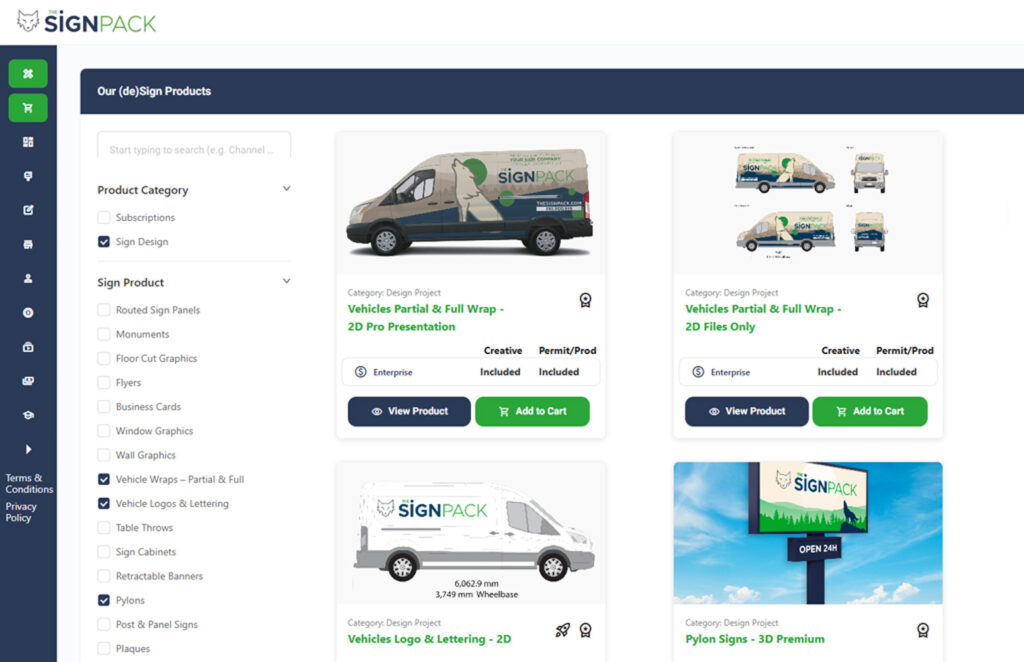
To support projects ranging from local implementations to national-scale rollouts, we have developed TSP Platform 3.0, a centralized environment designed to streamline signage design production and documentation.
By helping create a stronger design foundation, we enable organizations to move into permitting, fabrication, and installation with greater clarity, consistency, and confidence.
If your organization is planning a multi-location signage rollout and wants to improve consistency before fabrication and installation begin, we’d be happy to discuss how production-ready and permit-ready signage design support can help strengthen your implementation foundation.