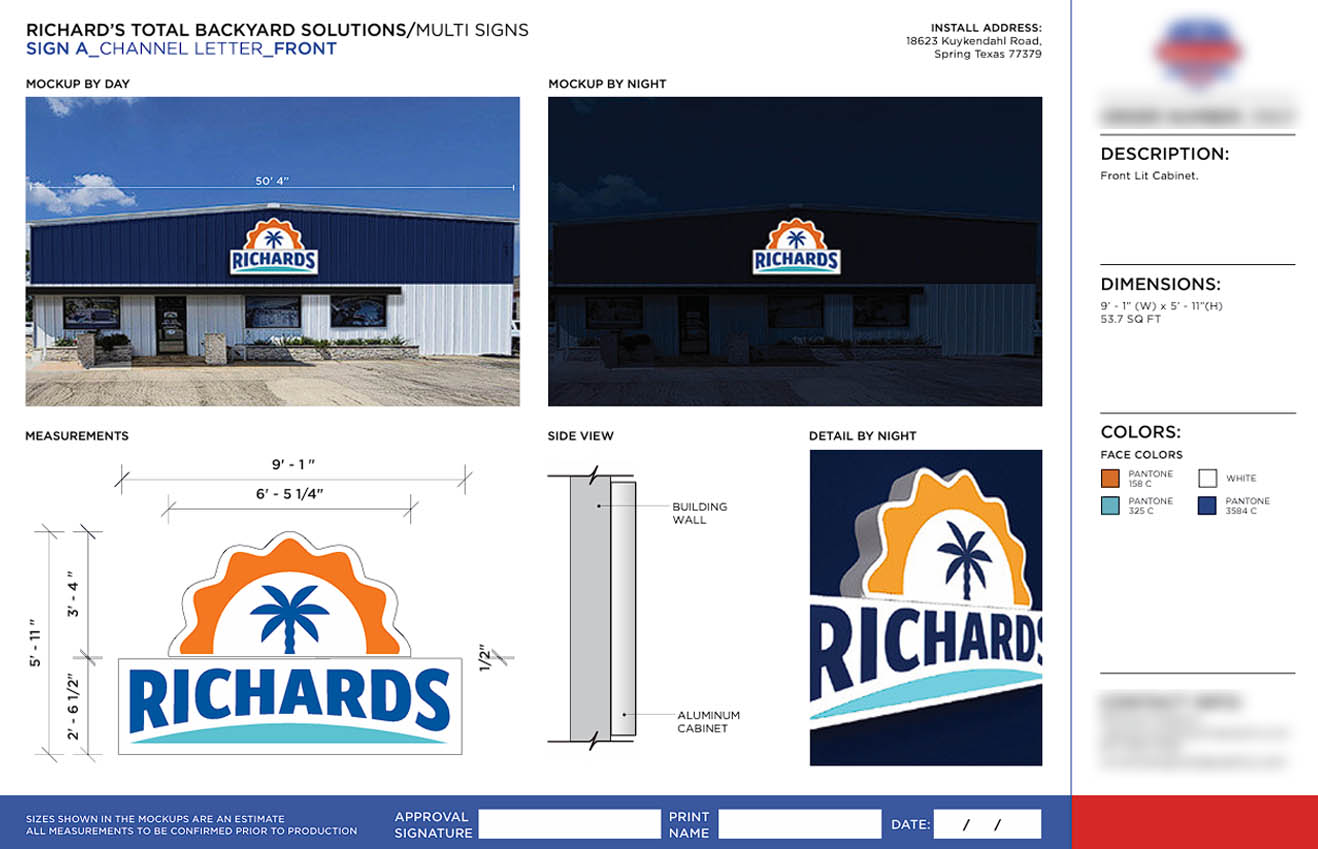
Maintaining consistent brand signage across multiple locations involves far more than simply following design standards.
For brands operating across multiple sites, maintaining signage consistency is much more complex than it may first appear. Each location introduces its own set of challenges, such as:
- Building conditions
- Visibility challenges
- Installation realities
- Local regulations and permitting requirements
- Landlord criteria and property restrictions
- Fabrication partners and capabilities
- And other site-specific constraints
At first glance, signage implementation seems simple: design, manufacture, and install. In practice, each step involves hidden complexities that can threaten consistency.
In reality, implementing consistent brand signage is far more complex.
Many brands already have highly detailed brand standards governing:
- Logo proportions and brand identity
- Typography and visual hierarchy
- Material specifications
- Prototype storefront concepts
Even with detailed brand standards, implementation in real-world environments often diverges from the plan.
A signage concept may follow the same visual direction on paper, but still create an inconsistent brand experience in the physical world.
One location may feel polished and premium, while another feels slightly off. Customers may sense that the flagship location in a major city feels disconnected from a regional branch, even when both technically follow the same brand standards.
Over time, these subtle inconsistencies can create a fragmented impression across locations and gradually weaken the overall brand experience.
Successful brand signage implementation impacts every stakeholder, from brand managers and architects to facilities teams and local partners.
This article provides strategic insights and a clear framework for vendors, project teams, and decision-makers supporting multi-location signage programs.
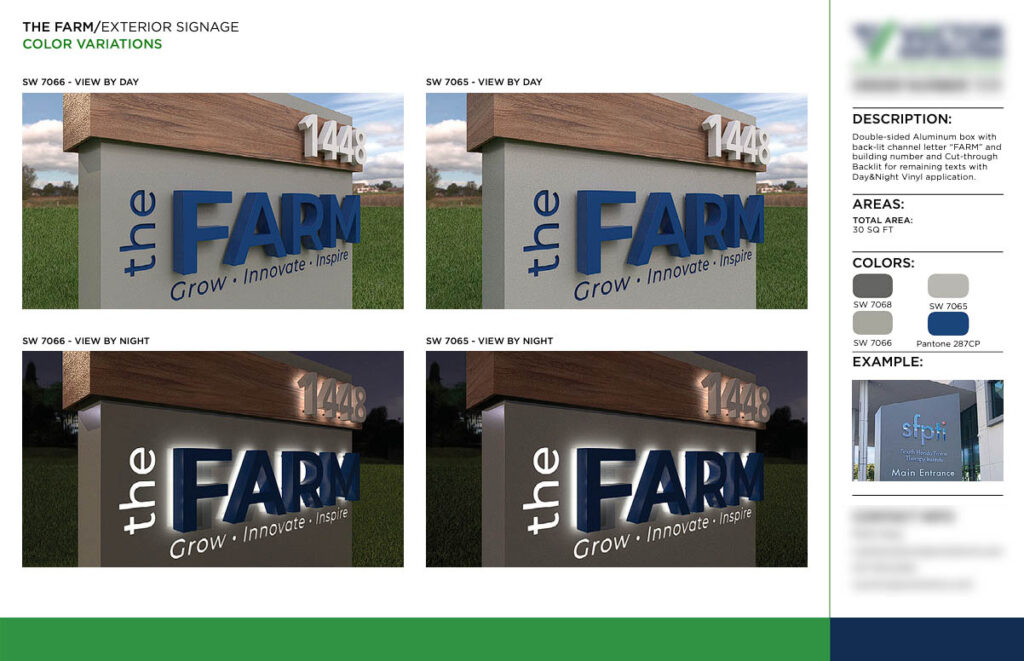
What Is Brand Signage Implementation?
Brand signage implementation means translating brand standards into physical signage across locations, while maintaining consistency, compliance, and functionality.
This often includes identity signage such as:
- Storefront signage
- Monument and pylon signs
- Directional signage
- Interior branding
- Window graphics
At a larger scale, however, brand signage implementation may also extend to:
- Branded environmental graphics
- Branded wayfinding and ADA systems
- Parking signage
- Digital displays
- Other customer-facing visual touchpoints
It’s important to recognize that brand signage implementation extends far beyond designing signs. The true objective is to create environments that are unmistakably branded and instantly recognizable—even as physical conditions and site-specific realities change from one location to the next.
A signage package that performs perfectly at one site may require adjustments elsewhere due to:
- Architectural limitations
- Landlord requirements
- Local sign ordinances
- Visibility conditions
- Permitting restrictions
Without the right level of adaptation, brand consistency can begin to erode as guidelines are applied across different environments.
This is precisely where many multi-location signage programs become more complex than anticipated. While strong brand guidelines are essential, they alone rarely guarantee consistent execution in the field.
In the next section, we will explore why maintaining signage consistency at scale becomes significantly more challenging and why even well-defined brand standards can struggle in real-world implementation.
The Design Extension for National Signage Programs
Turn complex brand guidelines into scalable real-world structures.
We partner with National Account and Program Managers to transform brand standards into permit-approved, fabrication-ready files. Maximize your project efficiency and margins while we handle the technical design complexity.
Why Brand Guidelines Alone Are Not Enough
As mentioned earlier, multi-location signage programs face a wide range of challenges, including physical site conditions and regulatory constraints, as well as permitting and installation realities.
Each location comes with different circumstances, and coordinating across multiple stakeholders often creates significant friction when trying to keep signage on brand, on budget, and on schedule.
Even with highly detailed brand guidelines in place, translating a signage prototype into a consistent real-world experience across multiple locations remains difficult.
There are several reasons why:
- Real-world implementation often requires adaptation
- Building conditions and local regulations can limit signage specifications
- Different vendors, fabrication capabilities, and technical limitations can make consistency harder to maintain
As a result, brand guidelines alone are rarely enough once a signage program begins; navigating the realities of production, permitting, fabrication, and installation is necessary.
At this stage, the challenge shifts from simply creating replicable standards to safeguarding brand consistency while adapting to on-the-ground realities—without losing control of execution.
This equilibrium is what differentiates robust signage programs from those that struggle with inconsistency and fragmentation.
When that balance breaks down, the consequences often extend beyond visual inconsistency. Budget overruns, delayed timelines, fragmented brand presentation, and loss of program control can quietly begin to surface, especially as the number of locations grows.
For this reason, maintaining brand signage consistency at scale is undeniably challenging, driven by several underlying factors.
| Also Read: Why Brand Signage Consistency Breaks Despite Strong Brand Standards |
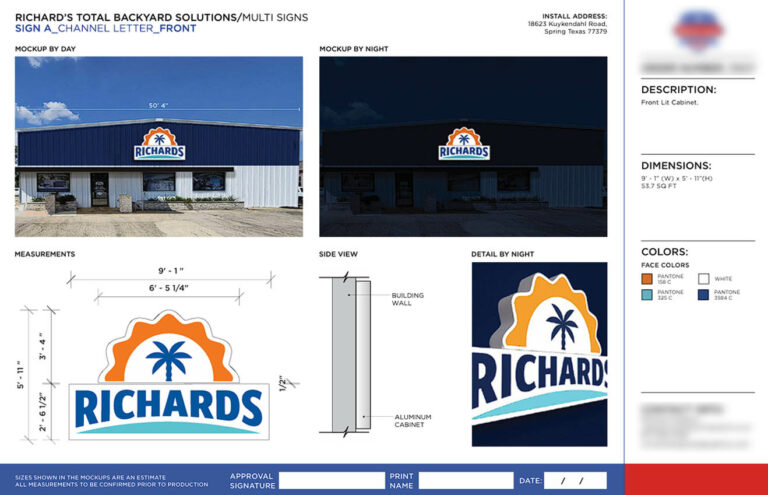
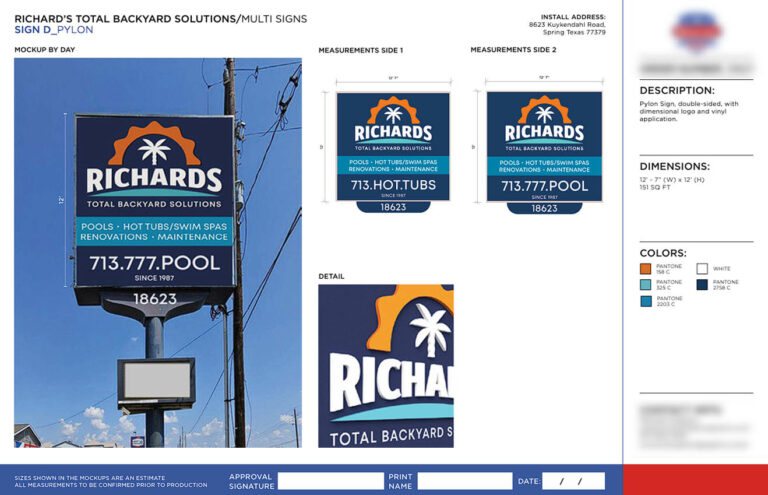
How Multi-Location Brands Maintain Signage Consistency Across Every Site
As mentioned earlier, signage implementation is the process of translating a brand system into the real world.
This goes far beyond cosmetic updates such as replacing an outdated logo across a handful of storefronts.
At its core, brand signage implementation is a comprehensive process of translating a brand system into physical signage across multiple locations, ensuring consistency, compliance, and buildability.
To execute this successfully at scale, companies and all stakeholders must understand the key stages that shape a strong signage program.
Without a structured process, even well-developed brand standards can begin to break down once they encounter the realities of different sites, regulations, vendors, and installation conditions.
That’s why maintaining signage consistency across multiple locations demands more than strong design—it requires a system intentionally built to scale, adapt, and perform in the real world.
Below are the eight essential stages we consider most critical for maintaining consistency in a multi-location signage program:
STEP 1: Portfolio-Wide Audits & Site Surveys
The first and arguably most critical step before launching any brand signage implementation program is conducting portfolio-wide audits and site surveys across all locations.
Before a brand begins refreshing its identity, scaling a rollout, or defining scalable signage standards, it must first understand the real-world conditions of its existing environment.
Without this foundation, even the strongest signage standards risk breaking down during implementation.
Below are the most essential components of this first stage.
1. Portfolio-Wide Audits: Understanding the Reality Across the Entire Network
A portfolio-wide signage audit involves conducting a structured inventory of all existing signage across a brand’s network, including both exterior and interior environments.
The goal is not simply to count the number of signs at each location.
It is to develop a clear understanding of how signage currently performs across the portfolio and identify where inconsistencies, risks, or opportunities already exist.
This typically includes evaluating:
- Signage Types: Understanding what signage currently exists across the network, including storefront signage, monument signs, wayfinding systems, safety signage, digital displays, and other branded touchpoints.
- Physical Condition: Assessing whether signage remains functional and visually effective, including signs that may be faded, damaged, cracked, misaligned, deteriorated, or difficult to read.
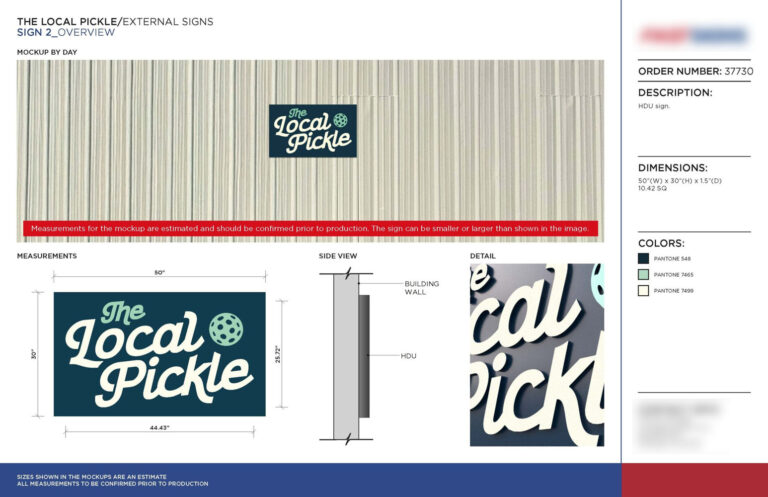
- Size and Proportion: Documenting logo scale, letter height, panel dimensions, and how signage proportions relate to each building façade.
- Placement and Visibility: Evaluating where signage is positioned, how visible it is from key viewing angles, and whether sightlines are obstructed by trees, poles, neighboring structures, or other visual barriers.
- Brand and Regulatory Compliance: Reviewing whether signage still aligns with current brand guidelines, including logo use, color accuracy, placement standards, safety requirements, and accessibility regulations.
This process falls within signage auditing and compliance, with the objective of creating a single source of truth for every site.
A well-structured audit typically captures:
- Photographs of every sign: Including key street-facing or mall corridor views, along with detailed images of visible issues such as peeling letters, faded colors, misalignment, or blocked visibility
- Panel dimensions and positioning: Including façade relationships, floor clearances, and spacing between architectural elements when relevant
- Physical condition, functionality, and cleanliness: Helping determine whether signage should be retained, repaired, or replaced
- Additional observations: Such as whether signage still aligns with the updated brand identity or complies with local regulations
In a mature signage program, this information is documented through standardized location-by-location and sign-by-sign templates, creating a reliable and centralized database.
For example, a brand should be able to quickly understand: at Location A, this sign type exists; its dimensions are; its current condition is; the supporting images are; and the recommended next steps are.
Ideally, this information is stored within a cloud-based platform, allowing teams across regions to access consistent, up-to-date information while maintaining centralized control.
Viewed through a strategic lens, a portfolio-wide audit is far more than an inventory exercise. It creates a clear operational baseline, transforming a fragmented signage network into a foundation for successful rollout or rebrand initiatives.
2. Site Surveys: Translating Standards Into Site-Specific Reality
While portfolio-wide audits answer the question, “What already exists?”, site surveys answer a different and equally important question:
“What is realistically possible and appropriate for this specific location?”
A physical site survey is conducted to gather technical information and contextual realities that cannot be fully understood through drawings, site plans, or Google Maps alone.
Common areas evaluated during site surveys include:
- Façade Dimensions and Installation Zones: Measuring available signage areas, clearances, and proximity to architectural elements such as windows, doors, canopies, and columns to determine safe and effective sign proportions.
- Surface Conditions and Material Types: Understanding whether installation surfaces are brick, concrete, glass, metal, or other materials to determine appropriate mounting methods and hardware requirements.
- Electrical Access and Power Requirements: Reviewing wiring access, power availability, and any required electrical upgrades, particularly for illuminated signage systems.
- Visibility Obstacles and Installation Access: Identifying trees, utility poles, competing signage, cable obstructions, or equipment access limitations that may affect visibility or installation feasibility.
- Local Requirements and Existing Conditions: Document signage that must be removed, identify potential conflicts with neighboring signage, and note visible zoning or regulatory considerations specific to the site.
It is important to recognize that architectural drawings and early planning documents do not always reflect field conditions, especially in older buildings or leased properties that have undergone multiple renovations.
Because of this, site survey data serves as the foundation for determining the most appropriate sign type, scale, and placement for each location.
In practical terms, this stage can be summarized in two ways:
- Portfolio-wide audits: Provide a high-level view of the network, helping brands understand consistency gaps and portfolio-wide conditions.
- Site surveys: Go deeper at the site level, ensuring each site has enough technical detail to translate brand standards into buildable, functional, and compliant signage solutions.
We recommend leveraging digital platforms like SignScope.pro to simplify and standardize this process. By capturing portfolio-wide audits and site surveys consistently from the outset, organizations create a reliable foundation for high-quality, effective brand signage programs.
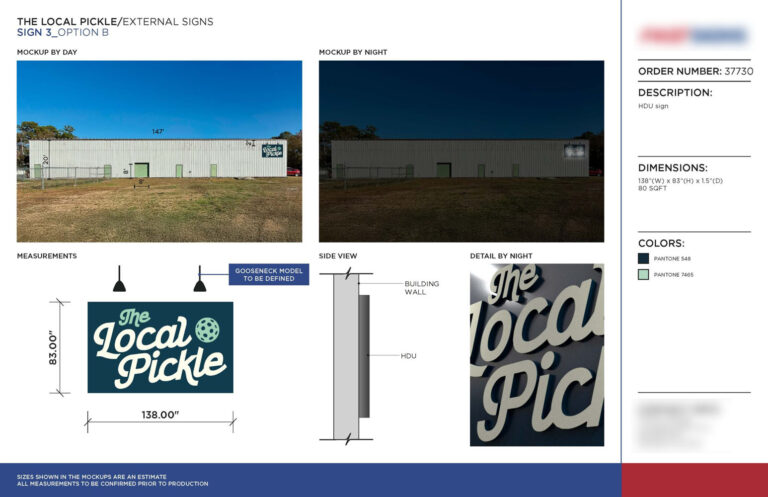
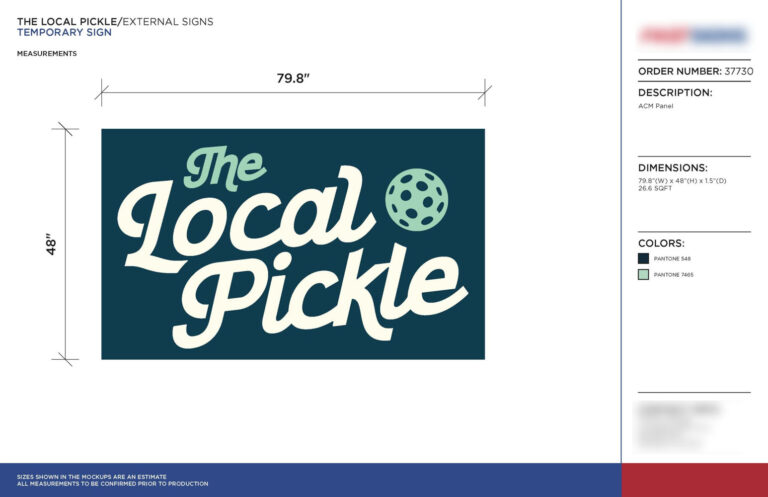
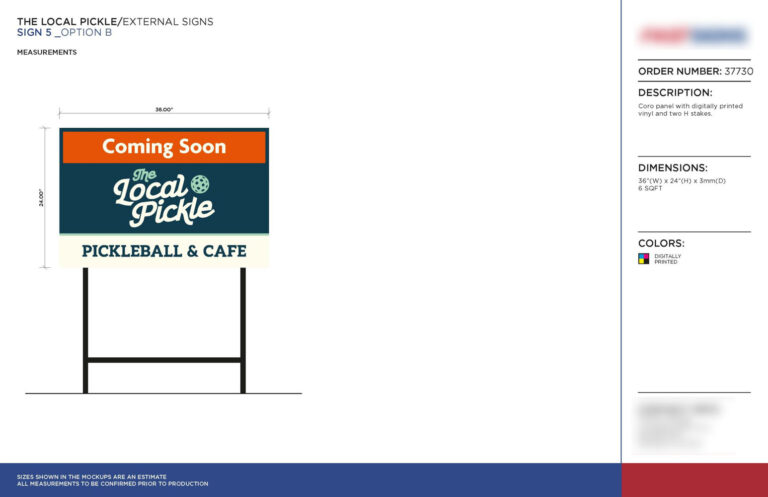
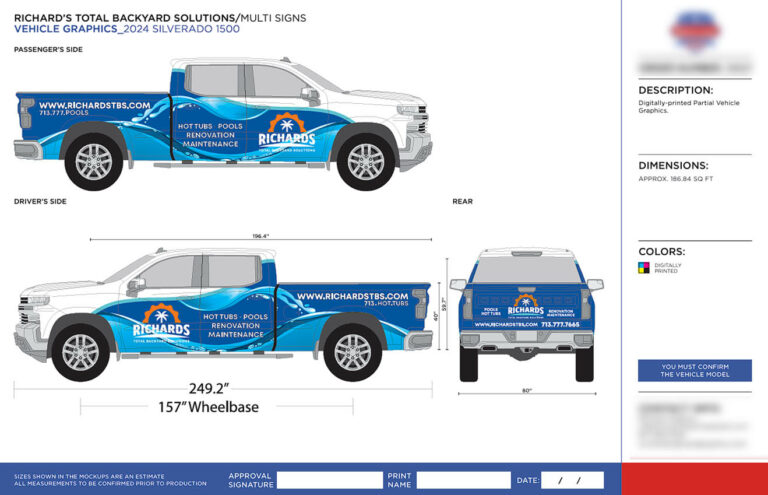
STEP 2: Define Scalable Signage Standards
The second critical step in maintaining brand signage consistency across multiple locations is defining scalable signage standards.
The goal is to create a signage system that can adapt to different building types, cities, and regulatory environments without losing brand identity.
This becomes especially important because success at a flagship or prototype location does not automatically translate into success across an entire network.
A prototype store often exists under relatively favorable conditions: ideal visibility, accommodating architecture, fewer restrictions, and cleaner implementation variables. Under those circumstances, achieving the intended design outcome is far more realistic.
The real challenge begins when a brand scales to dozens or hundreds of locations. At this volume, companies inevitably hit the Four Realities of Variability, which serve as the core drivers that break signage consistency at scale:
- Physical variability
- Regulatory variability
- Production variability
- Human and process variability
A signage system designed for one ideal scenario rarely survives in the real world without adjustment.
Put simply, effective implementation does not start with a single “perfect” sign design, but with scalable standards built for real-world challenges.
In multi-location environments, this typically means defining several key components.
1. Sign Family Systems
Brands should establish a fully structured sign family system, aligned with the broader Anatomy of a Complex Signage Environment.
Rather than redesigning signage from scratch for every site, sign families allow brands to deploy configurations that flex across small, medium, and large locations while still maintaining a recognizable identity.
The objective is not rigid duplication, but controlled adaptability.
2. Approved Material Palette
A scalable signage program should define a carefully approved material palette, including:
- Acrylic types
- Aluminum specifications
- Finishing methods
- Illumination systems
Just as importantly, brands should establish approved alternatives for different operating conditions, such as:
- Indoor vs. outdoor environments
- Coastal vs. inland climates
- High-exposure vs. lower-impact locations
With an approved material framework in place, regional vendors can adapt to local sourcing realities without compromising the overall brand look and feel.
3. Illumination Standards
Brands should clearly define illumination expectations, including whether signage is:
- Front-lit
- Halo-lit
- Push-through illuminated
- Non-illuminated
Standards should also establish acceptable ranges for brightness levels and color temperature.
This helps preserve a consistent visual character, even when adjustments are required due to local regulations or environmental conditions.
4. Dimensional Logic
Scalable signage standards should go beyond fixed dimensions.
Instead of relying solely on static sizes, brands should define dimensional logic that can adapt to different façade conditions.
This may include:
- Logo-to-façade proportion guidelines
- Minimum letter heights based on viewing distance
- Approved size ranges for different location categories
With dimensional logic in place, teams can scale signage up or down in a controlled way while maintaining readability, proportion, and visual balance.
5. Clarity and Visual Hierarchy
Signage standards should also define how information is visually prioritized.
This includes guidance around:
- Approved typography
- Relative sizing between the brand name, descriptors, and secondary messaging
- How hierarchy shifts between large-format and smaller-format applications
These decisions significantly influence how quickly signage can be understood, how effectively it adapts to local language contexts, and whether the reading experience remains consistent from site to site.
We explored this topic further in our article, Design Principles for Effective Signage That Drive Business Impact.
6. Placement Principles
Strategic placement plays a foundational role in signage performance.
No matter how well-designed a sign may be, poor placement can dramatically reduce visibility, readability, and overall effectiveness, ultimately wasting valuable investment.
For this reason, placement principles should be clearly defined to guide decision-making when ideal positioning is not possible.
This ensures that adaptations still follow recognizable patterns rather than becoming inconsistent, location-by-location improvisations.
Placement standards typically govern elements such as:
- Baseline alignment
- Setbacks from façade edges
- Relationships to doors, windows, and architectural features
- Alternative placement logic for non-standard façades
These six components form the foundation of scalable signage standards because nearly every multi-location program will eventually face conditions that force modification.
At some point, every brand encounters the same question:
“If a location forces us to change the size, placement, or even type of signage, will it still feel like our brand?”
In the reality of multi-location signage, nearly every site eventually requires adaptation.
The difference is that robust standards keep adaptations within a controlled visual system, preventing disconnected improvisations from undermining brand integrity across locations.
STEP 3: Define Adaptation Rules Before Rollout
The third stage is one of the most important factors in determining whether signage can deliver a consistent brand experience across multiple locations, even when faced with physical constraints, site limitations, and zoning realities.
At this point, a reasonable question often emerges:
If no two locations are ever truly the same, how can multi-location brands maintain consistency?
And if brands cannot realistically enforce identical execution across every site due to the Reality of Variability, is it still possible to preserve a consistent brand signage experience?
The answer is yes, but only when adaptation is planned intentionally.
The reality is this:
When brands insist on identical execution across all sites, field teams often become frustrated because each location presents different challenges, constraints, and practical limitations.
On the other hand, when local teams are given unlimited freedom to adjust signage however they see fit, visual consistency breaks down surprisingly quickly.
The most effective solution is to define adaptation rules before rollout begins.
These rules establish a framework for controlled flexibility, helping teams adapt intelligently while protecting brand consistency.
In practice, this means defining two critical categories:
1. Define What Is Negotiable and Flexible
For adaptable elements, brands should establish approved ranges, options, and substitutions rather than rigid one-size-fits-all rules. This may include:
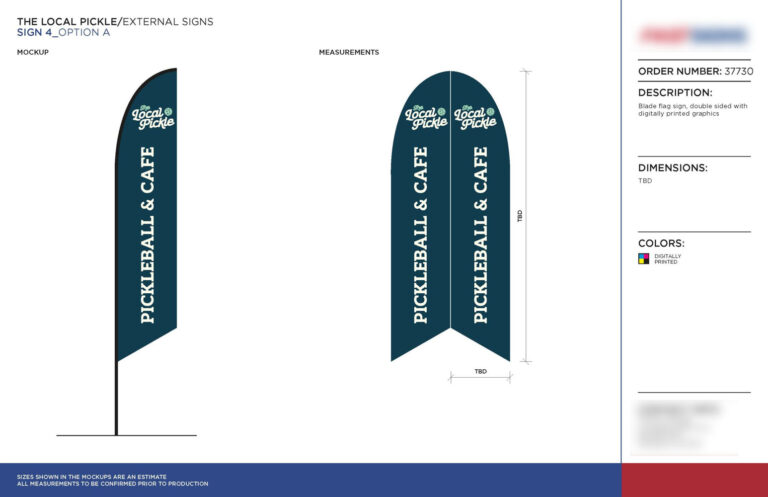
- Approved Size Ranges: Instead of relying on one fixed dimension, brands can define approved ranges for letter height and logo scale based on façade type, site category, and viewing distance. This helps maintain visibility without distorting proportions.
- Alternate Placement Zones: Brands should predefine approved placement zones for different façade conditions. For example, signage may be permitted to align above entry doors in one environment or center within a designated architectural panel in another, depending on site conditions.
- Proportional Scaling Rules: Guidelines should define how signage may scale up or down while preserving logo proportions, tagline relationships, spacing, and margin systems so smaller and larger applications still feel visually connected.
- Approved Material Substitutions: Alternative materials should be identified in advance for situations where primary materials are unavailable or incompatible with local climate, regulations, or sourcing realities, without dramatically changing the overall brand appearance.
2. Define What Is Non-Negotiable
At the same time, brands must clearly identify the elements that should remain protected, even when adaptation becomes necessary. These non-negotiable standards may include:
- Logo Hierarchy: The order and dominance of visual elements should remain consistent. For example, the primary logo should always retain visual priority, while supporting text, local messaging, or category descriptors should never overpower the core brand identity.
- Illumination Style: The character of illumination should remain recognizable even if brightness levels or technical specifications are adjusted for regulatory reasons. Whether the brand uses front-lit, halo-lit, warm illumination, or a more contemporary lighting feel, the visual character should stay consistent.
- Typography: Typeface families, weights, and usage standards should remain fixed so typography continues to feel unmistakably part of the brand system rather than a localized redesign. For example, the brand name may always use one typeface while supporting messaging follows another approved style.
- Brand Recognition Cues: Core identity signals such as signature colors, distinctive forms, framing devices, or recognizable patterns should remain present so customers can quickly identify the brand regardless of location.
With this type of framework in place, implementation teams and regional vendors gain room to adapt signage intelligently rather than improvising from scratch at every site.
They understand which dimensions can flex, which placement options are approved, and which materials may be substituted while staying within brand expectations.
This reflects an important principle of successful multi-location signage programs:
Consistency does not mean 100% duplication. It means controlled flexibility.
In other words, signage systems should be adaptable enough to respond to local realities, yet structured enough to ensure the brand still feels unmistakably the same to customers wherever they encounter it.
STEP 4: Standardize Documentation Systems
Earlier, we discussed scalable signage standards and adaptation rules as critical frameworks for maintaining visual consistency while allowing controlled flexibility across different site conditions.
At this stage, brands must also establish documentation system standards to minimize communication gaps and maintain version control throughout the signage implementation process.
In multi-location signage programs, inconsistency does not always originate from design decisions or material differences.
Often, inconsistency begins when teams work from different information.
Without a well-structured documentation system, stakeholders naturally create their own workflows, and small information gaps quickly turn into implementation problems.
When documentation standards are absent, common scenarios begin to emerge:
- Internal teams, vendors, and local partners access files through disconnected channels such as email threads, shared folders, or messaging platforms. Over time, this creates opportunities for miscommunication because there is no single source of truth.
- One team may still be working from a locally saved, outdated PDF. Another may have received a revised version by email but failed to distribute it properly. Others may review drawings without fully understanding documented revisions or approved exceptions.
- At the same time, file interpretation begins to drift. One vendor may assume minor design adjustments are acceptable. Another may interpret the same drawing as completely fixed and non-negotiable.
This is where communication gaps quietly begin to undermine brand signage standards, often unintentionally.
Most inconsistencies are not the result of negligence. They happen because standards were never clearly defined, documented, or centralized in a way that supports execution at scale.
The good news is that these risks can be dramatically reduced with a structured documentation system that provides clarity, accountability, and alignment for all stakeholders.
In practice, this often includes several critical components:
1. Sign Identification
Every sign type should have a clear and standardized naming convention and identification code, similar to how many universities, healthcare systems, and large institutions structure their signage manuals.
This ensures everyone is referring to the same sign type.
Instead of vague references like “the sign near the elevator,” teams can use consistent identifiers to eliminate ambiguity.
2. Revision Tracking
Every design package, drawing set, and specification document should follow a clearly defined versioning system.
Most importantly, there should only be one approved source of truth for production.
This includes:
- Consistent file naming conventions
- Change logs documenting revisions
- Controlled document access
With strong revision tracking in place, field vendors build from approved versions rather than whatever file happens to exist in an inbox.
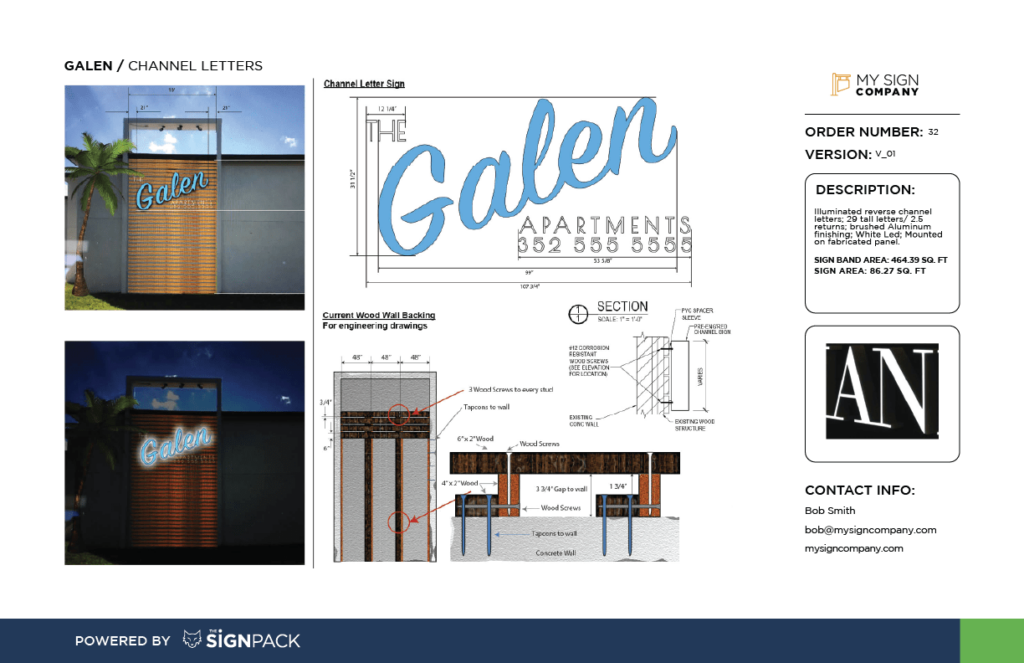
3. Site-Specific Documentation Packages
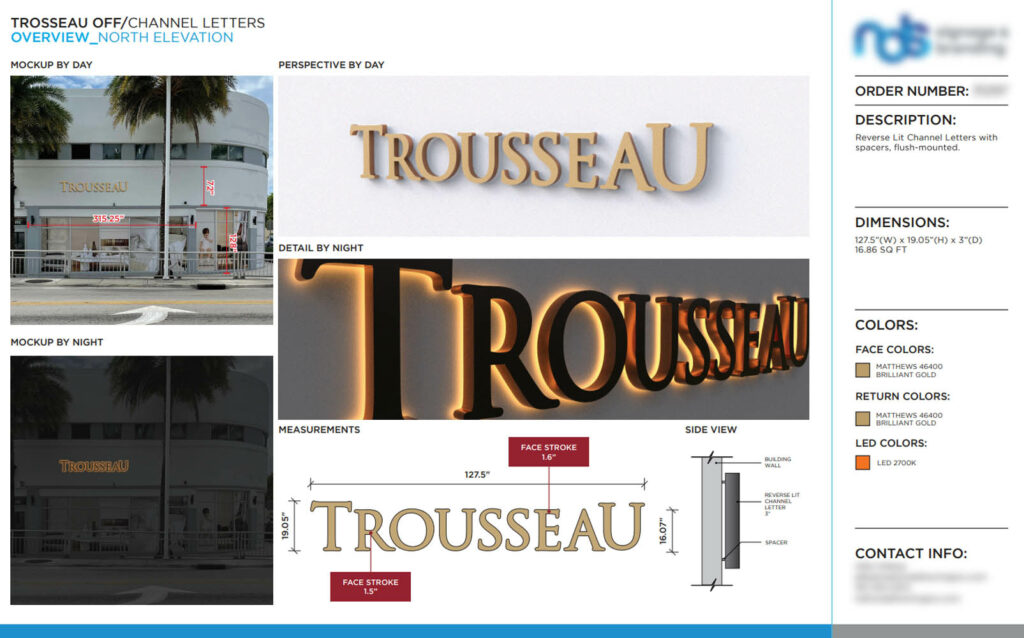
Each location should receive an official site-specific signage package that clearly defines:
- Which sign types apply to that location
- Final approved dimensions
- Any approved local adaptations or exceptions
These packages clearly distinguish between global brand standards and site-specific modifications, reducing the likelihood of unauthorized changes during implementation.
As a result, vendors and field teams spend less time improvising and more time executing within approved parameters.
Ultimately, the purpose of a documentation system is straightforward:
Reduce inconsistency, ambiguity, and communication gaps before they become expensive execution problems.
When sign naming is standardized, revisions are clearly documented, and site-specific adaptations are formally approved, the room for interpretation shrinks dramatically.
We explore this challenge further in our article, 7+ Common Challenges in Multi-Location Signage Programs and How to Overcome Them.
STEP 5: Anticipate Permitting Early
Anticipating permitting requirements early in the process can significantly improve the success and predictability of brand signage implementation.
Based on our experience, the most effective way to navigate this stage is through two proactive approaches.
1. Research Sign Codes Early and Plan for Adaptation
Brand teams should begin researching local sign codes, landlord requirements, and permitting constraints during the early planning phase, rather than waiting until rollout is already underway.
The objective is not simply to understand regulations, but to anticipate how regulatory variability may impact signage execution across different markets.
When high-restriction jurisdictions are identified early, teams can proactively plan acceptable signage adaptations rather than react only after a city reviewer or municipality rejects the permit package.
In practice, this means:
- Developing high-restriction design variants for jurisdictions with tighter controls, alongside standard versions for markets with more flexible regulations
- Treating permitting parameters such as sign size, illumination, placement, and sign type as part of the original design input, rather than making last-minute exceptions on a site-by-site basis
This proactive approach helps brands maintain consistency, reduces costly redesigns, and keeps implementation on schedule.
2. Map Permitting Context in Detail
Before launching a large-scale rollout, brands should develop a detailed understanding of the permitting landscape they will navigate.
This includes identifying:
- Which cities, municipalities, or councils impose the strictest limitations on sign size, height, or permitted sign types
- Whether illumination requirements vary between commercial and residential zones, including brightness restrictions, operating-hour limitations, or additional digital signage requirements
- Whether monument signs or pylons are permitted universally, or whether alternate sign configurations are required for more restrictive zoning environments
- Whether landlords, shopping centers, or property management groups require separate approval processes with standards that may be stricter than the municipal code itself
For example, some landlords may only allow one primary sign per façade, impose maximum letter heights, or prohibit certain lighting effects even when city regulations technically permit them.
When brands adopt these two approaches, local restrictions become easier to manage because teams already have a structured response framework in place.
Instead of scrambling to redesign signage after a permit rejection, teams can respond with pre-approved alternatives aligned with brand priorities.
The outcome is meaningful:
Brands deliver a more consistent customer-facing experience, even as technical details flex to meet local regulations. Rollouts are more likely to stay on schedule, within budget, and maintain quality control at every step.
By contrast, placing permitting at the end of the process creates unnecessary risk.
Because jurisdictions interpret signage differently, late-stage permitting discoveries often force teams to revisit designs that were previously standardized.
Over time, these reactive adjustments can push each location in a slightly different direction, gradually eroding the consistency the brand worked hard to build in the first place.
| Also Read: How to Fix the Sign Permit Drawing Bottleneck and Keep Projects Moving Forward |
STEP 6: Align Fabrication Expectations
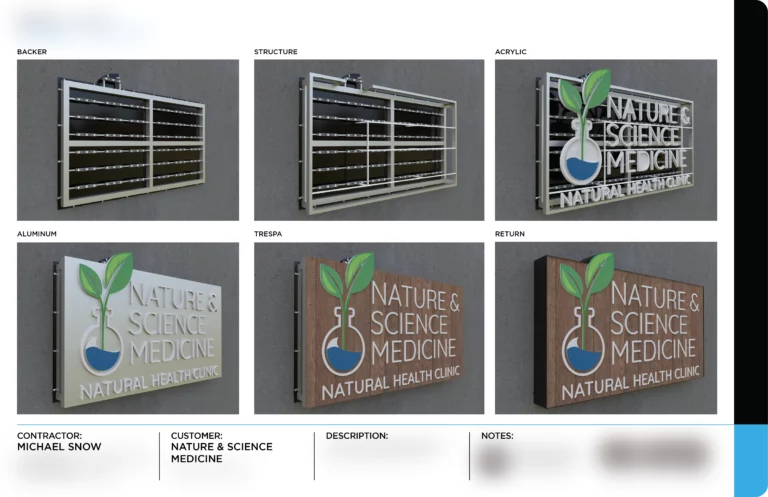
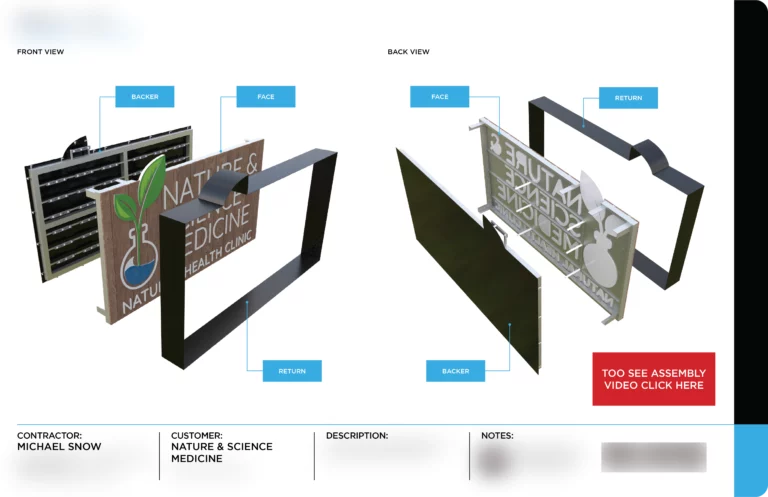
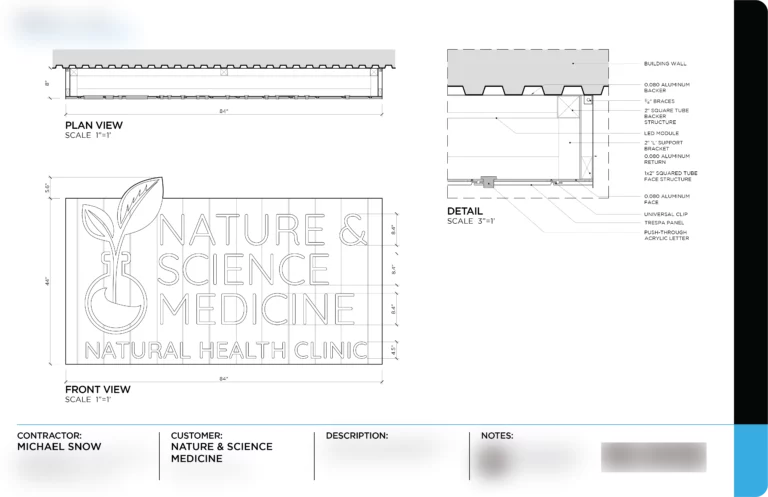
At this stage, the focus of consistency shifts from what is designed to how it is consistently built, even when fabrication happens across different vendors, regions, or production facilities.
This step becomes critically important because even the strongest signage system can begin to drift once it enters production, especially when brands work with multiple regional fabricators, local vendors, or implementation partners across different markets.
Brands that successfully maintain signage consistency rarely stop at visual guidelines alone.
They also standardize the technical variables that directly influence how signage looks and performs in the real world.
Below are several critical areas that should be clearly defined to improve consistency across fabrication outcomes.
1. Approved Materials
Brands should establish a list of approved core materials, including specifications for grade, thickness, and preferred suppliers.
This may include:
- Acrylic types
- Aluminum specifications
- Composite materials
- Diffusers
- LED modules
Clear material standards reduce the risk of vendors substituting products that appear “close enough” but ultimately introduce noticeable differences in color, texture, durability, or illumination quality.
2. Finish Expectations
Finish standards should define:
- Surface finish type (gloss, semi-gloss, matte)
- Surface quality expectations
- Color standards and acceptable tolerances
This should also include references to approved color systems such as Pantone or RAL, along with clearly defined tolerance thresholds for acceptable variation.
Without clear finish expectations, signage produced by different vendors can gradually drift in tone, finish, and perceived quality—eroding the unified brand experience.
3. Illumination Standards
Brands should define consistent LED color temperature and brightness expectations to preserve a recognizable visual character across locations.
For example:
- Neutral white illumination (around 4000K)
- Cooler white illumination (around 6500K)
Establishing these standards helps prevent visual inconsistencies caused by shifts in lighting temperature or brightness.
Without alignment, one location may feel sleek and contemporary while another unintentionally creates a warmer, more nostalgic appearance, even when both technically follow the same signage concept.
4. Mounting Standards
Mounting specifications should also be standardized, including:
- Installation methods
- Sign depth from the wall surface
- Bracket and anchoring systems
- Relative positioning to the façade
Mounting differences can significantly alter how signage is perceived.
Even subtle changes in projection depth or installation quality can affect shadow lines, light distribution, and the overall sense of craftsmanship.
Two signs built from identical artwork may feel dramatically different if one appears cleanly integrated with the façade, while the other looks loosely mounted or visually disconnected.
When fabrication expectations are clearly aligned in this way, signage need not be 100% identical down to the millimeter to feel consistent.
Instead, the brand experience remains visually recognizable and cohesive, even when regional fabrication realities require controlled variation.
STEP 7: Coordinate Sign Logistics With Rollout Timelines
Once brand signage fabrication is complete, logistics management becomes one of the most critical stages in the implementation process.
While fabrication focuses on building the signage itself, sign logistics focuses on ensuring signage arrives at the right place, at the right time, and in installation-ready condition.
For multi-location signage programs, this stage plays a far larger role than simply moving products from point A to point B.
Below are several critical considerations for managing logistics in a multi-location brand signage implementation program.
1. Ensure Sign Logistics Follow the Right Sequence and Timing
In multi-location signage programs, logistics is not simply about shipping signage from the factory to the store.
It is a highly coordinated process that manages the physical movement of signage through every stage, including:
- Packaging
- Transportation
- Temporary storage
- Delivery to the site
Most importantly, signage logistics must be synchronized with the broader fit-out and construction schedule.
Interior and exterior signage should arrive and be installed during the appropriate stage of site preparation.
If signage arrives too early, it risks damage while construction or finishing work is still underway.
If it arrives too late, locations may open without their full visual identity in place.
When stores begin operating before signage is installed, the customer experience often feels incomplete and disconnected from the intended brand impression.
2. Synchronize Logistics With Rollout Rhythm
Sign logistics requires specialized coordination that not every logistics vendor can handle.
This process is highly dependent on broader rollout milestones, including:
- Renovation schedules
- Construction phases
- Store opening timelines
If signage arrives too early, brands may incur additional warehousing costs while increasing the risk of damage during storage.
If it arrives too late, stores may launch without complete visual branding, or construction schedules may stall while teams wait for final signage installation.
Synchronizing logistics with rollout timelines helps brands deliver a stronger grand opening experience and ensures signage contributes to the intended customer perception from day one.
It is also important to recognize that retail signage installation is often scheduled outside operating hours, including nights, holidays, or other low-traffic periods, to minimize disruption to customers.
This means delivery windows must be timed carefully to align with installation access.
3. Understand the Challenges of Multi-Location Signage Logistics
Transporting signage safely across multiple locations requires specialized handling and experienced logistics partners.
Unlike standard shipments, signage often involves unique physical characteristics, including:
- Oversized dimensions
- Irregular shapes
- High-value units
- Fragile components such as acrylic, LED modules, and power supplies
- Products that cannot be treated like conventional freight
As a result, brands benefit significantly from working with logistics partners who understand how to properly handle large-format, fragile signage systems.
Strong logistics coordination helps reduce the risk of damage during transportation, storage, and site delivery while improving on-time readiness for installation.
4. Establish a Master Timeline for Better Coordination
Given how critical logistics is to timing, quality, and execution, we strongly recommend creating a master rollout timeline that maps key deployment milestones, including:
- When site surveys are completed
- When designs are finalized
- When fabrication begins and ends
- When shipping windows open
- When the installation is scheduled
A well-structured master timeline helps teams:
- Avoid bottlenecks and costly rework
- Stay aligned with rollout pacing and construction schedules
- Minimize disruption to store operations
- Better control costs and implementation risk across multiple locations
Poor logistics management is often one of the most overlooked sources of delays, additional costs, and inconsistent customer experiences.
The key takeaway is this:
Maintaining consistency across multiple locations is not only about designing and fabricating the right signage. It is also about ensuring the right signage arrives at the right place, at the right time, ready to be installed as planned.
While this seventh stage marks the end of signage production for most multi-location programs, it is not the final step.
The next stage is equally important:
Auditing real-world installations to verify that implementation matches the intended brand experience.
STEP 8: Audit Real-World Installations
Inconsistency in a brand signage program rarely manifests as a single dramatic failure.
More often, it emerges quietly through the accumulation of small variations across many locations.
If brands focus only on design and production without evaluating real-world execution, those deviations can continue growing unnoticed.
In other words, once signage is successfully installed, the rollout is not over.
In many ways, this becomes one of the most important stages of the entire process: verifying whether brand standards were actually delivered in the field.
The good news is that post-installation audits do not always need to be complex or expensive.
Even a standardized photo-review process across locations can be highly effective at identifying patterns of inconsistency.
For example, brands can establish fixed photo angles to evaluate visibility, placement consistency, and day-versus-night performance.
Below are several key areas that should be routinely audited as part of any multi-location signage implementation program.
1. Lighting Quality and Accuracy
Brands should verify that all illuminated signage performs consistently in terms of:
- Brightness levels
- LED color temperature
- Illumination uniformity
Audits should also check for:
- Hot spots
- Dark spots
- Uneven illumination
- Panels appear dimmer than those at other locations
It is important to remember that even small differences in wiring, drivers, or LED modules can create noticeable visual shifts between locations.
One store may feel bright, premium, and contemporary, while another appears dull or outdated, even when the design is technically identical.
2. Placement Accuracy and Alignment
Signage should be reviewed to confirm it aligns with approved standards for:
- Baseline positioning
- Margins and spacing
- Installation height
Even shifts of only a few inches can significantly alter visual perception.
A sign may appear misaligned, too close to the ceiling line, visually crowded, or disconnected from the intended architectural relationship, changing how the brand is perceived from a distance.
3. Material Consistency and Quality
Field audits should evaluate whether materials, finishes, and craftsmanship match approved specifications.
This includes checking for:
- Finish consistency
- Color accuracy
- Material texture alignment
- Mounting quality and hardware appearance
Small differences matter.
One location may appear more polished, while another may look noticeably lower in quality due to subtle variations in gloss, material finish, or visible mounting details.
Material audits can also surface early durability concerns, such as:
- Premature fading
- Yellowing acrylic
- Corrosion
- Excessive dirt buildup
- Early material wear
Identifying these issues early helps brands improve future material decisions before problems scale.
4. Visibility Performance
Audits should also evaluate how signage performs in its real-world context.
Questions worth asking include:
- Is the sign easily readable from key vehicle or pedestrian approaches?
- Does visibility change between daytime and nighttime conditions?
- Are there seasonal or environmental visibility issues?
In theory, placement may appear correct on paper.
In reality, signage can become partially blocked by trees, utility poles, neighboring signage, glare from glass surfaces, or other environmental factors that weaken the customer experience.
5. Deviations From Approved Standards
Post-installation audits should actively identify deviations from approved design and fabrication standards, including:
- Incorrect dimensions
- Unauthorized font substitutions
- Logos scaled outside approved ranges
- Additional elements added by local teams or vendors without approval
These inconsistencies often go unnoticed unless someone is intentionally reviewing locations through the lens of brand compliance.
When real-world installation audits are conducted properly, whether through site visits, photography, or video reviews, brands can identify issues early before they spread across the network.
Every documented finding becomes a valuable asset for improving standards, refining vendor briefs, and strengthening future rollout processes.
The earlier deviations are identified, the easier and less expensive they are to correct before they scale across dozens or even hundreds of locations.
Without post-installation review, brands are left assuming that approved designs and specifications automatically translate perfectly from paper into reality.
As a result, the final customer experience may gradually drift further away from the original brand intent.
These are some of the most critical stages we believe help multi-location brands maintain signage consistency across every site.
While additional considerations may vary by project, industry, or operational complexity, the framework presented here captures the foundational elements necessary for launching and sustaining successful signage programs at scale.
| Also Read: How to Manage a Signage Program for Multi-Location Brands Without Losing Control |
Brand Signage Implementation Requires More Than Great Design
Brand signage implementation requires far more than great design or simply replacing outdated logos across a few storefronts.
Many brands assume that having approved brand guidelines, polished mockups, or beautifully executed signage concepts automatically guarantees consistency across locations.
In reality, the opposite is often true.
- The biggest challenges rarely come from design itself. They emerge during implementation.
- A signage concept that looks flawless at a flagship location may be difficult to replicate across an expanding network due to physical constraints, regulatory limitations, fabrication realities, and execution complexity.
- Successful multi-location signage programs require systems that can adapt across different site conditions while still feeling unmistakably part of the same brand.
That said, design remains one of the most critical stages throughout the entire signage implementation lifecycle.
The True Challenge is Designer Shortages
The reality is that experienced signage designers are in extremely short supply.
Professionals who can expertly navigate the entire signage lifecycle—from 2D and 3D design to ADA compliance and wayfinding—are few and far between. Those who possess both creative vision and technical production expertise represent a rare combination in today’s market.
As we discussed in our article, Signage Industry Trends, one contributing factor is the absence of dedicated educational pathways specifically designed to train professionals in signage design.
At the same time, fabrication technology continues to advance rapidly, making production faster, more automated, and increasingly efficient.
Yet despite these improvements, we believe signage production still faces major upstream bottlenecks, including:
- Sign design quality and scalability
- Skill mismatches and knowledge bottlenecks
- Design backlogs, revisions, and rework that slow production timelines
- Team capacity limitations that struggle to flex with changing workloads
- Disconnected workflows between site surveys, design, production, and installation
When these challenges remain unresolved, multi-location signage programs become increasingly difficult to scale effectively.
Instead of operating with predictability and control, companies often find themselves stuck in a continuous cycle of reactive problem-solving just to keep programs moving forward.
The brands that execute consistently at scale are typically not those with the most visually impressive concepts alone. They are the ones that build systems capable of translating design intent into real-world execution, repeatedly and reliably across every location.
Where The Sign Pack Fits in Brand Signage Implementation
In many complex signage programs, companies simply do not have the internal capacity to manage end-to-end signage design and pre-production at scale.
At the same time, experienced signage designers with deep knowledge of production-ready and permit-ready files for multi-location programs remain exceptionally difficult to find.
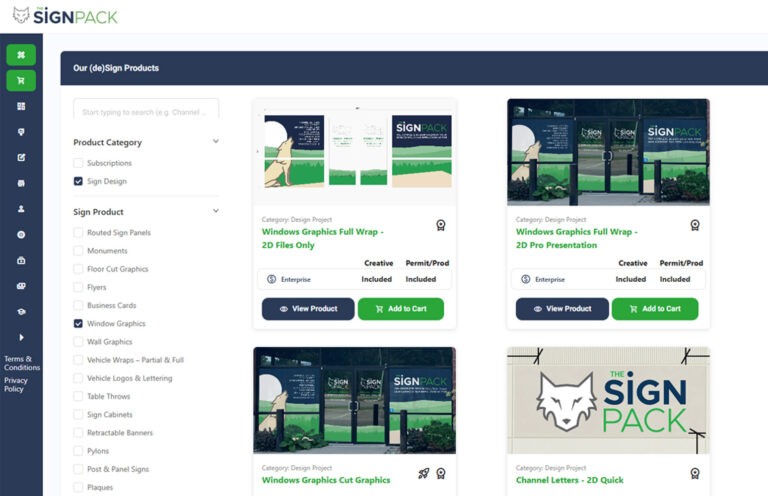
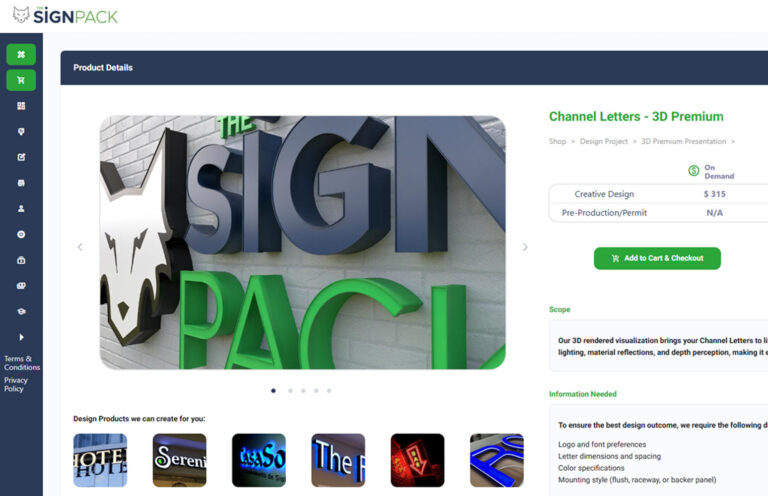
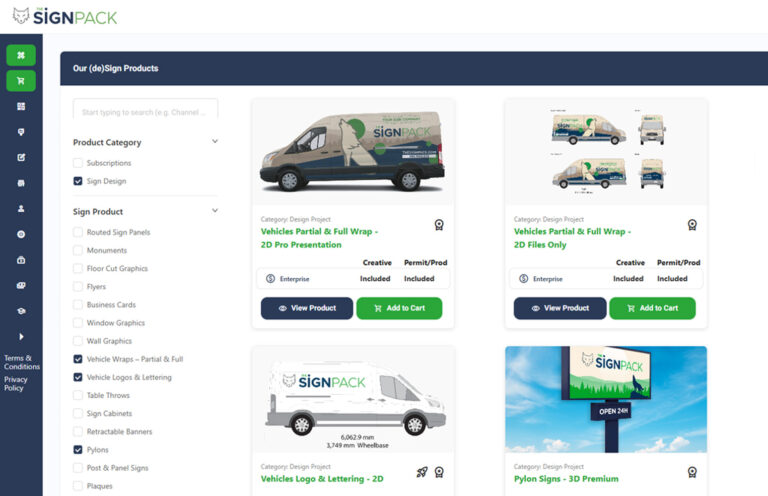
This is where The Sign Pack fills a critical gap, serving as an extended signage design partner for sign companies, branding agencies, and national accounts managing signage programs across multiple locations.
Below are several reasons why companies choose to involve us in brand signage implementation.
1. Extended Design Team for Production-Ready Files
We focus exclusively on signage design and pre-production, not general graphic design.
Our team brings hands-on experience across:
- Prepress and print production
- Engineering-oriented layout development
- Fabrication-aware signage detailing
- National signage program coordination
We approach signage design with production realities in mind from the start.
Material selection, mounting considerations, structural thinking, and fabrication feasibility are integrated into the design process early, rather than becoming last-minute adjustments that create delays and rework.
2. Permit-Focused Sign Drawings
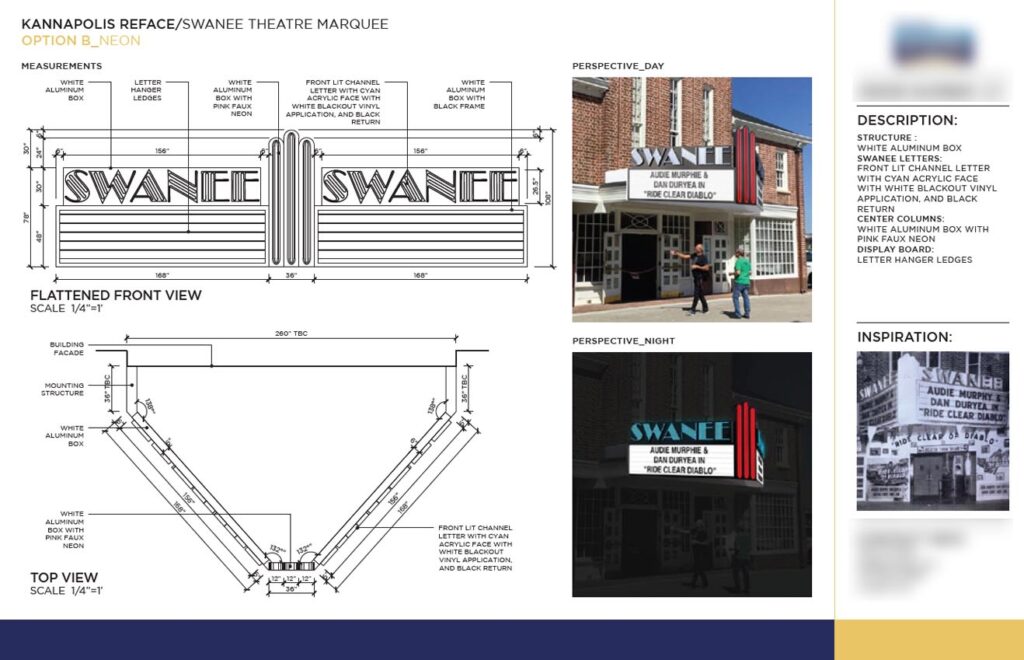
We also prepare permit-oriented signage drawing packages designed to support smoother permitting and fabrication workflows.
Using site data and code-related information provided by your team, we create clear, organized drawing packages structured around the expectations of municipalities, landlords, and reviewers.
Well-prepared sign permit drawings play an important role in keeping signage implementation moving forward while reducing unnecessary resubmissions and installation delays.
While we are not a licensed engineering firm and do not conduct code research, we use specialized tools and structured workflows to organize technical assumptions and supporting information, enabling engineers, fabricators, and permitting stakeholders to move faster and more efficiently.
3. Scalable Capacity for Multi-Site Rollouts
We provide flexible, on-demand design capacity that scales alongside rollout needs.
This allows sign companies, franchise systems, agencies, and national accounts to:
- Absorb multi-site programs without hiring additional full-time designers
- Smooth out peak-and-valley workload fluctuations, allowing internal teams to stay focused on sales, fabrication, and installation
- Maintain more consistent design standards and execution workflows, supported by trackable revision processes and document version control through TSP Platform 3.0
As rollout complexity increases, scalable support becomes less of a convenience and more of an operational advantage.
4. A Dedicated Team for Multi-Location Signage Programs
We also provide a dedicated signage project management team that works across departments to support smoother implementation.
Our team helps ensure signage programs move forward in a way that is:
- Consistent
- On-brand
- Fabrication-conscious
- Better aligned with permitting realities
In practical terms, The Sign Pack functions as an extended design and workflow system, helping brands and signage partners execute complex programs more efficiently, even when the rollout scope is large and market conditions vary significantly from site to site.
If you’re planning a brand signage rollout or navigating the complexities of a multi-location implementation, our team welcomes a conversation to share insights, answer questions, and help you achieve greater consistency and impact with your signage program.
Let’s start a conversation about how to elevate your brand’s signage program for long-term consistency and success.