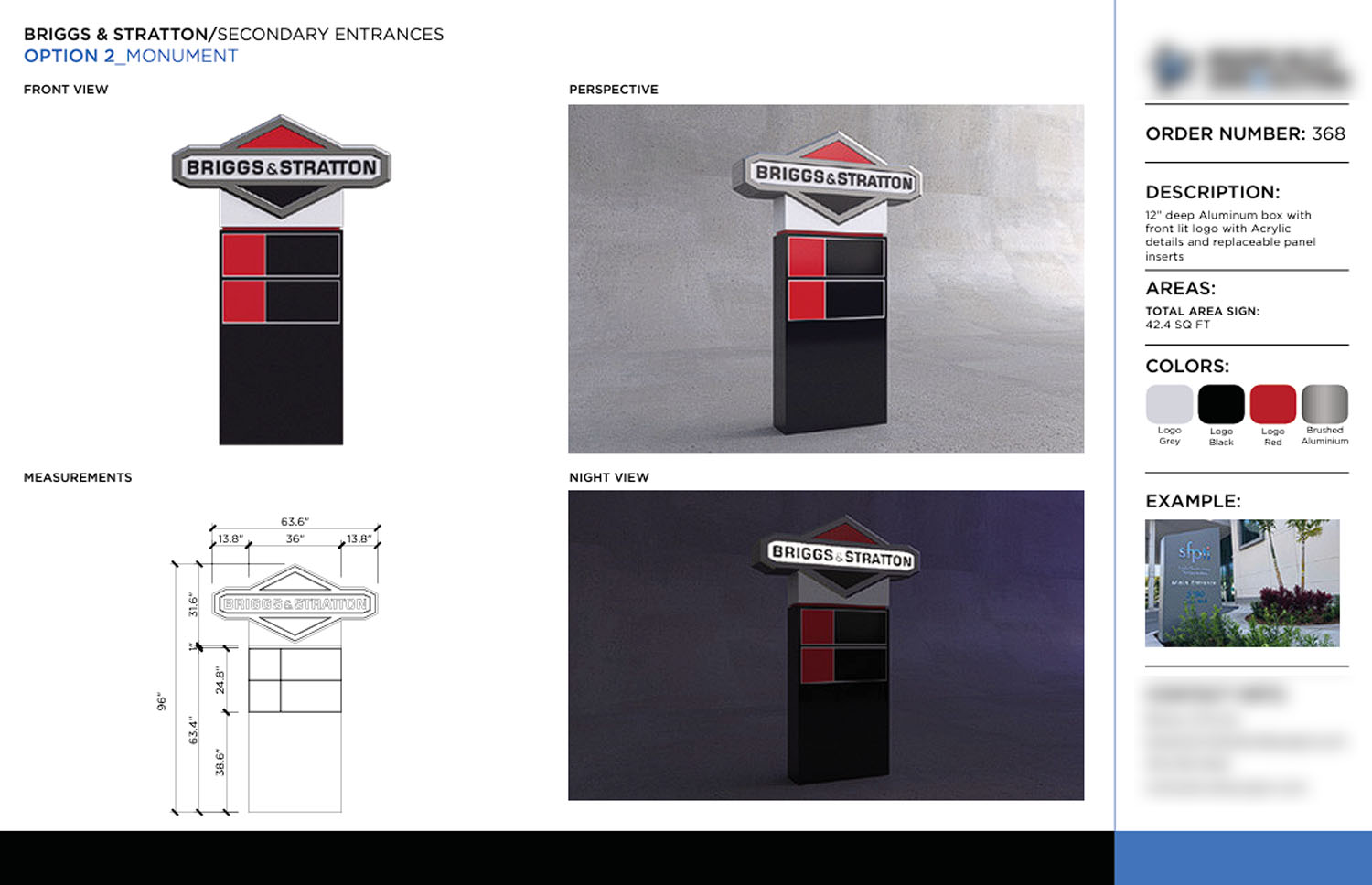
A multi-location signage rollouts often includes a range of sign types: exterior and interior signage, wayfinding systems, branded elements, and operational signs. As your company expands, the complexity grows. Each site brings its own regulations, deadlines, stakeholders, and unique challenges your team must address.
For sign companies, these programs often come with a predictable set of challenges:
- Keeping design consistent across multiple cities
- Dealing with different city codes and landlord requirements
- Coordinating with multiple vendors and trades
- Handling permit processes that change from one jurisdiction to the next.
Without a clear system, inconsistency and delays are nearly inevitable. When processes are missing, problems escalate quickly. This can mean postponed store openings, costly rework, and a brand experience that varies from one location to the next.
This article is part of our ongoing series on How to Manage a Signage Program for Multi-Location Brands. In the previous article, we looked at:
- What a multi-location signage program is and why it is hard to manage
- The key success factors behind effective signage programs for multi-location brands.
This article explores the most common challenges national account teams and sign companies face when managing multi-location signage programs. It also provides practical recommendations to help improve consistency, reduce delays, and keep projects moving efficiently from planning through implementation.
Inconsistent Design Across Multiple Locations
Design quality is at the heart of complex signage projects. Inconsistent design is rarely intentional. It often comes from gaps in coordination or a lack of clear standards for translating the brand into signage. Common signs include:
- Different interpretations of the brand guidelines
- Frameworks and standards that are not clearly defined
- Too many teams, vendors, and stakeholders are involved, each adding their own version of the final outcome
- Small variations in layout, letter size, stroke thickness, and material choices alter the overall look and feel.
It’s a familiar refrain in the industry: “The logo is the same, but in every city, it feels like a different brand.”
It is not unusual to see a storefront in Texas look noticeably different from the same brand in California, even though they are supposed to represent one unified identity.
On the technical side, vendor differences create even more variation, for example:
- Acrylic and polycarbonate behave very differently visually, even when used for the same type of sign
- Neon versus LED lighting, and different mounting methods, can dramatically change the final appearance
- Corporate colors can drift from the headquarters standard because each vendor uses different paint, vinyl, or powder coat suppliers.
Over time, these shifts weaken brand recognition for customers who see the brand in different markets.
How National Accounts and Sign Companies Can Address Design Inconsistencies
To get in front of this, sign companies need true two-way communication with the brand so everyone shares the same understanding of fabrication realities and material limitations.
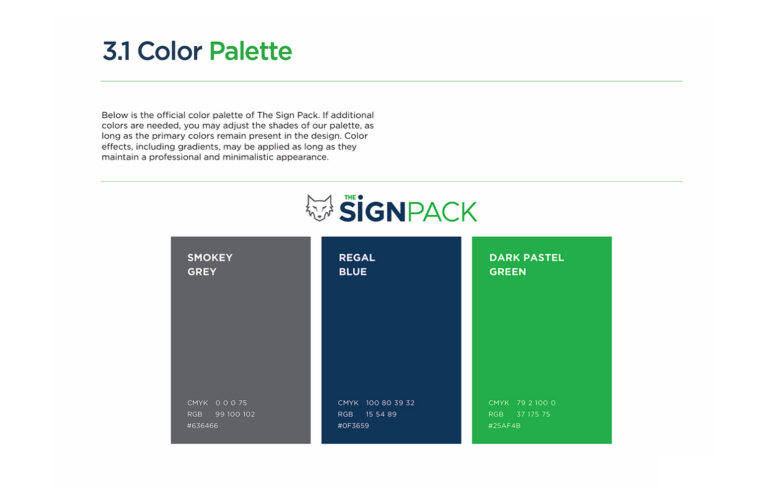
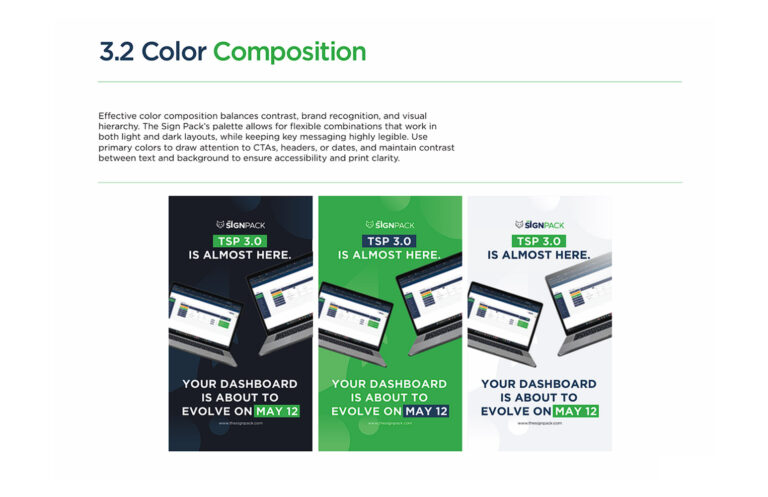
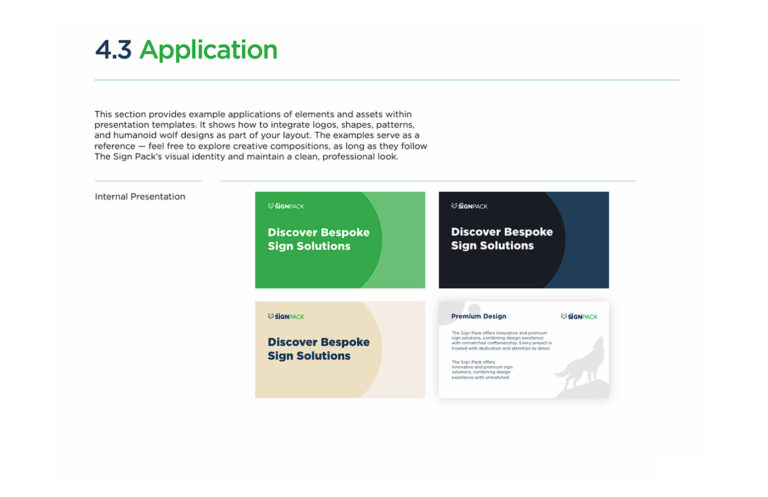
As we mentioned in the previous article, ideally, the client already has a Brand Guideline and Signage Standard Pack that serves as the single source of truth, covering:
- Complete color specifications
- Typography rules
- Logo usage rules
- Standard signage applications
- Recommended specifications for each sign type
- Placement guidelines
- And other relevant standards.
When those standards are defined and agreed upon, it becomes much easier to translate the visual brand identity into physical signs in a realistic, repeatable way.
More importantly, the sign company can integrate creative sign design into a cohesive brand experience across multiple locations, instead of creating one-off interpretations at each site.
Choosing the right design partners and fabrication vendors directly impacts whether your standards hold up in the field.
Consolidating production with a vetted network or working with a single national partner that maintains consistent materials and quality control across regions can go a long way toward keeping the brand’s appearance uniform in every market.
The Sign Pack can support your team as a Dedicated Sign Design Partner, delivering consistent, scalable design solutions that align with your client’s brand guidelines—instead of reinventing the wheel at every new location.
The Design Extension for National Signage Programs
Turn complex brand guidelines into scalable real-world structures.
We partner with National Account and Program Managers to transform brand standards into permit-approved, fabrication-ready files. Maximize your project efficiency and margins while we handle the technical design complexity.
Design Capacity Bottlenecks and Slipping Timelines
Design delays caused by capacity bottlenecks are another common frustration in multi-location signage programs and daily sign shop operations.
Many shop owners state the same thing: “Design is always the bottleneck.” They know they could install more signs and take on additional programs if the design files were ready on time.
In most cases, design capacity bottlenecks come down to two main issues:
- Limited internal team: A typical shop might have just two to four designers handling pre-sales mockups, production layouts, and permit drawings simultaneously.
- Inflexible design systems: When workloads spike, teams become overwhelmed, and the entire program slows because design throughput simply can’t scale to match demand.
The reality today is that fabrication capacity is no longer the primary constraint for many sign companies; production technology has become faster, more advanced, and increasingly automated.
The sign design process sits at the very front of the sign lifecycle and is absolutely foundational. If design capacity issues are not addressed, they trigger a predictable domino effect:
- Quotes are delayed because visuals are not ready
- Fabrication and installation schedules slip
- Landlords cannot approve without clear layouts
- Permit submissions are held up because technical drawings are incomplete
- Project schedules get disrupted. Customer satisfaction drops. Equipment and crews sit idle. All of this erodes profitability.
As long as design is not finished, everything downstream is forced to wait, even when the installation calendar is already full and your project has not even made it into the queue.
How National Accounts and Sign Companies Can Address Design Capacity Bottlenecks
Every sign company has its own way of dealing with design bottlenecks, but some approaches are more sustainable than others. One of the most practical models is to build a flexible design capacity structure by adding an external capacity engine that plugs into your existing workflow.
The principle is simple. Split the design workload. Let your internal team focus on strategic tasks, while an external partner handles operational, repeatable work.
Your core internal team focuses on strategic and growth-oriented work, such as:
- Managing approvals
- Coordinating with clients and maintaining relationships
- Handling strategic initiatives that drive long-term business growth, like pitching and pursuing new opportunities.
Your external capacity engine focuses on volume and recurring technical tasks, such as:
- Drafting 2D designs
- Creative layouts and 3D visualizations
- Preparing production-ready files
- Producing sign permit drawings.
By dividing the workload, operational design tasks no longer compete with your team’s growth capacity. This lets you take on more projects as demand rises, without constantly increasing your overhead.
To build this external layer, you might use freelancers, an outsourced design team, a design agency or studio, or partner with a specialized extended design team that operates through a centralized platform like The Sign Pack.
It is important to remember that not all sign designers have the same skill set. Many 2D designers cannot handle 3D work, and relatively few can consistently produce files that are truly production-ready and permit-ready.
A specialized sign design partner adds real value. You get consistent output from professionals who know sign production, while your internal team focuses on their strengths.
For more details on how this strategy works in practice, you can refer to our article, How Sign Companies Scale Design Capacity Without Adding Headcount.
Fragmented Communication and Losing Version Control
The third major challenge in multi-location signage programs is fragmented communication, scattered across tools and channels rather than living on a single platform.
The resulting workflow complexity leaves project managers and their teams feeling overwhelmed and less productive day after day.
They end up feeling less productive simply because too much time is spent hunting for files buried in email threads, chat apps, and assorted cloud folders.
In practice, this kind of fragmentation often leads to issues such as:
- Teams are spending excessive time clarifying details or untangling mixed versions with missing information
- High risk of losing context and files when nothing is stored in a single, integrated system
- Fabricators or installers on site, working from outdated files, while the client has already approved a newer version
- Teams, vendors, and the brand are struggling to maintain accurate version control across all locations.
All of this underscores the importance of structured, well-managed communication. Without a clear system, it’s difficult for sign companies to see at a glance which locations are approved, in progress, or ready for installation.
How to Centralize Communication and Tighten Version Control
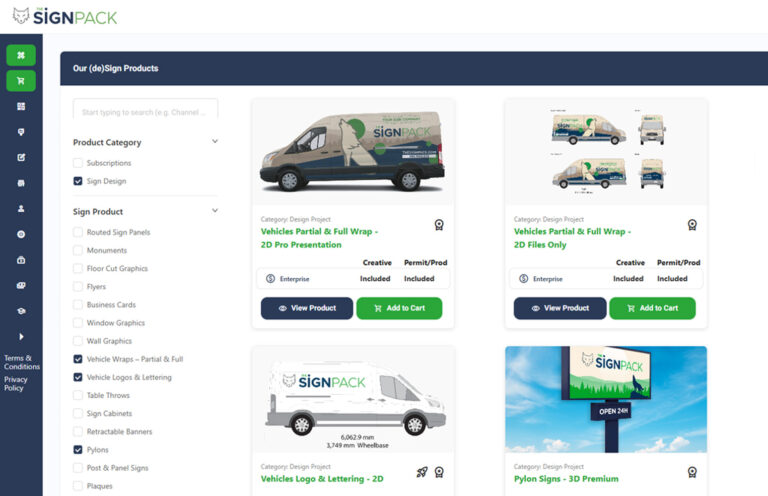
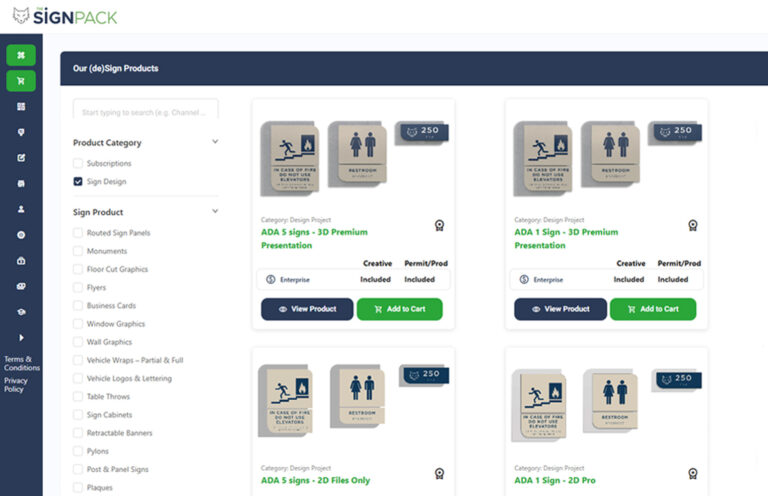
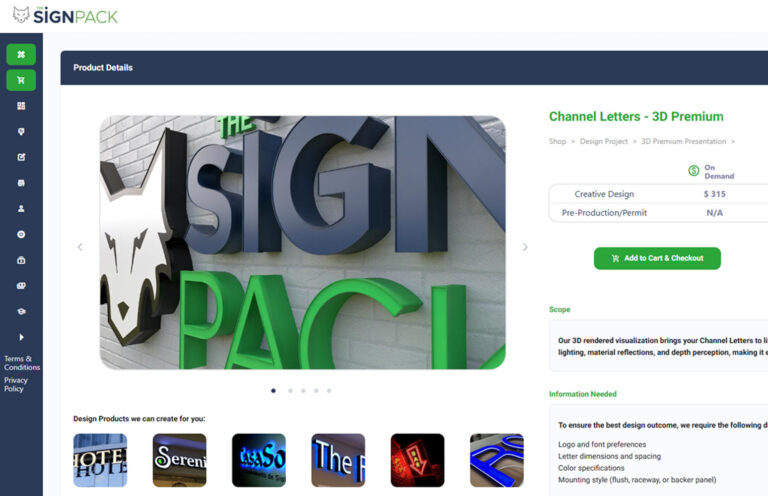
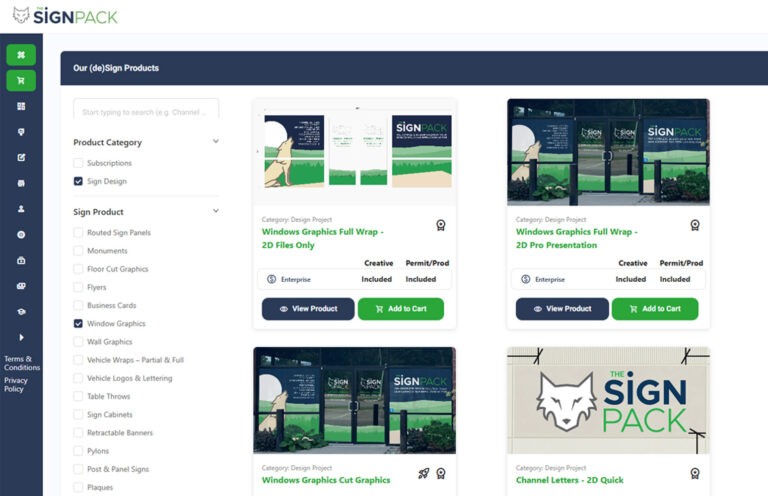
With more than 15 years in the sign industry, our recommendation is to move both communication and sign design into a single workflow platform.
Whenever possible, use a multi-site project management system built specifically for the sign industry rather than relying on generic cloud drives that lack industry-specific features.
With the right platform, you store every brief, revision, production file, and location status in one place. Version control and activity logging become much easier and more reliable.
The design stage is especially critical in any signage program; each design should include a trackable activity log with comments, revisions, and updated details.
That way, both your internal team and the client always know which version is approved, while fabricators and installers in the field can proceed confidently with the latest files.
If you already use CoreBridge, you can integrate it with the TSP Platform to manage sign projects and clear design queues more easily.
For sign companies handling heavy workloads, integrating CoreBridge with the TSP Platform unlocks several practical advantages:
- Structured design briefs: Start design requests directly from CoreBridge and follow a simple, guided process to complete and finalize each order. This keeps everything in one place and makes it easier for your team to manage requests, track progress, and stay aligned from start to finish.
- Organized files and assets: All design files and assets are stored in a single, organized location, making design progress easier to monitor and preventing anything from getting buried or lost across tools.
- Clear, trackable revisions: Every revision is logged and easy to trace, no more digging through old chats, email threads, or random attachments just to figure out which version is current.
- Less mental load for busy teams: With centralized communication and project-level comments instead of scattered emails, your team spends less time chasing information and more time actually moving jobs forward.
For more details on how this integration works in real operations, you can visit the CoreBridge and The Sign Pack Integration page on our site.
Non-Standard Site Survey Data and Project Information
Another major challenge is the lack of standardized site survey data and project information. In this context, a single incorrect measurement or missing detail can force you to redo an entire project—from design to installation.
On a small scale, you might manage surveys with paper forms or Excel sheets, but once the program grows, that approach becomes risky and fragile.
You might run into issues like:
- Surveyors are changing the format on their own
- Photos stored on personal devices or in WhatsApp threads
- Critical fields left blank or filled in carelessly
- Endless scrolling just to find the right photo for a specific site
- Zoning information is being missed right before permit submission
- Important images buried in group chats or email chains
- Design teams start work by hunting for photos, calling surveyors, or guessing what the façade actually looks like.
Sign shop owners often say, “Every surveyor has their own style, so information is inconsistent from one location to another, and our designers are left guessing.”
Key details are frequently discovered too late. For example, you might not realize the electrical panel is far from the sign location until the installer is already on site. These last-minute surprises create friction just as signage is about to be installed.
This situation is especially dangerous in multi-location projects with heavy workload and tight timelines. Instead of focusing on layouts and permit drawings, your design and engineering teams burn hours patching information gaps that should have been closed on day one during the site survey.
When data is incomplete or inconsistent at the survey stage, permit drawings and layouts become vulnerable to errors from the very beginning, with serious downstream impacts on the signage process:
- Multiple rounds of revisions because the city rejected the permit
- Fabrication vendors are asking for clarification or rejecting files that do not meet their standards
- Installers are discovering conflicts on-site and delaying installation.
For brands planning multiple store openings at once, this can easily translate into postponed grand openings, ongoing labor costs with no revenue offset, and a hit to the company’s reputation.
How to Address Non-Standard Site Surveys and Project Information
To tackle non-standard site surveys and project information, you first need a clear system that every surveyor on site can follow. That system should define exactly what must be documented, ensuring the data you receive is consistent and usable across all locations.
For example, you can require:
- Façade photos from multiple angles (front, angled, and broader context or street view)
- Close-up photos of the installation area
- Horizontal and vertical measurements of the signage area
- Structural conditions of the façade (material, condition, potential issues)
- Electrical access (panel location, drop points, possible routing)
- Mounting height and sign position (eye level, above a canopy, etc.)
- Visibility from main roads and entry routes
- Existing signage in the area (potential visual clutter or conflicts)
- Zoning notes, municipal codes, HOA rules, or landlord restrictions (maximum size, illumination rules, sign quantity, and so on).
Surveyors in the field rarely have time to manually organize every piece of information, label every file, or tidy up every photo. As programs scale and data complexity grows, traditional methods stop working. A comprehensive, digital approach is essential.
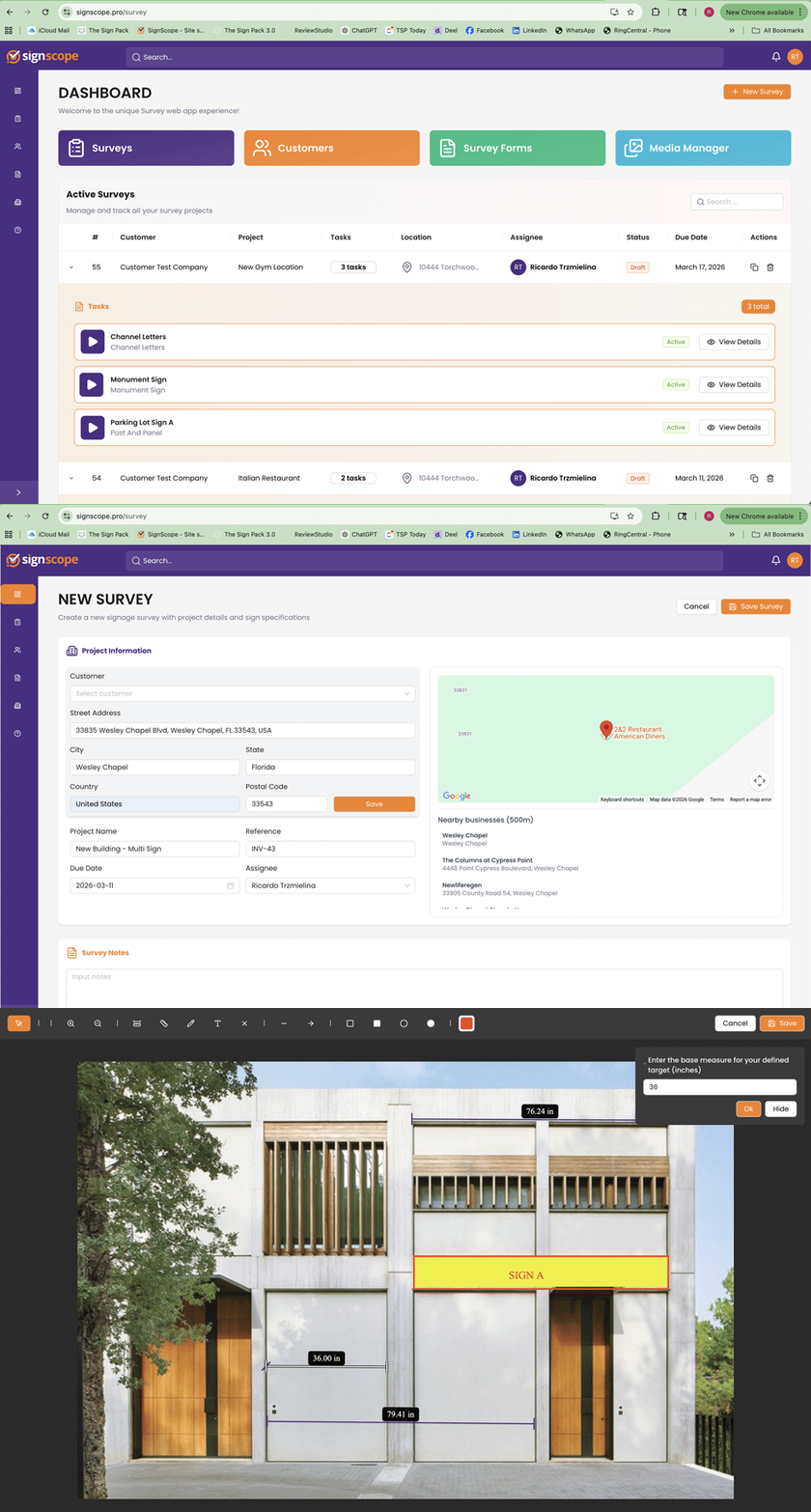
Many companies now use survey apps or digital forms that enforce a specific data-entry structure, so survey outputs from different cities arrive in a consistent, design-ready format without endless back-and-forth.
One example is the SignScope.pro platform, which offers ready-made default survey forms while still giving you full flexibility to build new forms or adjust existing ones. Its survey form module includes features such as:
- Form duplication: Copy an existing form and use it as a template for new projects
- Drag-and-drop field ordering: Rearrange questions quickly and easily
- Multiple field types: Text, numbers, dropdowns, radio buttons, checkboxes, and more
- Labels and placeholder text: Clear guidance for surveyors in the field
- Centralized storage: Every piece of data, information, and every photo is stored in a single cloud-based location.
These capabilities make site surveys for multi-location signage projects smoother and more accurate.
For example, on a channel letter project, your team can create or select a dedicated channel letter form with specific questions about façade conditions, substrate type, power availability, and installation access. That way, surveys become more effective, and you avoid missing or non-standard information that can slow things down later.
With proper data standardization, you capture all critical information at the very first stage of the sign project:
- Every surveyor completes the same digital form, with required fields and controlled field types (numbers, dropdowns, checklists) based on your baseline standards
- Photos are uploaded and tagged directly to the correct task or area instead of being buried as “IMG_1234” in chats, emails, or loose files
- Dimensions are entered into dedicated fields and can be tied to annotated photos and visual calculations
- All data is stored in one place, a central dashboard and cloud storage, making it straightforward to search, audit, and compare across locations.
Here is a comparison table showing how the right site survey platform can improve productivity and efficiency.
| Aspect | Conventional Approach | With SignScope.pro |
| Data storage | Paper, WhatsApp, spreadsheets, scattered cloud folders | Centralized in one integrated cloud-based platform |
| Survey forms | Generic, not project-specific | Customized forms for each project type |
| Site photos | Spread across multiple devices and chat threads | Organized by task and folder |
| Measurements | Manual, prone to misreading and transcription errors | Calculations based on structured inputs and photo references |
| Client reporting | Reports rebuilt from scratch each time | Instant PDF reports generated directly from the system |
| Manager visibility | Limited and reactive | Real-time dashboard visibility across locations |
| Mobile access | No integrated mobile workflow | Mobile app with direct camera integration for field data capture |
The table above compares traditional site survey methods with using SignScope.pro for managing multi-location signage projects.
While standardizing your data input is a powerful first step, failing to optimize this groundwork can lead to severe operational bottlenecks downstream.
To understand how these survey errors directly impact your project margins, and to learn how to prevent them from causing pricey rework, explore our detailed guide on the 5 Costly Signage Site Survey Challenges and How to Overcome Them.
Design Files That Are Not Production-Ready and Prone to Rework
Sign designs that look great on screen can quickly fall apart in production. As many teams put it, “Visually it looks fine, but the moment it goes into production, we have to fix a lot of things or the file gets rejected as not production-ready.”
When this happens across dozens or hundreds of locations, the problem multiplies. Rework—such as re-cutting, repainting, or remanufacturing signs—quickly becomes expensive. Your team ends up spending time on corrections instead of moving projects forward, and clients lose confidence.
The root cause is usually the same: the design file does not fully account for fabrication and installation realities.
This is a common bottleneck for sign companies, because truly skilled sign designers who understand the entire production process from start to finish are rare. At the same time, many US sign companies only have two to four designers who are expected to handle everything:
- Creative layouts and sales mockups
- Production layouts
- Technical permit drawings
- 3D renders for complex projects.
When one person juggles this many responsibilities, file quality often becomes inconsistent from job to job.
How to Fix Non-Production-Ready Design Files
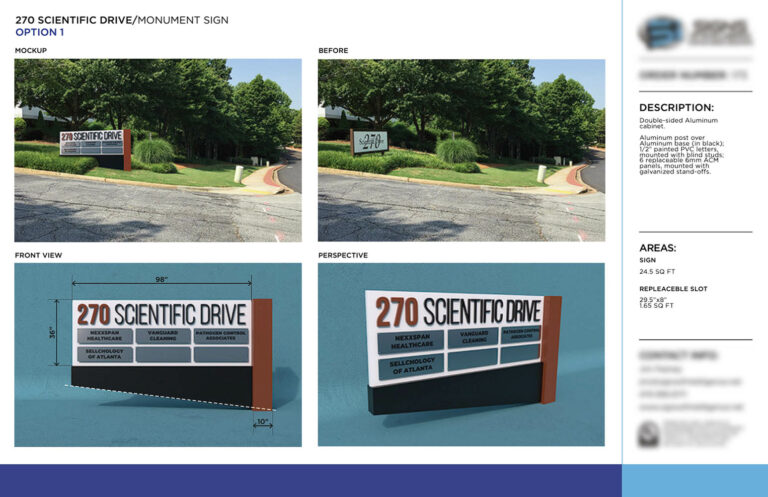
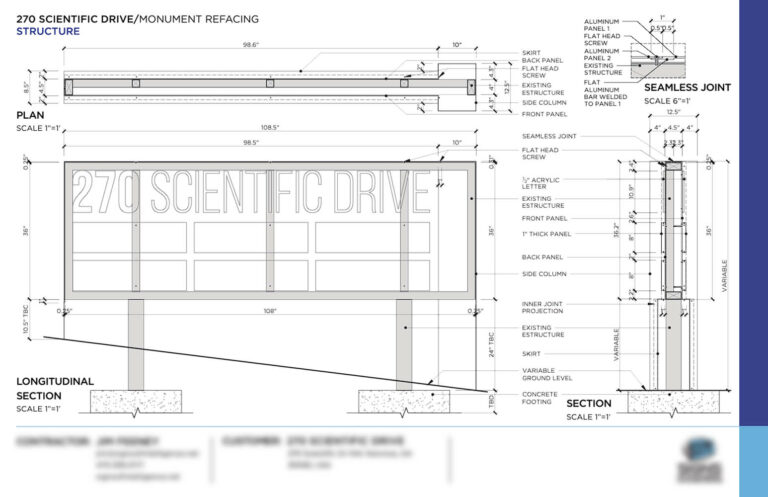
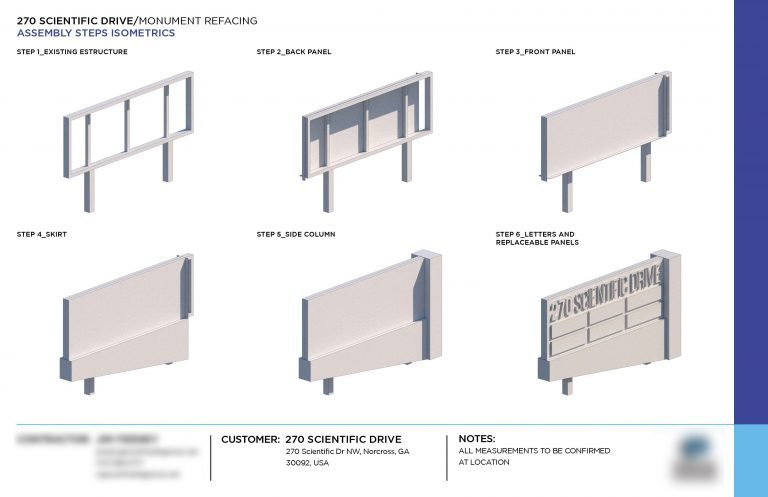
The best way to address non-production-ready design files is to ensure designs do not stop at “looks good” but are fully buildable and production-ready from day one. That typically involves:
- Preparing clean, structured, and complete files with organized layers, consistent scales, and clear naming that shop teams can understand at a glance
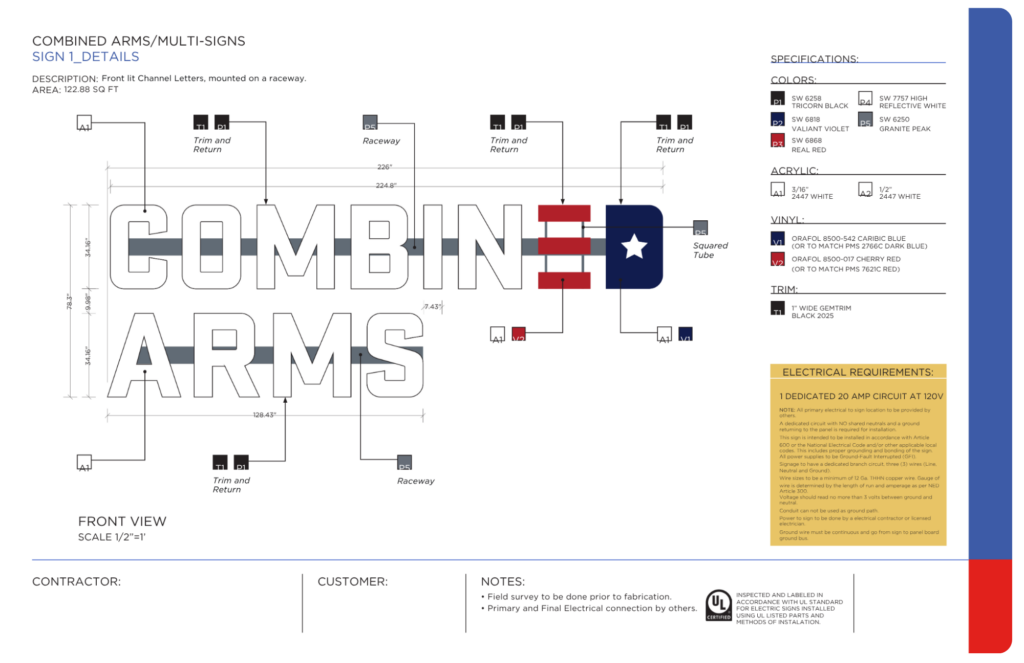
- Including precise dimensions, material specifications, mounting methods, and electrical requirements directly in the layouts and detail drawings
- Aligning layouts with real fabrication methods and on-site installation constraints, such as equipment access, façade conditions, and usable structural points
- Involving the fabricator or production lead in a pre-production review for complex sign types to catch potential issues before mass production begins.
With this approach, the files you send to vendors are truly shop-ready. This reduces the need for clarification, avoids expensive remakes, and enables production teams to work faster and with greater confidence at every location.
But what if your in-house design capacity isn’t enough to support a large program?
In that case, partner with an external team to handle the overflow so your internal designers aren’t spread too thin.
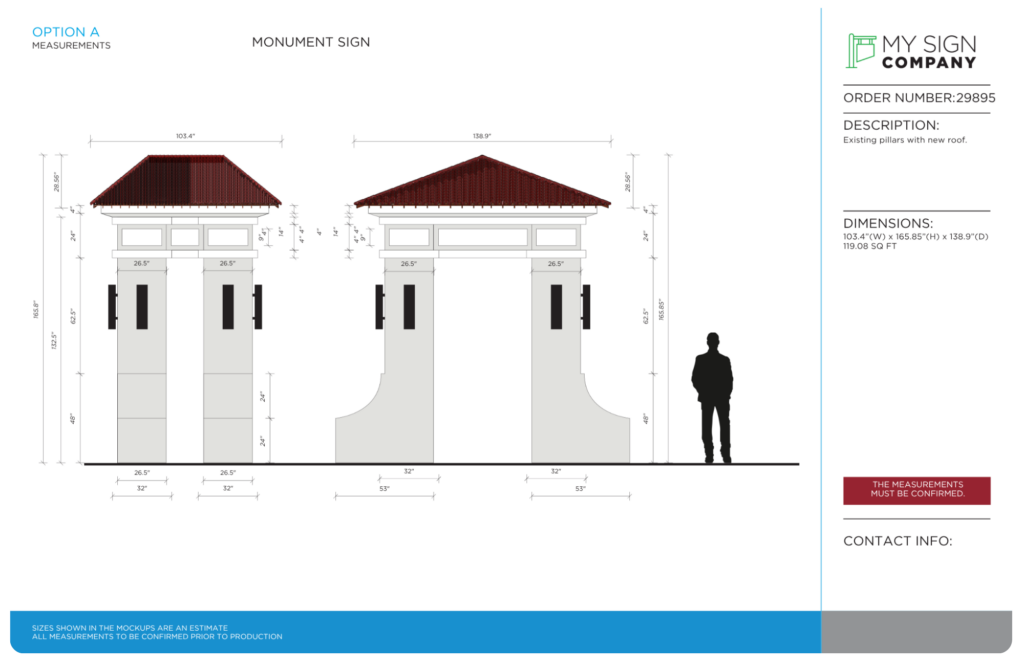
For example, you can partner with a design team that understands Sign Permit Drawings and provides Pre-Production Files so your packages are both shop-ready and permit-ready with minimal additional corrections.
When you do this well, the bottleneck shifts from file cleanup to faster, more predictable project execution at every site.
Code Compliance and Local Regulations
Every city in the US has its own sign code, covering everything from maximum size and height to allowed illumination types and special rules for historic districts or residential areas. On top of that, property owners and shopping centers often layer on their own internal signage criteria, which can be even stricter than the city’s requirements, such as:
- Limits on tenant panel sizes
- Allowed illumination types
- Fixed logo positions on a pylon sign.
National project managers often sum it up like this: “What passes in Dallas can be rejected in Denver, and every mall has its own rule book.”
Brand teams usually start with a global design package, but they often do not realize how much local adaptation each jurisdiction will require. When code research and landlord requirements are handled too late after final design, or worse, after manufacturing, your sign company can end up facing:
- Expensive redesigns
- Installation delays that drag on for months
- The risk of not having signage installed before opening day.
When you address these challenges early, multi-location signage programs run more smoothly. Consistency improves your reputation, strengthens client satisfaction, and positions your company as a reliable partner.
How to Navigate Local Sign Codes and Regulatory Requirements
There is no question that dealing with planning departments or building officials for sign permitting can be unpredictable.
Comments like “the process feels one-sided” or “communication can be unresponsive” are common in the industry.
Behind these comments is a very real operational challenge: permitting delays, rejections, and unclear feedback make this one of the most frustrating stages of the project lifecycle.
In reality, sign permit drawings should not become the choke point that stops production and installation when they are managed properly from the beginning.
From our experience working with sign companies, city reviewers typically value completeness and accuracy in documentation more than the speed of application submission. Instead of sending a permit package and hoping it passes, your team can prepare a proactive submittal set designed to minimize revision requests and keep the project moving.
A few common pitfalls to anticipate and control in the permitting process include:
- Missing or outdated documents
- Inconsistent file formats
- Zoning or overlay checks are performed too late
- Unclear submission methods
When drawings and documentation are clean and complete from the start, reviews tend to move more smoothly, with less back-and-forth and fewer surprises mid-process.
Shifting your permitting approach from reactive to proactive requires structure. In many cases, delays are not caused by the city “moving slowly,” but by avoidable gaps in the permit package that lead to rework.
We cover this topic in more depth in our article, How to Fix the Sign Permit Drawing Bottleneck and Keep Projects Moving Forward.
Internal Capacity That Cannot Flex With Workload Changes
Another challenge in managing signage programs for multi-location brands is internal capacity that cannot flex up and down with demand. Sign companies often experience intense peak periods during national rollouts or rebrands, followed by sharp slowdowns when much of their capacity sits idle.
You might face three straight months when your internal team is overwhelmed, followed by nine months of underutilization. When volume is high, you’re forced to turn work away because your team can’t scale; when volume is low, your resources sit idle.
This is a very common problem and not surprising, because most teams are staffed based on average monthly orders rather than peak program demand.
The real issue comes when your company is trusted with a large signage program for a major brand that is an opportunity you do not want to walk away from, but forcing everything through the same fixed team can create chaos in day-to-day operations.
Without a flexible, elastic capacity model, it becomes hard for a sign company to commit confidently to large programs. That often means missing out on meaningful growth and on the chance to move up a tier in the sign industry.
How National Accounts and Sign Companies Can Build More Flexible Internal Capacity
The solution to this challenge is actually similar to how you address design capacity bottlenecks. It is worth repeating here that you need to separate operational capacity from growth capacity.
First, operational capacity:
These are resources responsible for non-strategic tasks that can be delegated to others, including external teams. Their role is not to replace your designers or internal staff, but to act as a scalable system that stabilizes operations without disrupting your core workflow. They help you handle repeatable, non-strategic, lower-complexity work, such as:
- Developing layouts for presentations
- Producing photorealistic 3D renders
- Preparing technical drawings and sign permit drawings.
Even though these tasks are non-strategic, you still need to be selective in choosing professional candidates or partners. This work sits in the operational layer, but it becomes the backbone that keeps your production and creative pipeline moving.
Second, growth capacity:
This is your internal team, the people who take on strategic roles that shape your company’s long-term growth. These responsibilities should not be handed off to external teams or carried by you alone. Their work includes:
- Coordinating with clients and vendors
- Reviewing design and signage progress across programs
- Pitching high-margin projects and other high-value opportunities that drive growth.
With this model, your internal capacity becomes far more flexible as demand fluctuates. You can confidently say yes to multi-location programs, knowing you have a structure that absorbs workload spikes without burning out your core team.
| Also Read: How Brands Maintain Signage Consistency Across Every Location |
Multi-Country Coordination Challenges
The next layer of complexity arises when a signage program extends beyond the United States into multiple countries simultaneously. For most sign companies, this is a critical coordination challenge that quickly exposes gaps in their processes.
Once you cross borders, complexity increases for a range of reasons, including:
- Different time zones and languages
- Imperial versus metric measurement systems
- Vendor standardization across regions
- Local aesthetic expectations
- And many other factors that are hard to list in full.
A team used to working on East Coast time can easily overlook that 9 a.m. in New York is already late afternoon in parts of Europe.
At the same time, a local vendor may work entirely in centimeters while your designers are thinking in inches. These are just small examples of what you inevitably face when managing a multi-country signage program, and there are many more beneath the surface.
Each country comes with its own regulatory framework, documentation requirements, and engineering practices, so what is considered “standard” in the US does not automatically translate to Europe or Asia.
We will explore this topic in more detail in a dedicated article, Signage Program Management From Single-Country Rollouts to Multi-Country Coordination.

Turning Challenges Into Competitive Advantage
These are some of the core challenges that surface when you manage signage programs for multi-location brands:
- Inconsistent design across locations
- Design capacity bottlenecks and slipping timelines
- Fragmented communication
- Non-standard site surveys and project information
- Files that are not production-ready or permit-ready
- Code compliance and local regulations
- Internal capacity that cannot flex with changing workloads
- Multi-country coordination issues
- And many others that show up as programs grow.
There are, of course, more obstacles than we can list here, but these themes capture the reality most sign companies face.
Companies that master these challenges with the right processes and strategies are best positioned to win and retain national and international accounts.
With a solid foundation, these companies do more than complete projects. They build a reputation as strategic partners who protect brand consistency in every location.
With that foundation, previous pain points become competitive advantages. Your company can take on more ambitious signage programs and move up in the industry.
How The Sign Pack Supports National Accounts and Sign Companies
For sign companies managing multi-location signage programs, The Sign Pack serves as a behind-the-scenes design partner, helping keep programs controlled, standardized, and scalable.
We’re not a generic agency or a freelancer marketplace. Instead, we operate as an extended design team built specifically to solve some of the sign industry’s biggest bottlenecks:
- Designer scalability
- Inconsistent file quality
- Errors in project information.
Our mission is to provide a comprehensive solution for the sign industry, with a focus on specialized sign design support.
Through our TSP Platform 3.0, sign companies can centralize briefs, files, communication, and revisions, making it easier to track progress accurately for every sign design project.
Integrating The Sign Pack into your workflow boosts productivity, shortens turnaround times, and scales your design capacity in line with workload, not headcount.
By addressing these bottlenecks, we help sign companies improve efficiency without the overhead and complexity of constantly hiring and training new designers. We don’t replace your team.
Instead, we clear the recurring technical design bottlenecks that slow them down, so your designers and project managers can focus on higher-value work like client relationships, custom jobs, and strategic growth initiatives.
Whether you’re a small shop handling your first multi-location rollout or a larger player managing national programs, we’re ready to support your growth.
If your team is facing growing design queues, time-consuming permit drawings, or the challenge of scaling design without stretching your staff, you don’t have to solve it alone.
Let’s start a conversation about your current signage program and explore how an expert, scalable support model can strengthen your operation.
Contact our team to discuss whether an extended design partnership with The Sign Pack fits your goals and needs. We’re here to advise, support, and help you navigate complex signage programs with confidence.