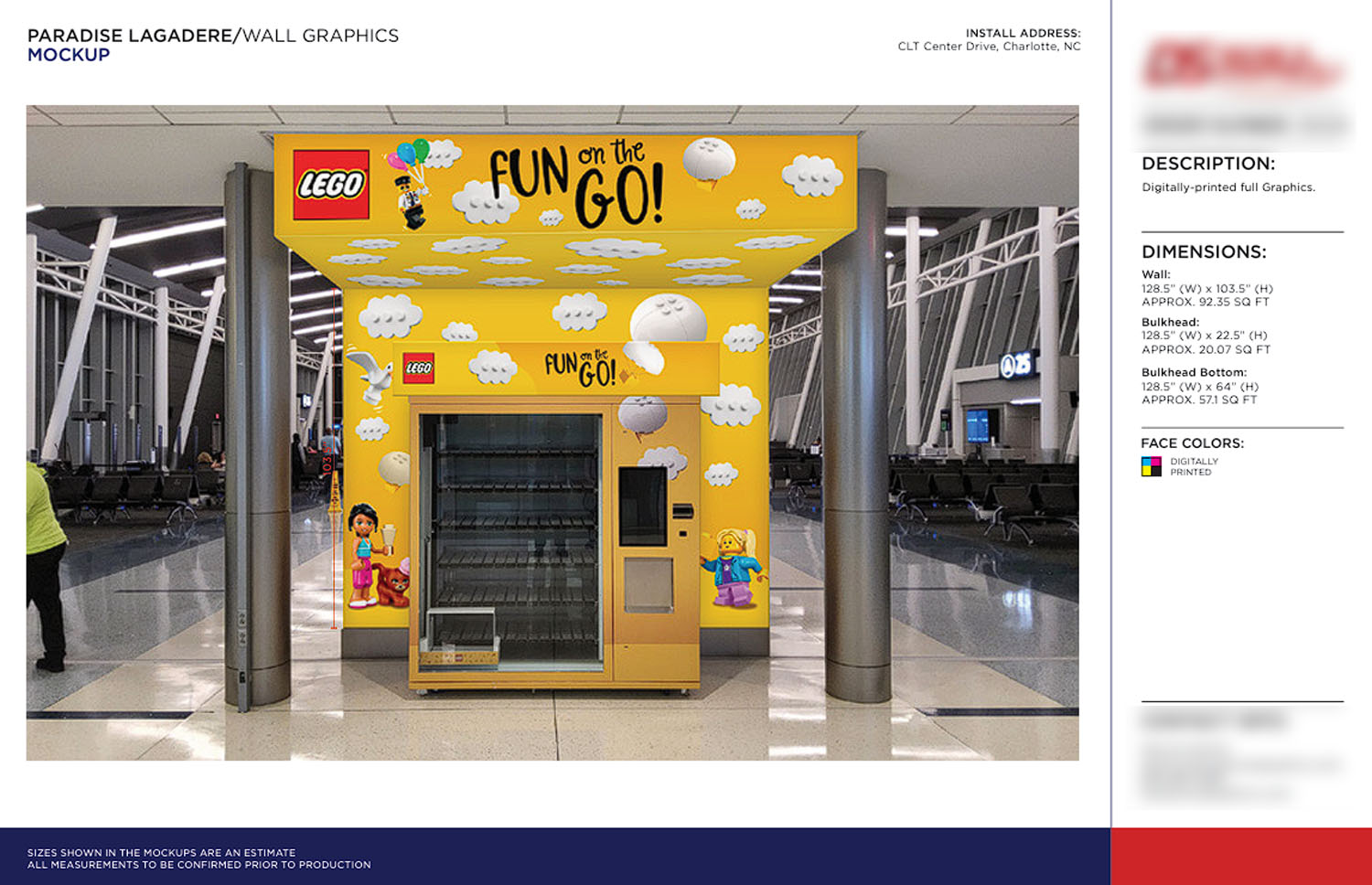
A signage program is a strategic approach to managing a brand’s signage across multiple locations. Rather than viewing each sign as a standalone project, this method treats signage as an integrated ecosystem spanning regions, countries, or even continents. This approach encompasses:
- Interior and exterior signage
- Branded signage
- Operational and functional signage
Complexity increases rapidly as programs cross borders and encounter varying municipal regulations, permitting requirements, and building conditions. For sign companies, success in these programs demands both deep expertise and the operational capacity to keep every phase on track, minimizing delays and budget overruns.
The challenges extend beyond design complexity, permitting, and technical drawings. Teams must also navigate technical standardization across locations. They need to adapt to site-specific regulations and maintain continuous communication among brands, vendors, and internal teams.
This article builds on our previous discussion in “Signage System Design: How to Manage Complex Signage Projects Without Costly Breakdowns.” It expands the conversation into a multi-article series focused on the realities of managing signage at scale for multi-location brands.
Here, we take a deeper, end-to-end look at what it truly takes to deliver successful outcomes in these environments.
In this series, we’ll walk through:
- What a multi-location signage program is and why it’s hard to manage
- Key success factors for signage programs for multi-location brands
- How to manage signage programs within a single country
- How to oversee corporate signage programs across multiple countries
- How to maintain quality and measure success
- Common challenges in multi-location signage programs and how to overcome them
From our perspective, these insights are critical. Too often, sign companies underestimate the complexity and hidden friction that lurk inside multi-location programs. This is where projects start to unravel. Timelines slip, budgets bleed, and client trust wears thin.
These programs typically involve multiple vendors and stakeholders, each with their own standards, expectations, and regulatory requirements.
Without a unified management approach, seemingly minor issues at the project level can escalate into significant bottlenecks when repeated across dozens or hundreds of sites. This can disrupt workflows, erode margins, and ultimately damage client trust.
Our goal is to provide sign companies with a practical foundation before embarking on a brand rollout program or multi-site signage strategy.
With the right insights from the outset, teams can design more resilient systems, anticipate challenges, and maintain control as their programs scale.
What Is a Multi-Location Signage Program and Why It’s Hard to Manage
A multi-location signage program is a structured way to manage all signage activities for a brand that operates across multiple sites, whether within one country or across several. Instead of treating each sign as a standalone job, you manage signage as one interconnected system that covers every location in the network.
In many ways, the mindset is similar to a Signage Design System we’ve discussed before. Here, though, the focus is on keeping branded signage consistent across locations and through every stage of work, from design to fabrication to installation.
The Purpose of a Corporate Signage Program for Multi-Location Brands
For brands with many locations, such as retail stores, banks, restaurants, or clinics, a brand rollout program provides a standardized way to design, produce, and install all their signs. The aim is to keep every location looking and feeling the same, so customers always recognize the brand and have a consistent experience.
When implemented effectively, a signage program drives wider brand exposure, stronger brand recognition, improved customer engagement, and ultimately supports stronger business performance across all locations.
Benefits of a Standardized Signage Program
A standardized corporate signage program benefits both parties: the sign company, as the execution partner, and the brand, as the client. Here are three key advantages.
1. Ensures Brand Consistency
- For brands: A signage program keeps the brand looking the same and on-brand at every site, even when the building façade, city, or country is different.
- For sign companies: A standardized program makes it significantly easier to deliver consistent results across all client locations. Working from a unified set of guidelines, templates, and specifications, your team can achieve predictable outcomes at scale.
This level of consistency reduces subjective client revisions, enhances your professional reputation, and positions you for ongoing collaboration. It demonstrates your ability to uphold visual standards nationally or internationally.
2. Cost Control & Efficiency
- For the brands: A centralized signage program helps keep costs under control and improves efficiency by scaling rather than running one-off projects per site with a different vendor.
- For sign companies: Centralized workflows enable better cost control and operational efficiency compared to managing each location as an ad-hoc project. By streamlining briefs, designs, and approvals, your team spends less time reinventing processes for every site.
In addition, you gain greater negotiating power with suppliers and reduce the complexity of managing multiple material variants.
3. Faster Implementation
- For brands: A well-structured signage program accelerates rollouts, particularly during rebrands, campaign refreshes, or new-location openings.
- For sign companies: With a well-organized program, rollouts become more efficient and predictable. Standardized, approved signage packages streamline workflows from design and production through permitting and installation, making operations truly scalable.
The Design Extension for National Signage Programs
Turn complex brand guidelines into scalable real-world structures.
We partner with National Account and Program Managers to transform brand standards into permit-approved, fabrication-ready files. Maximize your project efficiency and margins while we handle the technical design complexity.
Signage Categories Inside a Multi-Location Signage Program
As mentioned in the opening, a corporate signage program or multi-site signage strategy typically covers multiple types and groups of signage: exterior, interior/wayfinding, branded, and operational/functional.
Below are the categories you’ll most often see in retail, quick service restaurants (QSR), banking, healthcare, and corporate environments.
1. Exterior Signage (Identity & Visibility)
Exterior signs are all about first impressions and street visibility. Common examples include:
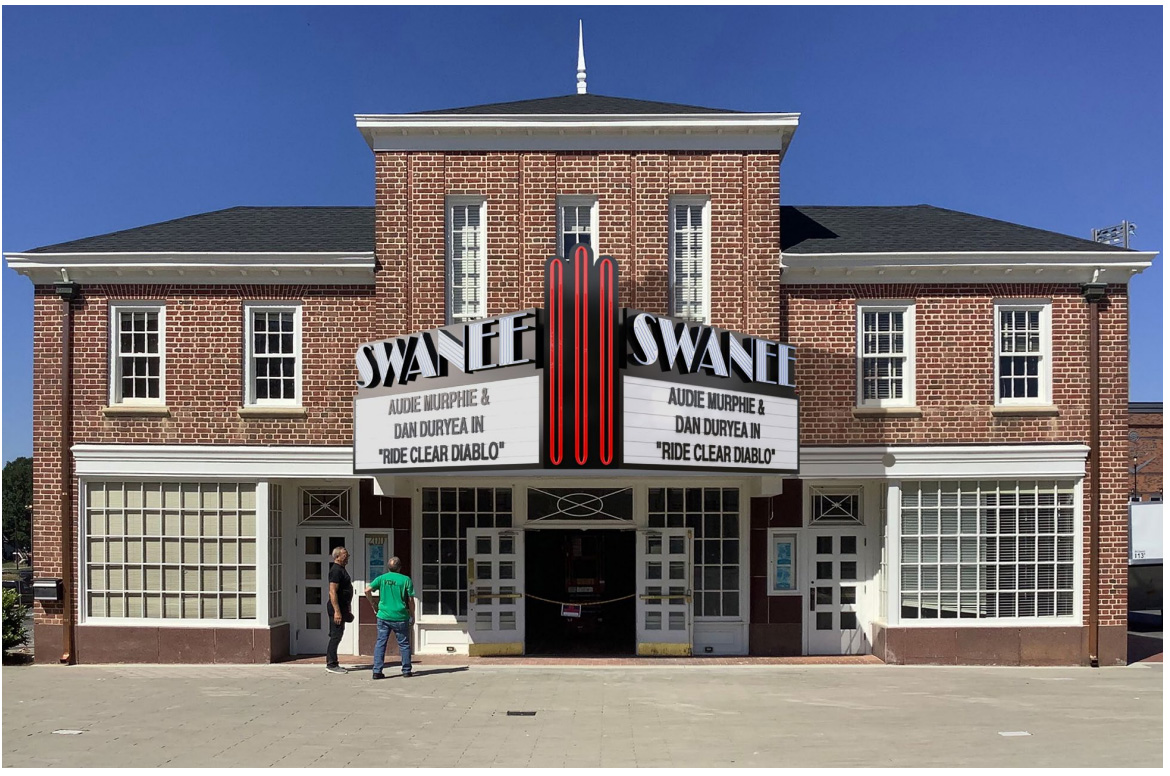
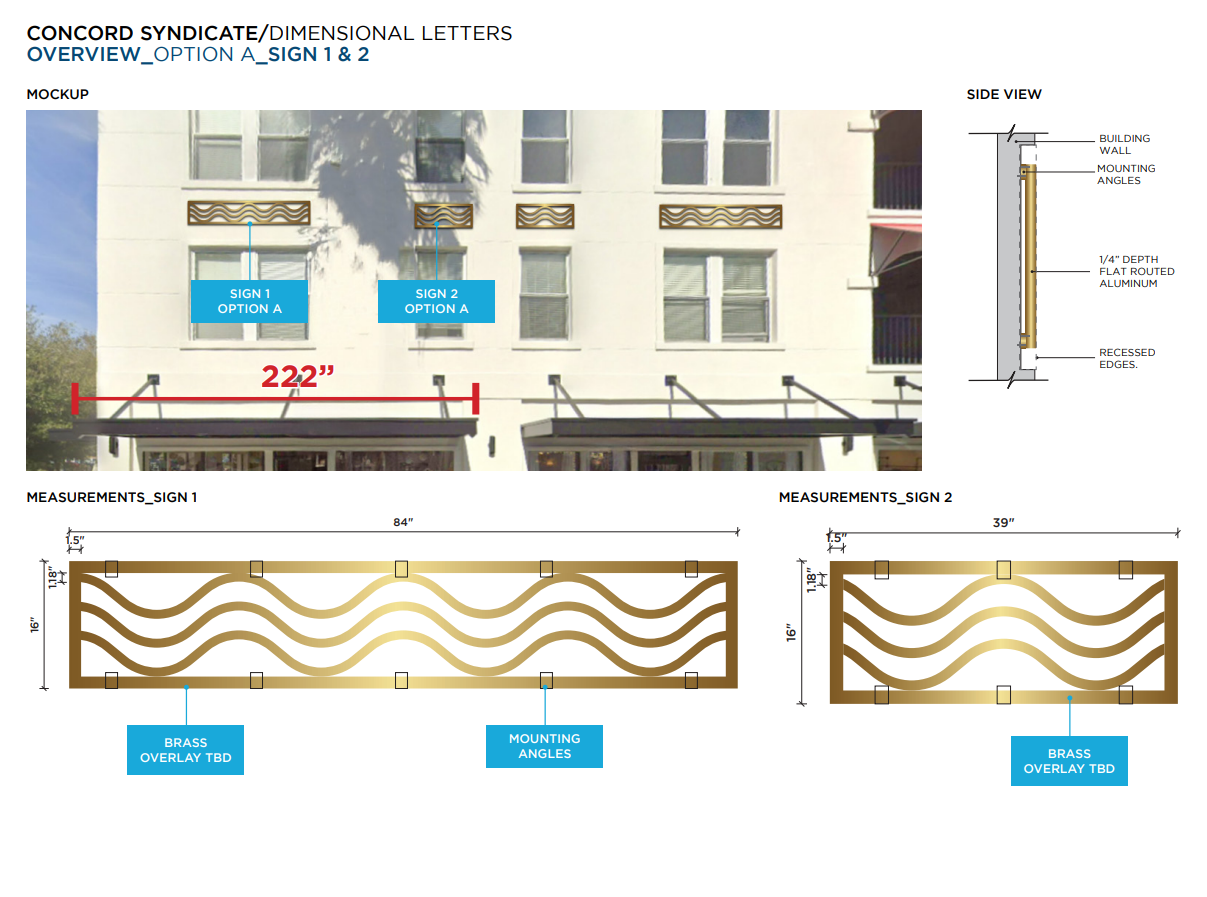
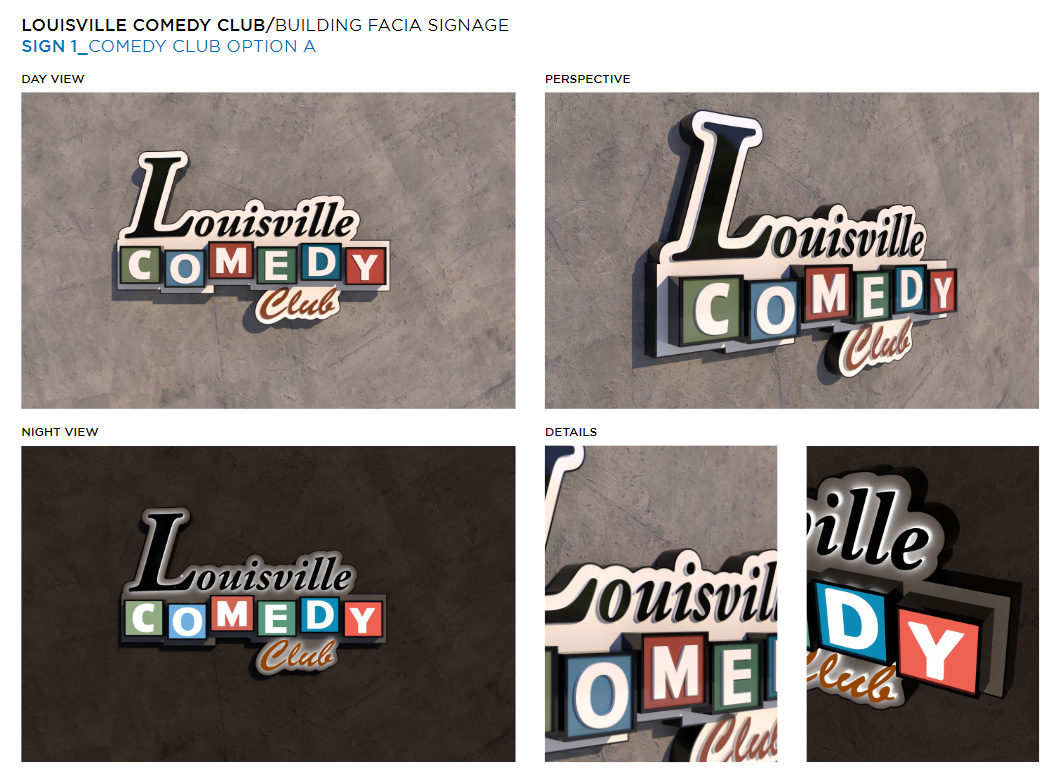
- Fascia / wall signs: Signs mounted to the building façade, either as flat panels or dimensional letters.
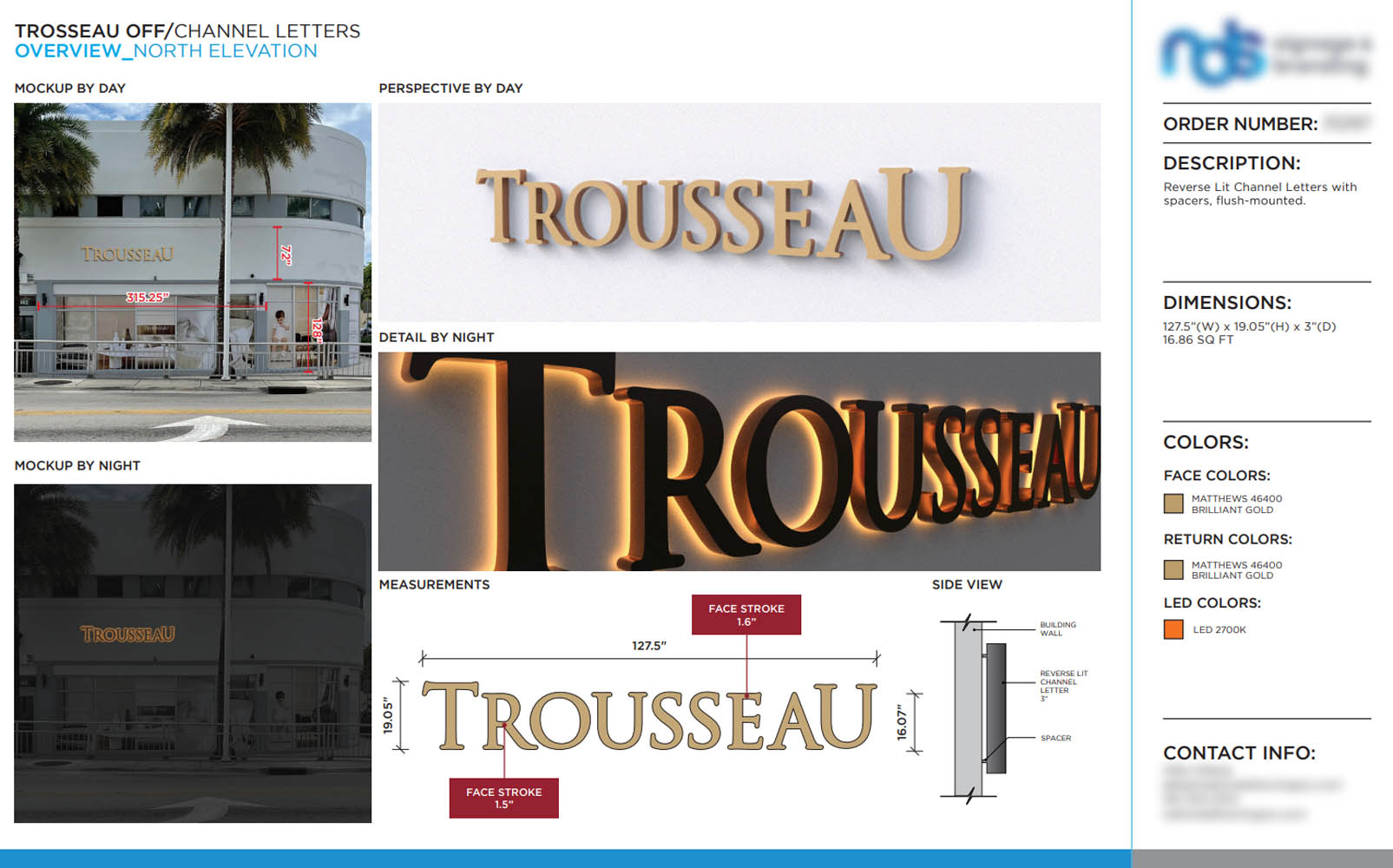
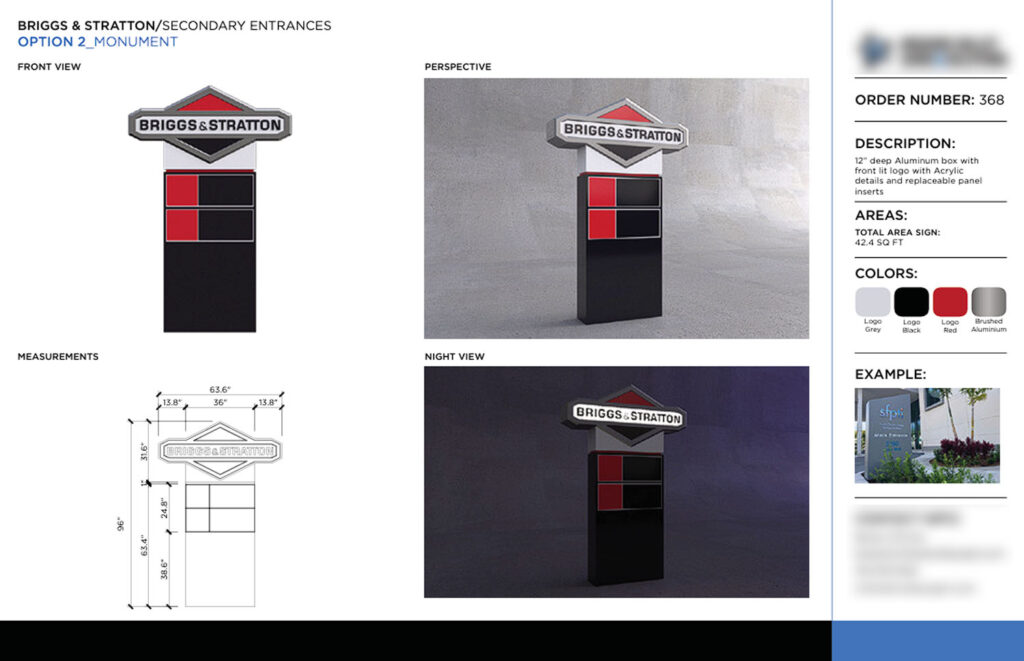
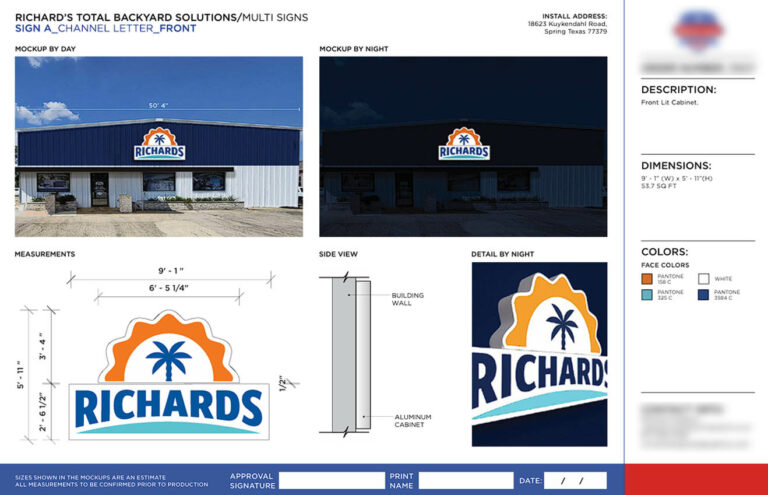
- Channel letters: Illuminated dimensional letters (front-lit, halo/back-lit, or combination) installed on storefronts or building elevations.
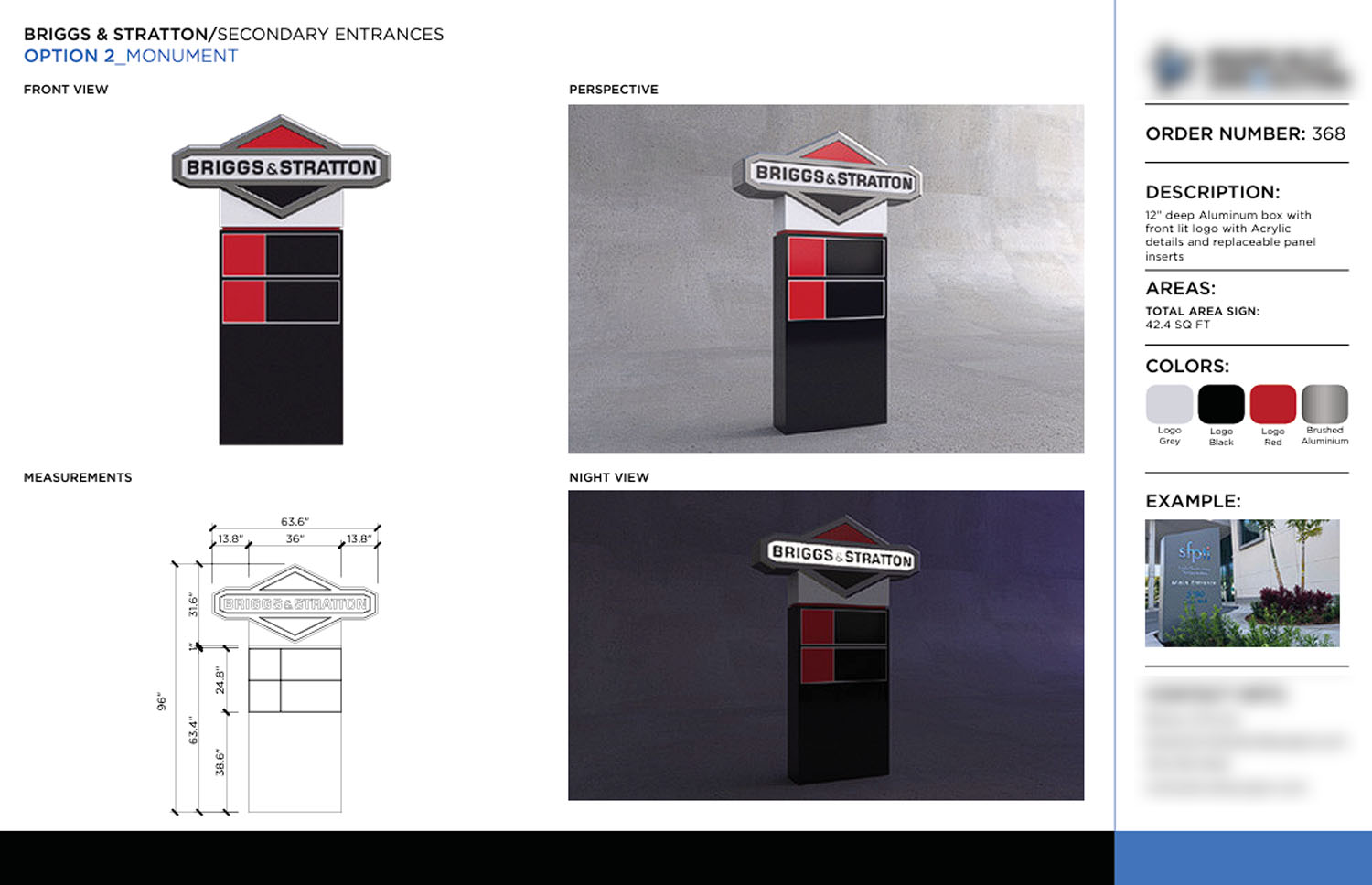
- Monument signs: Low, ground-level structures near entrances or driveways, often used for corporate offices, campuses, and hospitals.
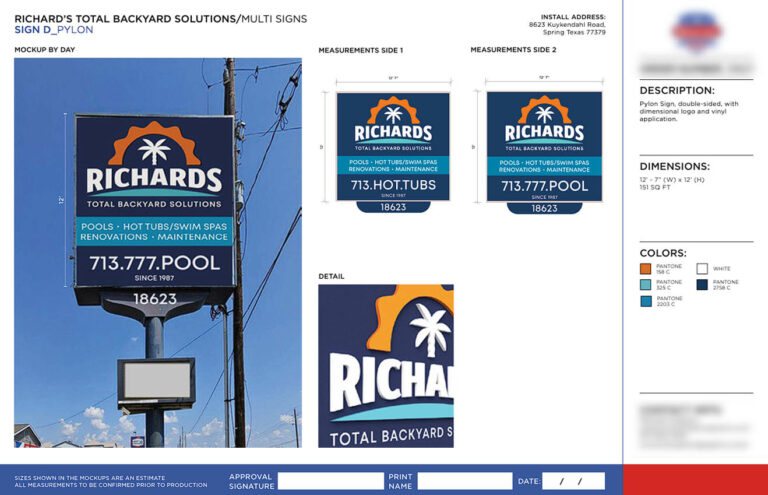
- Pylon or pole signs: Tall signs meant to be seen from far away, like on major roads or highways. These are common for shopping centers, gas stations, and car dealerships.
- Storefront signs and window graphics: These combine main storefront signs with window graphics like decals, vinyl, or one-way vision films to support brand presence and promotions.
- Awning / canopy signs: Fabric or vinyl canopies with branding, commonly found in pedestrian-heavy retail areas.
2. Interior Signage & Wayfinding
Interior and wayfinding signage guide people, deliver information, and reinforce the brand experience inside the space. Examples include:
- Wayfinding & directional signs: Directional signs leading to lobbies, elevators, restrooms, parking, departments, and more.
- ADA-compliant signs: Tactile/Braille signage with specific color contrast and layout to ensure accessibility; in the US, these are mandatory for most public and commercial facilities.
- Lobby / reception signs: Logo and brand elements placed at reception desks or feature walls in offices, hotels, and clinics.
- Room identification signs: Room markers for meeting rooms, patient rooms, office numbers, and similar spaces.
- Wall & floor graphics: Decorative or directional graphics applied to walls and floors (for example, a path to checkout or a highlighted promo area).
Interior and exterior signage play a major role in complex environments like airports, hospitals, campuses, flagship retail, headquarters, and museums.
These two groups often sit inside large, complex systems and need a documented approach and clear standards to avoid breakdowns during implementation.
Sign companies that understand the Anatomy of a Complex Signage System are in a much better position to avoid costly project failures and rework.
3. Promotional & Retail Signage
This group is more tactical and changes frequently along with marketing campaigns. Common types include:
- POP/POS signage: Point-of-purchase displays, shelf talkers, wobblers, and shelf headers.
- Posters, hanging signs, banners: Used for seasonal campaigns, price promotions, or events.
- A-frame / sidewalk signs: “Sandwich boards” placed on sidewalks in front of stores, usually with daily offers or specials.
- Countertop signs: Small signs at checkouts or information counters for upsell messages or service info.
4. Digital Signage & Illuminated Systems
This group aims to increase exposure and engagement and to create a more immersive customer experience. It’s very common in retail and QSR networks. Examples include:
- Digital menu boards: Especially in quick-service restaurants and coffee chains.
- Interior/exterior digital displays: Screens for dynamic content, promotions, or queue information.
- Custom lighting / neon & LED art: Visual elements that combine branding with the interior experience.
Investing in immersive, interactive digital signage creates clear differentiation in the marketplace. This helps brands stand out against competitors still relying solely on static solutions.
5. Fleet & Environmental Branding
Competition for attention is intense, and you can see it in how crowded the streets have become with branded fleets. The same goes for environmental branding across events, industrial estates, and office complexes.
This is an important part of a broader signage branding strategy that extends the brand beyond the building itself, for example:
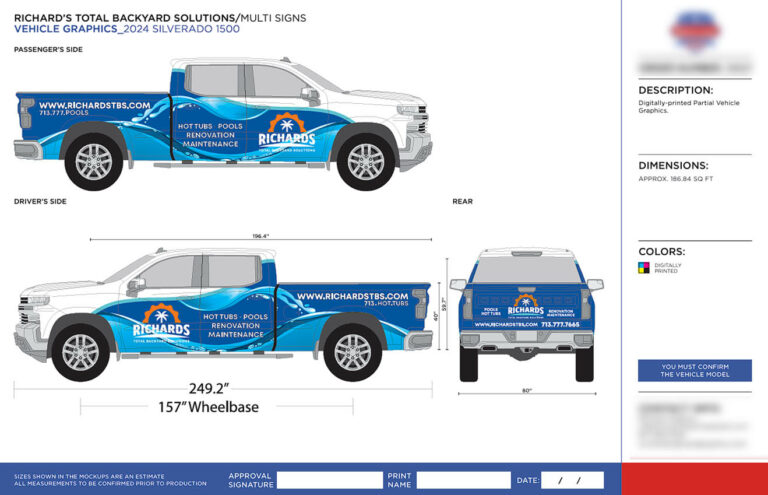
- Vehicle graphics / wraps: Branding applied to service vehicles, trucks, or logistics fleets.
- Campus / site signage: Integrated packages for campuses, industrial zones, major hospitals, or office parks, combining wayfinding, safety, and identity signage.
When you consider all these categories together, the complexity of managing a signage program across multiple locations becomes clear. The key is not to treat these elements in isolation, but to manage them as a unified portfolio.
Brands determine which signage types form their standard package—such as channel letters, monuments, interior wayfinding, and ADA-compliant signs—and then establish templates and specifications to ensure consistent replication across all locations.
In a separate article, we’ll dive into Common Challenges in Multi-Location Signage Programs and How to Overcome Them. There, we’ll unpack the critical issues that often arise in multi-location signage programs and what sign companies need in place to run these projects smoothly, rather than constantly putting out fires.
| Also Read: Why Most Vehicle Branding Designs Fail and the Critical Factors That Determine Success |
Key Successes for Signage Programs for Multi-Location Brands
To deliver consistent visuals and a unified brand experience across every location, a sign company needs a solid foundation for its signage program.
At a basic level, three things are most important in nearly every program:
- Accurate site survey information
- Centralized workflow
- Design capacity that can actually scale with the rollout
But when you start working across many locations, especially in different regions or countries, those basics aren’t enough.
You need to clearly define what makes a program successful, so your team knows what’s needed and can spot problems before they cause delays, lost profits, or unhappy clients.
Remember, a signage program affects your client’s business results, not just how their space looks.
According to research from Capital One Shopping, 88% of American consumers buy from brands they trust, and customers with an emotional connection to a brand are worth significantly more than even highly satisfied customers.
That trust is built and reinforced through consistent brand experiences, including what people see on the building, inside the space, and across every location.
That’s why clients expect a well-run signage program to help their business succeed. For them, keeping brand visuals and the on-site experience consistent isn’t just about looks—it’s how they build and protect customer trust.
In this context, the stakes for sign companies are high. Gaps in survey data, fragmented workflows, or underpowered design capacity don’t just slow down projects. They can directly impact how the brand shows up in the real world, and over time, that affects both your margins and your client’s confidence in you as a long-term partner.
Here are some key success factors for signage programs for multi-location brands, which we’ll break down in the next sections.
Defining a Formal Brand Guideline
The first non‑negotiable foundation for any multi-location signage program is a formal brand guideline for the client.
In reality, many sign companies still face situations where the client has no proper brand book but still expects perfectly consistent signage across every location.
For example, a client may say, “We don’t have a brand book, but we want everything to match.”
A clear brand guideline matters because it:
- Keeps visual consistency across locations: Ensures every asset follows the same references for logo, colors, typography, and overall visual style.
- Prevents local vendor improvisation: Without clear rules, local fabricators may “adjust” designs to accommodate material constraints, causing logos, colors, or proportions to drift from the original intent.
- Reduces unnecessary revisions: A brand guideline helps lock in color codes, logo placement, and dimensions, so production aligns with standards and approvals move faster with fewer redesigns.
- Acts as a single source of truth: Marketing, procurement, the sign company, fabricators, and installers can all reference the same document, which cuts miscommunication and rework.
When a client doesn’t yet have a formal, field‑tested brand guideline that’s ready for large‑scale implementation, the sign company can step in and offer a specific solution.
One option is to provide a Brand Guideline and Signage Standard Pack that’s built to support the signage program end-to-end, including:
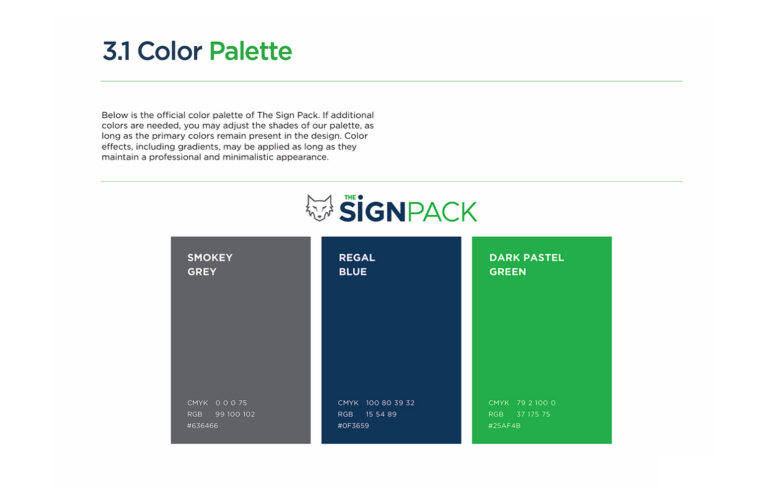
- Complete color specifications: Pantone, CMYK, RGB, HEX, plus approved paint/vinyl matches.
- Typography rules: Primary fonts, sizing, and hierarchy that work across different signage families.
- Logo usage rules: Minimum sizes, clear space, and versions for light and dark backgrounds.
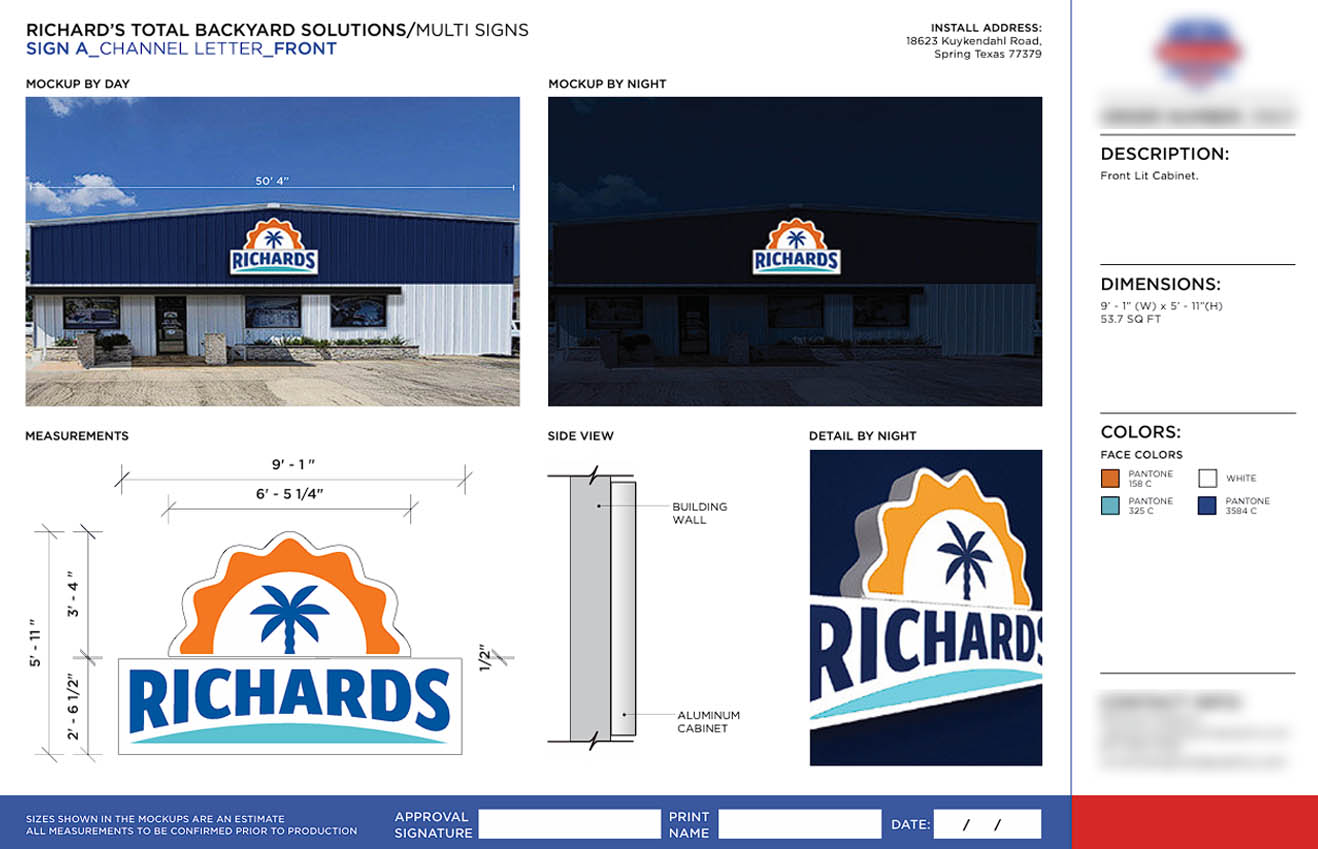
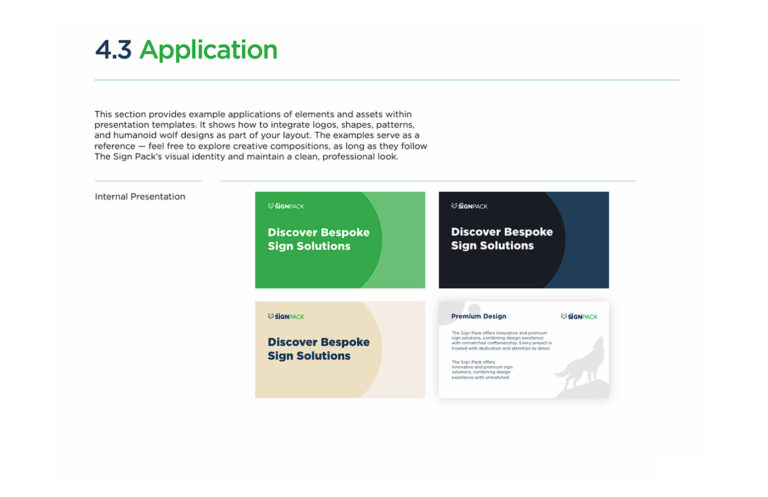
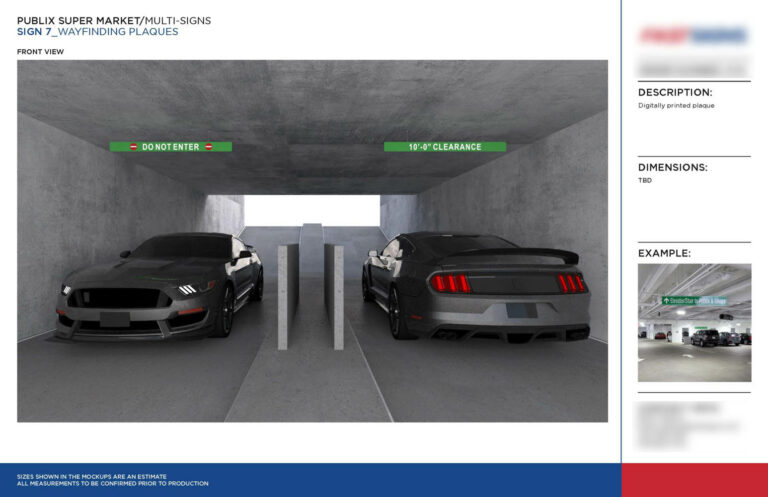
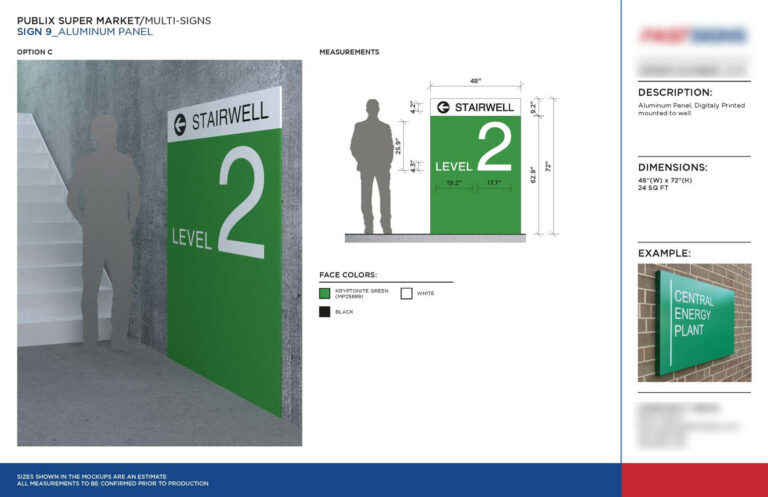
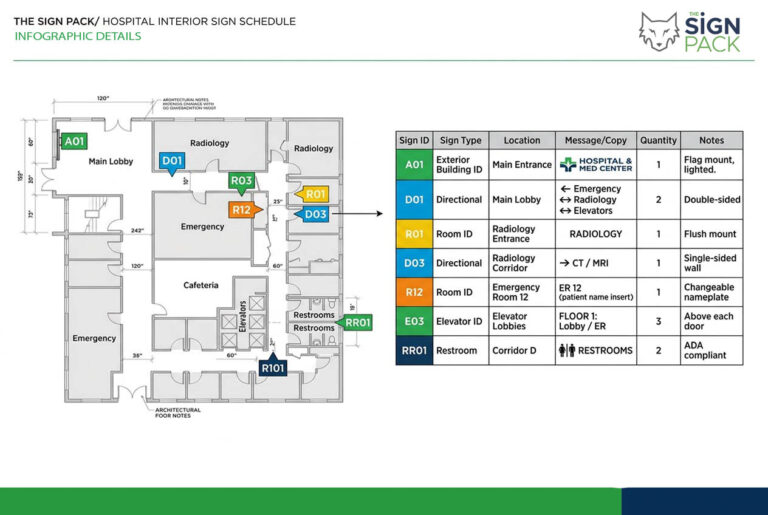
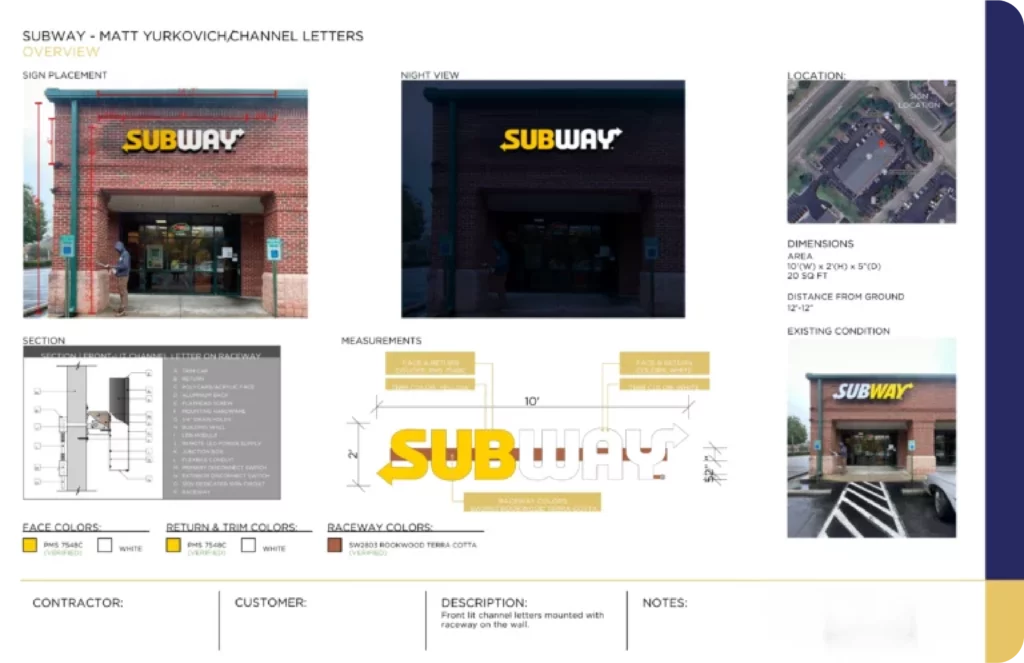
- Standard signage applications: Example layouts for fascia/wall signs, monuments, pylons, interior wayfinding, ADA, and more. These are supported by Creative Layouts and 3D Renderings where needed.
- Recommended signage specifications: Typical dimensions, approved materials, lighting types, finishes, and sample construction details.
- Placement guidelines: Recommended mounting heights, façade zones, and spacing between elements.
By providing this comprehensive pack, a sign company demonstrates expertise and professionalism while laying the foundation for long-term client partnerships.
A robust Brand Guideline and Signage Standard Pack can serve as a clear competitive advantage in a crowded marketplace.
This matters for several reasons:
- It’s a required foundation before you even think about mass production in a signage program.
- You need clear rules for adapting brand assets when the original artwork is not directly applicable to physical signs because of form or material limitations.
- Many things that look great on screen simply do not work in the real world. Only an experienced signage team will spot these issues early.
- It becomes a primary reference across the signage program and a starting point for the brand’s marketing team to continue refining.
- It ensures the transformation of brand identity from digital/print into physical space happens in a realistic, achievable way.
- It allows the sign company to position itself as a consultant, not just a vendor. This helps the brand deliver a stronger real-world experience based on deep signage expertise.
In our experience, this support is critical, because many clients don’t fully understand how ready—or not—their existing brand assets are for signage.
Adjustments are often necessary to make the program scalable.
Without clear communication, clients may push back when fabrication requires changes due to material or construction constraints.
The objective is to foster alignment: implementing a signage program that truly drives results requires the brand to collaborate and provide assets tailored for large-scale execution.
When this partnership is established, the outcome is a signage program that delivers an immersive experience and integrates seamlessly into the architecture and spatial journey, rather than simply displaying a logo.
Standardizing the Signage System Design for Scalability
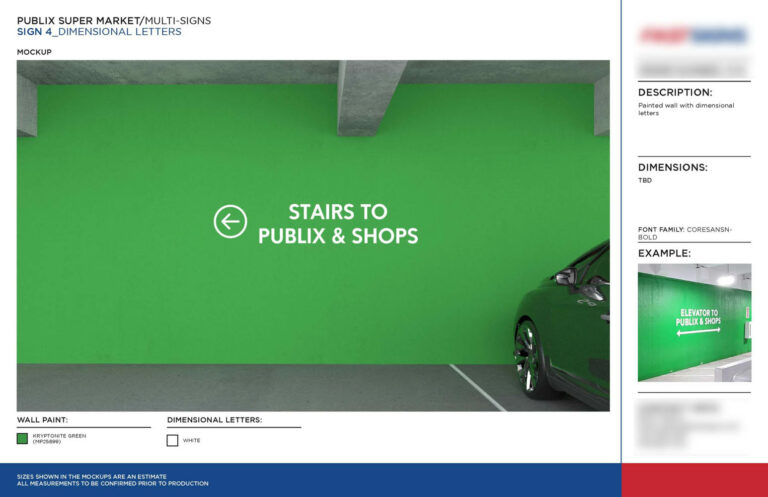
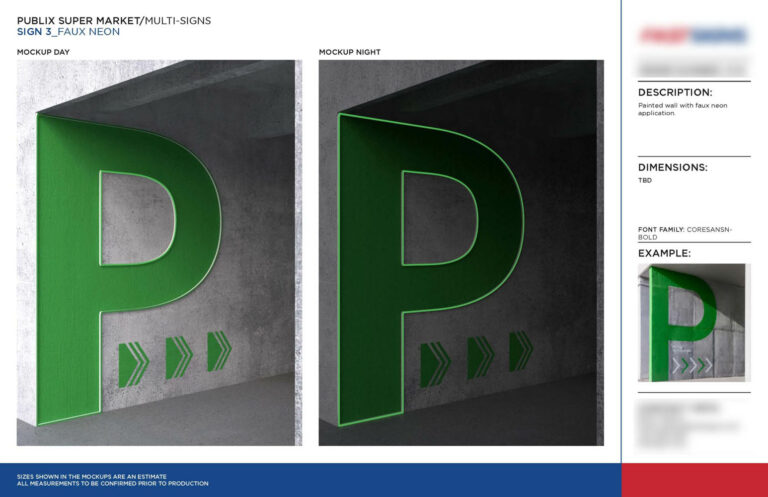
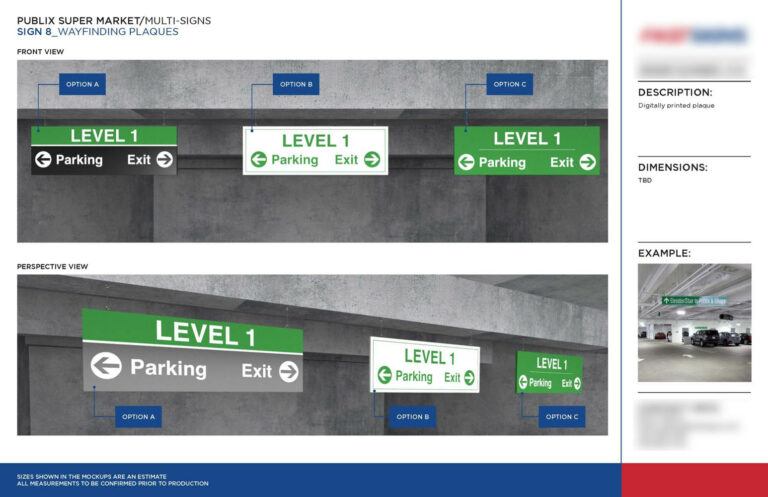
Consistency is rooted in standardization. Any signage program designed for scale requires documented system standards. Clear standards ensure that implementation follows uniform visual and structural rules, even as vendors change or the program expands to new locations.
A standardized signage system gives you a stable framework that can flex to different content while still protecting brand consistency, identity, and sign functionality.
In practice, these standards allow teams to:
- Maintain visual consistency across large environments and multi-location networks
- Speed up the design process by cutting down repetitive work
- Simplify revisions when information changes
- Keep design intent aligned with what actually comes out of production
- Without standardized layouts and rules, even the best-designed signage systems will gradually drift. Incremental deviations accumulate across projects and can undermine consistency.
Now imagine a multi-location brand with multiple signage families at every site, and different on-the-ground challenges at each branch.
What starts as a clean list of sign types quickly turns into dozens, or even hundreds, of individual signs, each with variations in size, language, regulations, or environment.
A program like this might include:
- Exterior building identification signage
- Interior directional signs with ADA compliance
- Promotional signage
- Immersive interactive digital signage
- Environmental graphics that support the brand
Therefore, managing this level of complexity goes beyond design expertise. Sign companies need a structured system that defines relationships among sign types and maintains visual cohesion and functional integrity across the entire program.
From our experience, two elements need to be clearly defined from the start:
- Signage System Design: Focused on the functional side of the program. This ensures smooth navigation, better usability for all users, and clear operations across every sign in the environment.
- Branded Environment Signage Design: Focused on elevating the spatial experience, building emotional connection and trust, and fostering a sense of familiarity that supports business growth.
When sign companies define both of these elements early, the signage program becomes significantly easier to manage and scale. This reduces the risk of endless revisions, production errors, and costly rework.
It’s also critical to standardize not just the visual system, but the way that system feeds into production and permitting. Those two stages are where many sign projects hit their biggest bottlenecks, and both trace back to how well the design and standards were set up in the first place.
If you want to go deeper into these two aspects and see how they play out in complex environments, we recommend exploring the dedicated articles linked above.
These articles offer a more detailed breakdown of how to structure both the functional system and the branded experience for real-world signage programs.
Centralizing Workflow and Tracking Jobs in a Single System
A centralized workflow creates a single source of truth for all projects across countries and locations. That way, you can easily track work, everyone sees the same data, and your team doesn’t duplicate effort or manage projects across scattered spreadsheets, emails, and chats.
The model works best when you’ve already established a hybrid team structure that combines a global core team with local vendors. We’ll cover this concept in more detail in the next section.
The core idea is to maintain global visibility while keeping local progress moving. Centralized management can see the overall picture of every project in every country, while local execution teams stay focused on day-to-day implementation.
When you run everything through a single workflow platform that connects briefs, design, files, and job status by country and location, teams can move faster and stay aligned from the start.
The global core team typically handles the strategic and operational elements, such as:
- Defining the signage program brief
- Managing client approvals
- Creative layouts and 3D renderings
- Technical and permit drawings
- Standard files and other documentation
This model makes progress tracking far more efficient. With everything centralized, files remain organized, approval steps are transparent, and the usual back-and-forth communication that leads to delays is minimized.
You can implement this model by integrating your existing job management system with an external support platform.
For example, integrating CoreBridge with the TSP Platform allows you to manage projects and clear sign design queues more efficiently.
Done right, this integration helps you:
- Reduce the double entry of design requests
- Make job progress easier to track and keep teams aligned
For sign companies already dealing with heavy workloads, integrating CoreBridge with the TSP Platform unlocks several practical advantages:
- Structured design briefs: Start design requests directly from CoreBridge and follow a simple, guided process to complete and finalize each order. This keeps everything in one place and makes it easier for your team to manage requests, track progress, and stay aligned from start to finish.
- Organized files and assets: All design files and assets are stored in a single, organized location, making design progress easier to monitor and preventing anything from getting buried or lost across tools.
- Clear, trackable revisions: Every revision is logged and easy to trace—no more digging through old chats, email threads, or random attachments to figure out which version is the latest.
- Less mental load for busy teams: With centralized communication and project-level comments (instead of scattered emails), your team spends less time chasing information and more time actually moving jobs forward.
If your team already runs on CoreBridge, integrating with the TSP Platform can help you handle the high-volume workflows that come with multi-location signage programs.
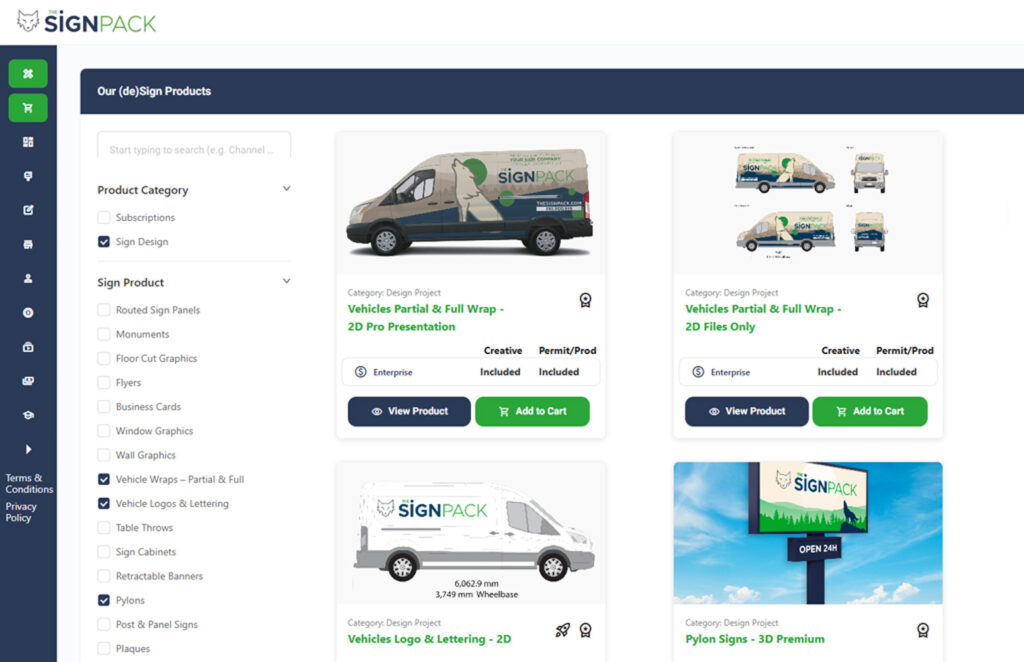
The TSP Platform is a modern system built specifically for sign companies to scale sign design professionally and to industry standards, without immediately adding headcount. It also supports centralized communication around sign design production for your global core team.
Every order logged in the TSP Platform 3.0 is executed by a specialized sign design team. They act as your design capacity engine, focused on completing signage design end to end—from creative layout to permit-ready files—so your in-house team can stay focused on production and the relationship with the end client (the brand).
For more details on how this integration works in practice, you can refer to the CoreBridge and The Sign Pack Integration page on our site.
Build a Hybrid Team That Combines Internal and External Support
One key framework for sign companies looking to manage multi-location signage programs is building a hybrid team that combines in-house staff with the right external support.
The main reason this model works is simple:
Your core team keeps control of client relationships, project management, and final approvals, while their time and energy stay focused on strategic, high-impact work for the business instead of getting buried in production overload.
In practice, the ideal hybrid composition is flexible and can be tailored to your company’s size and goals, but it generally includes:
- Design engine: A team responsible for handling sign design from start to finish, including revisions, creative layouts, presentations, and delivering permit-ready and production-ready files.
- Technical expert team: Survey, fabrication, and installation crews who work from clean, well-organized pre-production files and permit drawings that meet the expectations of engineers and city reviewers.
You can fill the design engine role in different ways: freelancers, outsourced design teams, agencies/design studios, or a specialized, extended design team that works through a centralized platform.
Work can then be split into two main groups:
- Global core team: Your internal team plus your design capacity engine. This group ensures that every design stays on brand and adheres to the agreed file standards.
- Local vendors: Professional execution teams on the ground who understand local conditions and have strong contractor networks. They handle fabrication and installation in accordance with the agreed standards.
When you build a hybrid team like this, your operational layer is much better positioned to run successful, sustainable signage programs. Many sign companies already use some form of hybrid model because it allows them to:
- Grow without adding permanent headcount
- Maintain consistent quality across projects
- Respond quickly to new opportunities with elastic design capacity
- Adjust to workload spikes without the fixed cost of constantly hiring new designers
- Keep internal resources productive and balanced instead of overloaded
By adopting this model, your team saves costs, reduces pressure on internal resources, and maintains greater control over client relationships.
By bringing in external design support, you can add flexible capacity and specialized skills when demand increases, while your in-house team leads on strategy, client communication, and approvals.
With this model, your company can:
- Scale without constantly expanding staff
- Keep a consistent quality bar across all locations
- React fast to new RFPs, rollouts, and rebrands with on-demand design capacity
- Protect your team from burnout while still taking on complex programs
If you want to explore this model in more detail, you can refer to our article “How Sign Companies Scale Design Capacity Without Adding Headcount”, where we dive deeper into the operational and profitability benefits of a hybrid design model for sign shops.
Standardizing Site Surveys and Project Information
Standardizing site surveys and project information is the heart of any signage program for multi-location brands.
When you’re dealing with data from hundreds of sites, consistency in that data has a huge impact on how fast and accurately your central team can execute at scale.
You’ve probably felt this before:
“The documents look organized, but as soon as we start drawing, something is always missing.”
Or, “Every surveyor has their own style and format, and when something isn’t clear, we end up going back and forth with questions, which makes it hard to review quickly.”
A single wrong dimension can mean redoing an entire set of drawings—or worse, remaking a sign.
That’s why standardized site surveys and project information are so critical for multi-location signage programs. They’re a core foundation if you want a system that is both successful and scalable.
In theory, you can use a paper or Excel checklist. In real multi-location, complex projects, though, you run into issues like:
- Surveyors are changing the format on their own
- Photos stored on personal devices or in WhatsApp threads
- Critical fields left blank or filled in carelessly
- Endless scrolling just to find the right photo for a specific site
- Zoning information is getting missed right before permit submission
- Important images buried in group chats or email chains
- Design teams start work by hunting for photos, calling surveyors, or guessing what the façade actually looks like
This kind of environment doesn’t work when you’re managing a high-volume, multi-location program with tight timelines.
While your design and engineering teams should be focusing on layouts and permit drawings, they end up spending their time patching information gaps that should have been solved on day one during the survey.
One missed detail can force a full drawing revision—or in the worst case, a fabricated sign that simply doesn’t fit the façade.
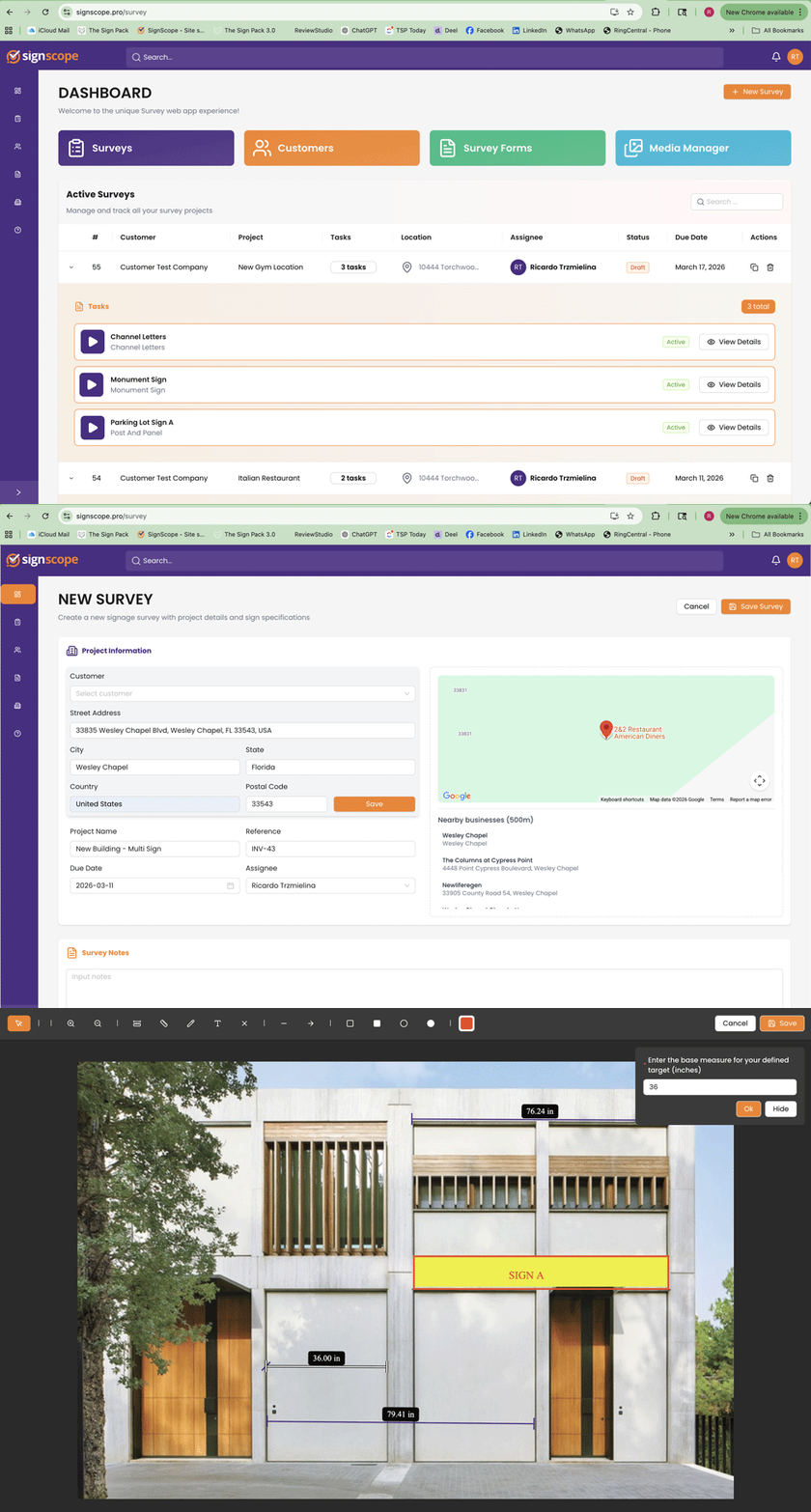
We recommend using SignScope.pro to simplify and standardize this process so site survey and project information can be captured properly from the start. The tool functions as a standardization engine and a core foundation for a high-quality, effective signage program.
With proper data standardization, all critical information gets captured in the very first stage of the sign project:
- Every surveyor fills out the same digital form, with required fields and controlled field types (numbers, dropdowns, checklists) based on your baseline standards.
- Photos are uploaded and tagged directly to the correct task or area, rather than buried as “IMG_1234” in chats, emails, or loose documents.
- Dimensions are entered into dedicated fields and can be linked to annotated photos and visual calculations.
- All data is stored in one place (a central dashboard and cloud storage), making it easy to search, audit, and compare across locations.
An approach like this quickly becomes a best practice for survey standardization inside your company, especially when you’re under pressure to turn around signage projects for multi-location brands faster and with fewer errors. You’re no longer guessing:
- What data needs to be collected is clearly defined
- How it should be documented is standardized
- Where it should live is agreed upon, so every branch follows the same baseline
For sign shops, this level of standardization directly reduces rework, protects margins, and keeps design and engineering teams focused on value-added tasks. It prevents them from repeatedly fixing survey mistakes or tracking down missing information.
| Also Read: Brand Signage Implementation: How Brands Maintain Signage Consistency Across Every Location |
From Single-Country Roll-Outs to Multi-Country Coordination
When a brand operates in just one country, the main challenges of a signage program usually revolve around:
- Standardizing design
- Getting accurate site surveys
- Managing approval workflows
- Preventing design workload from becoming a bottleneck
- Coordinating production, permitting, and installation
Even in a single-country roll-out, those factors can already put real pressure on your team’s time, capacity, and margins if they’re not managed with a clear system.
Once the brand starts expanding across borders, the complexity increases. You now have to deal with:
- Different permitting rules in each city and country
- Time zone differences and more complex communication
- Technical and file standards that may vary (imperial vs. metric, drawing formats, layouts)
- Local vendors with very different ways of working
- Higher risk of color and material inconsistencies
At this point, a signage program cannot be treated as a loose collection of projects. It has to become a coordinated system that brings together several critical elements:
- A global brand guideline
- Technical standards that can be localized where needed
- A curated network of vendors
- A workflow and platform that unifies all the moving parts
In this scenario, having systems and teams that integrate well between the global core team and local vendors becomes essential.
In a single-country roll-out, your sign company can often rely on familiar regulations, known material suppliers, and an established contractor network. At the multi-country scale, many of those assumptions fall apart, and surprises become the norm.
To maintain brand consistency while complying with local rules, you need a “global brand, local details” approach.
Central guidelines define the brand, design, and core technical standards, while local execution adjusts mounting methods, materials, and construction details to comply with local codes and conditions—without compromising the visual identity.
When you manage your signage program with centralized direction and adapt technical details to each country’s context, your team ensures scalability, protects profitability, and avoids costly cycles of rework and redesign that can occur when you treat every new country as a separate project.
We’ll dive deeper into this topic in a follow-up article, “Signage Program Management: From Single-Country Roll-Outs to Multi-Country Coordination.”
We’ll unpack how to structure the systems, teams, and workflows that keep multi-country programs under control.
How Partnering with The Sign Pack Contributes to the Success of Your Signage Program
Managing a signage program across multiple locations becomes significantly more difficult as scale increases. What works for five locations often breaks down at fifty. Brand standards become inconsistent, permit requirements vary by jurisdiction, and production files can quickly become fragmented across teams and vendors.
In many cases, multi-location signage programs fail not because of fabrication issues, but because the design and documentation system behind the program cannot scale consistently. Design systems, permit documentation, and production-ready files begin to break down as complexity grows.
That’s where The Sign Pack fits into the process. We help sign companies standardize the design and documentation layer behind multi-location signage programs, making it easier to maintain consistency across every site, reduce errors, and keep projects moving forward.
Today, fabrication is no longer the primary bottleneck for most sign companies. The real pressure point is design capacity—the ability to quickly and accurately convert briefs, surveys, and brand standards into production-ready files.
When design becomes the choke point, it impacts lead times, limits your ability to take on new projects, and ultimately affects margins.
We are not an agency or freelance marketplace. We operate as an extended sign design partner built specifically for the sign industry. We help sign companies increase capacity, improve file consistency, and support scalable growth without adding unnecessary overhead.
Whether you’re managing your first regional rollout or supporting a national signage program, having a repeatable design and documentation system often makes the difference between a smooth rollout and operational chaos.
If your team is experiencing growing design queues, permit drawing bottlenecks, or challenges maintaining consistency across locations, we’d be happy to discuss how we can support your workflow.
Connect with our team to see whether an extended design partnership with The Sign Pack aligns with your goals.