Over the last decade, the sign franchise industry has evolved from a workshop-driven business into an operation increasingly shaped by technology.
Today, production equipment is more advanced, software platforms are smarter, and many leading sign industry players position themselves as technology-driven organizations.
When discussing technology adoption in modern sign franchises, the conversation typically centers around several broad categories:
- Software Platforms: Including design applications, signage calculation tools, 3D rendering software, and project management systems.
- Automation & Production Technologies: Covering production automation, smart digital signage solutions, and marketing technologies.
- Artificial Intelligence: Including generative AI for design, quality control, and operational optimization.
While these technologies are undeniably important, technology alone is no longer the primary driver of growth in the modern signage business.
The reality is that the infrastructure of a sign franchise extends far beyond equipment and software. It involves a much more complex ecosystem, particularly what we describe as the Convergence of Physical and Operational Systems.
In fact, long-term competitiveness depends less on adopting the latest technology and more on understanding how to align that technology with the operational layer of the business.
Companies that get this right create a framework for effective scaling. It helps them operate consistently and adapt to changing market demands.
In this article, The Sign Pack explores the technologies we believe are most essential to the growth of modern sign franchises, as well as the operational growth factors that drive long-term success.
Let’s look at the three key technologies and supporting systems that play the most significant roles in helping sign companies achieve long-term growth.
High-Efficiency Production Technology
Advanced production equipment continues to play a key role in the growth of modern sign franchises. We mention production technology first because it remains the engine that drives the shop floor.
With sufficient production capacity, sign companies can serve customers across multiple locations while maintaining competitive lead times and consistent output.
Some of the most important high-efficiency production technologies include:
- Digital printing systems
- UV-curable ink technologies
- Eco-solvent printing systems
- Automated finishing solutions that improve both visual quality and production speed
- And other emerging fabrication technologies
However, when considering growth, production technology should be evaluated within a broader context.
The conversation is no longer simply about whether a machine can produce installation-ready signage. Nor is it only about whether production equipment can support higher-margin projects.
The more critical perspective is strategic. It’s about how production technology fits within the company’s overall growth strategy.
As access to advanced production technology grows increasingly widespread, the competitive landscape begins to shift. What was once a differentiator gradually becomes the industry standard.
Today’s sign companies have far greater access to sophisticated fabrication equipment than ever before. As a result, barriers to entry continue to decline, making it easier for new competitors to enter the market.
In this environment, the companies that win are not necessarily those with the most advanced production floor.
The real advantage goes to organizations that integrate production capacity with scalable operational systems. They consistently deliver quality, reliability, and a client experience that meets expectations at every stage of the project.
A New Perspective on Growth in an Era of Advanced Production Technology
There is no question that modern production equipment remains the engine behind a successful sign franchise operation.
But as technology becomes less of a constraint in signage production, growth depends increasingly on operational strength.
Today, growth is no longer determined solely by fabrication capacity. Increasingly, it is influenced by the strength of a company’s operational foundation.
Over the years, we’ve seen a familiar growth pattern repeated throughout the industry at events such as ISA International Sign Expo:
- Adding more equipment
- Hiring more staff
- Increasing production output
Many sign companies adopt new technology with the goal of improving efficiency, increasing throughput, and exceeding customer expectations.
Those objectives still matter. However, the operating model behind successful growth has become far more complex.
For many companies, fabrication capacity is no longer the primary bottleneck. Equipment is faster, automation is more capable, and production output can often be expanded relatively quickly.
The challenge has shifted elsewhere.
Today, growth is more often constrained by the capacity of internal teams, the quality of project documentation, and the accuracy of pre-production design.
This is one of the biggest reasons many sign companies struggle to improve operational efficiency and scalability despite investing heavily in modern production technology.
Many organizations continue to experience hidden margin erosion resulting from:
- Excessive revisions
- Permit resubmissions
- Shop-floor reinterpretation of incomplete information
- Misalignment between design intent and fabrication requirements
These operational issues often create more friction than the production process itself. As fabrication technology continues to advance, the companies that scale successfully will be those that address the operational bottlenecks surrounding production, not just the equipment on the production floor.
The Innovation Paradox: When Production Gets Easier, Execution Gets Harder
With all the advancements in production technology over the past decade, it’s easy to assume that running a sign company is now simpler.
In reality, the opposite is often true: operational complexity has increased as technology has improved.
Modern production equipment is highly automated. Physical fabrication is no longer the primary obstacle it once was. Today, virtually any company can invest in high-end CNC routers, wide-format printers, or other advanced equipment. The learning curve for operating these technologies is also much lower now.
Yet despite these advancements, technology alone does not guarantee business growth.
Without scalable operational systems, even the most advanced production equipment can’t deliver its full value. As companies grow, new challenges often emerge elsewhere in the business.
Common examples include:
- Seasonal workload spikes that overwhelm internal teams
- Difficulty finding and retaining experienced sign designers
- Recurring production delays caused by design backlogs
- Limited internal capacity to manage multi-location rollout programs
- Site survey processes that lack the structure needed to support efficient production workflows
These are not fabrication issues—they are operational challenges.
And they are becoming increasingly important as production technology continues to improve.
Long-term growth in today’s sign industry relies less on equipment and more on design capacity and operational strength.
Companies that can scale both effectively are often the ones best positioned to maintain quality, increase throughput, and grow without creating new bottlenecks elsewhere in the business.
AI Adoption for Insights and Automation
The second technology that has a crucial role in the growth of modern sign franchises is Artificial Intelligence (AI).
AI is already making a measurable impact across the signage industry, particularly in areas such as:
- Digital signage
- Content automation
- AI-powered signage rendering
- Predictive analytics
As a result, AI adoption is helping sign companies improve efficiency across multiple stages of the business, from accelerating design workflows and supporting sales presentations to uncovering market insights and identifying emerging trends.
From a strategic perspective, however, the AI that matters most is not simply another generative tool. The real value lies in its ability to strengthen operational performance and enhance the capabilities of internal teams.
For modern sign franchises, AI can help:
- Reduce repetitive workloads by automating tasks such as layout variations and content adaptation, allowing design teams to focus on higher-value decisions.
- Analyze digital signage performance by identifying which content performs best based on location, time of day, audience engagement, and visual composition.
- Support predictive decision-making by turning signage interactions into actionable business intelligence that can improve sales performance.
- Enable dynamic content personalization through real-time data analysis that adjusts messaging based on demographics, behavior patterns, and environmental conditions.
Will AI Replace Sign Designers?
As AI adoption accelerates, a common question continues to surface, “Will AI replace sign designers?”
From our perspective, the answer is no.
The signage industry operates within a level of real-world complexity that extends far beyond what AI can independently solve. Every project involves Four Variables that are deeply connected to:
- Physical conditions
- Regulatory requirements
- Production realities
- Human decision-making and operational processes
Successful signage implementation depends on countless technical considerations that still require professional judgment, experience, and context.
A sign may look great in a rendering. But fabrication constraints, installation methods, local sign codes, structural requirements, site conditions, and customer expectations all influence the final outcome.
These are challenges that cannot be solved through AI or automation alone.
Rather than replacing sign designers, AI serves as an amplifier of human expertise. It helps teams move faster, explore more options, and improve productivity while leaving critical design and operational decisions in the hands of experienced professionals.
AI Signage Rendering for Higher Close Rates and Faster Workflows
One of the most valuable applications of AI for modern sign companies is its use as a pre-sales design tool.
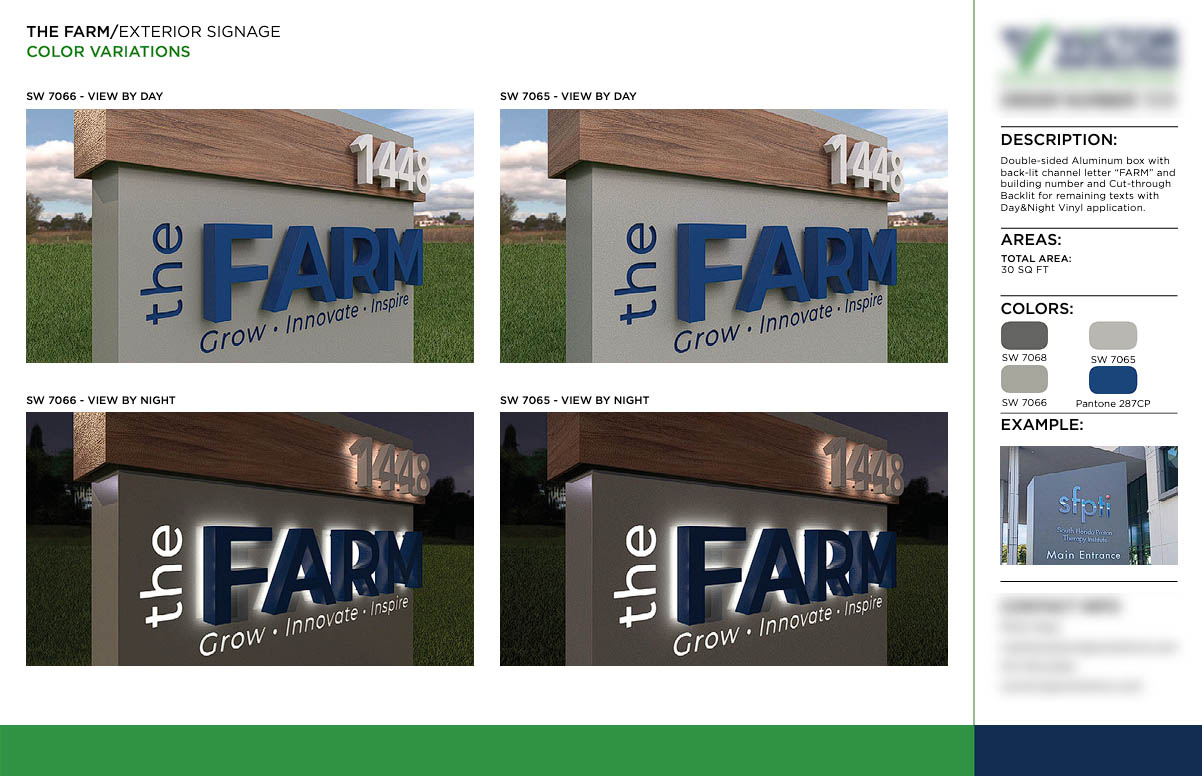
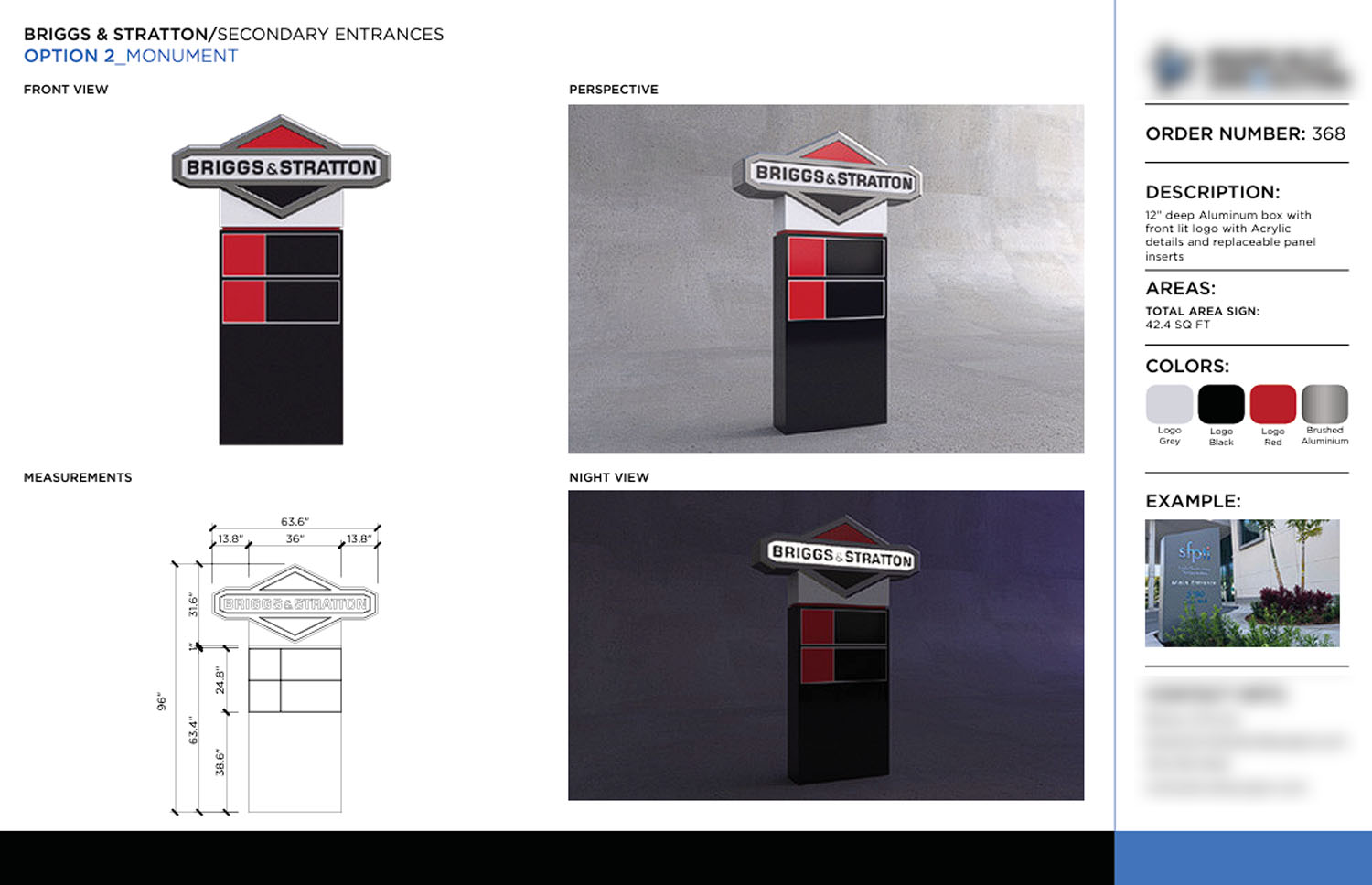
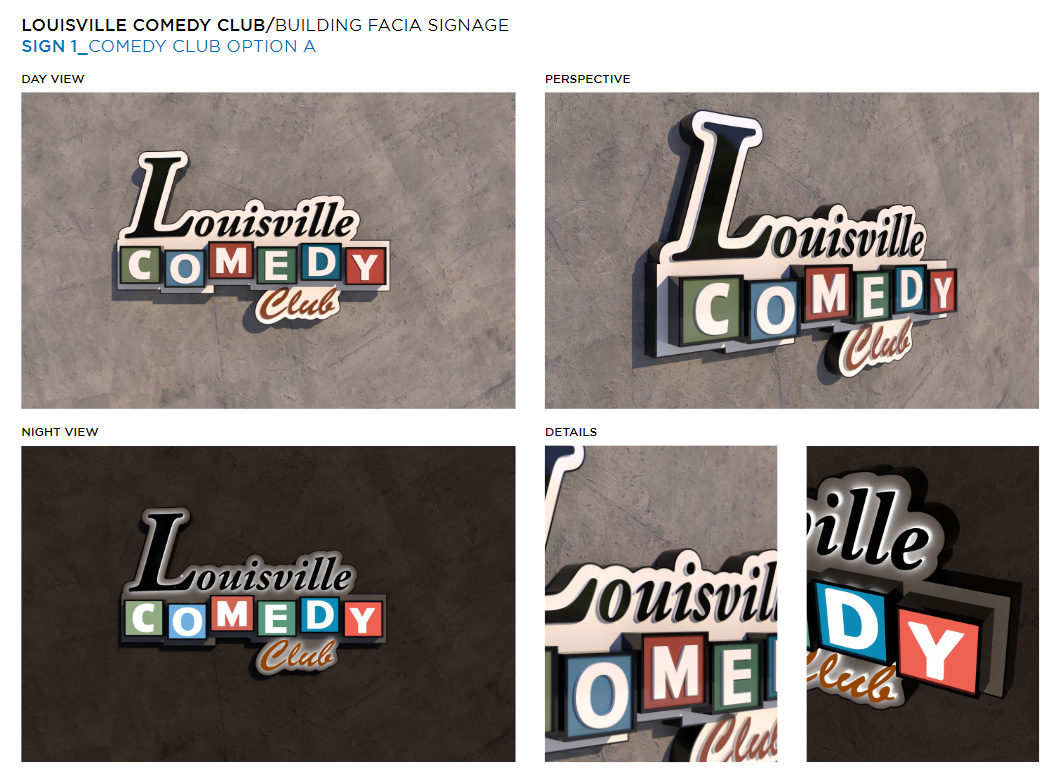
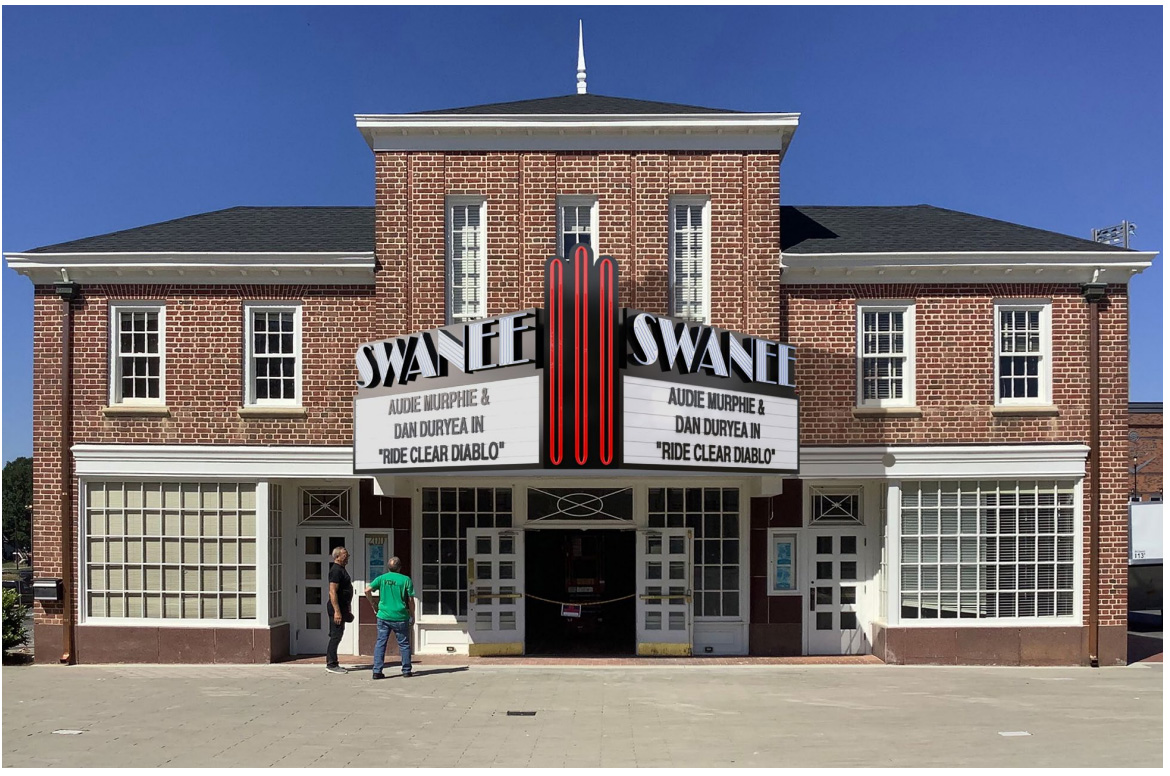
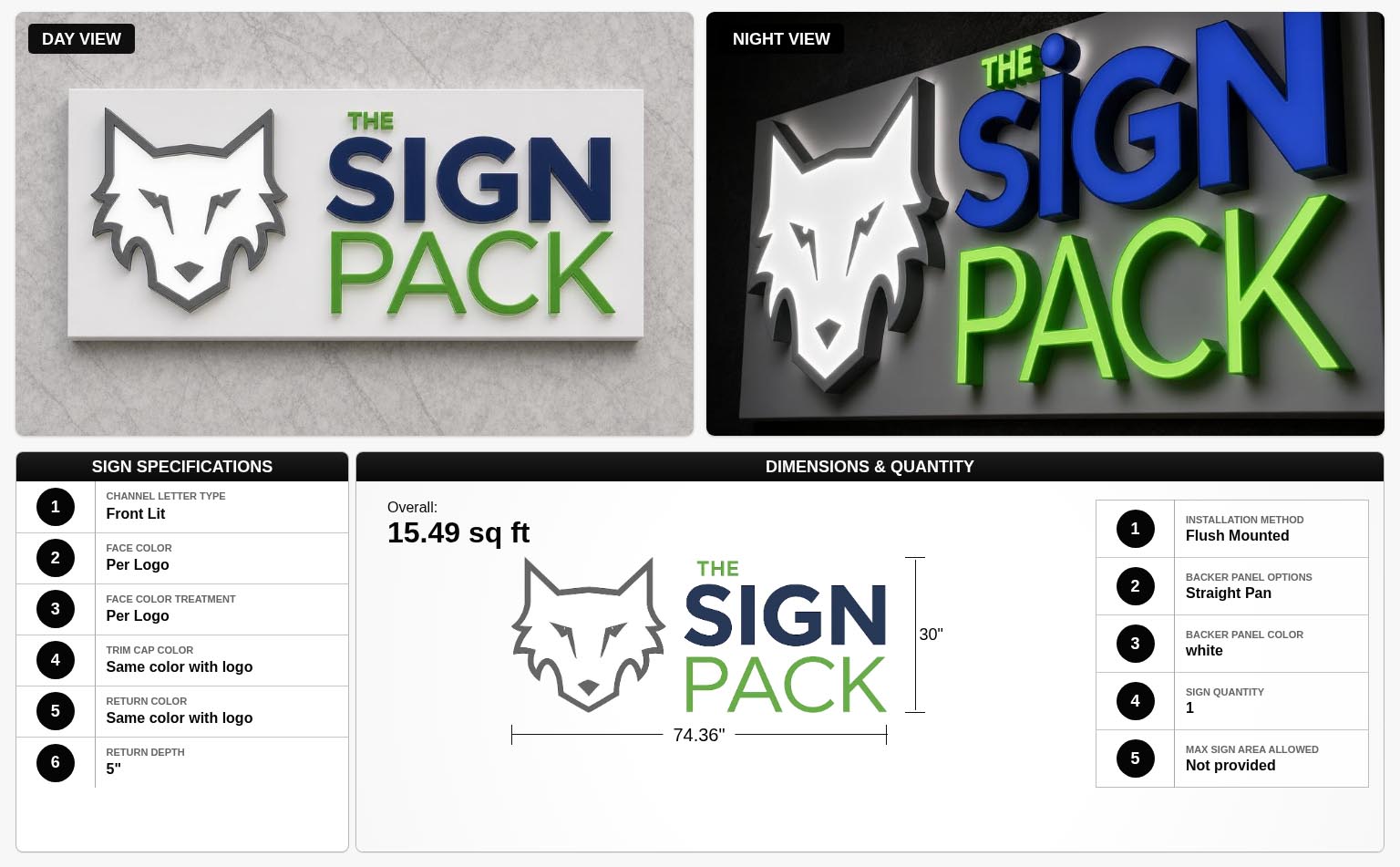
AI-powered rendering platforms can generate signage concepts and realistic 3D visualizations using initial information provided by a prospective customer, including:
- Site photos
- Logos and branding assets
- Color preferences
- Sign dimensions
Many sign companies still underestimate the impact this capability can have on business development.
In practice, AI-powered signage rendering can become a significant competitive advantage when pursuing higher-margin projects.
1. Higher Closing Rates
Customers make decisions with greater confidence when they can clearly visualize the final outcome.
Instead of relying on imagination, they can review a proof of concept that shows how the sign will appear in the real world. When clients can see the vision, they are often more comfortable moving forward with the project.
2. Faster Sales Cycles
Speed matters. AI-assisted rendering enables sign companies to deliver compelling visual presentations much faster, helping sales teams respond to opportunities before competitors have a chance to catch up.
3. Better Expectation Management
When clients have a realistic preview of the finished signage from the beginning, designers can align creative execution with technical requirements more effectively.
This reduces ambiguity, improves communication, and helps ensure that the final product meets expectations.
For these reasons, we believe AI-powered signage rendering is becoming an essential capability for growth-oriented sign franchises.
Beyond supporting the sales process, these tools can strengthen presentations, improve proposal quality, and create more opportunities to win complex, high-value projects.
AI Wolf Studio: AI-Powered Signage Visualization Built by The Sign Pack
Recognizing the growing importance of AI in the sales and design process, The Sign Pack developed AI Wolf Studio, an AI-powered platform designed specifically for the signage industry.
The AI Wolf Studio serves three primary functions:
1. Pre-Sales Design Tool
Wolf Studio is built to support the earliest stages of the sales process.
It enables teams to quickly create initial concepts and proof-of-concept visuals that can be presented to prospective clients before a project moves forward.
2. Sign-Trained AI Technology
Unlike general-purpose image generators, Wolf Studio uses AI trained specifically for signage applications and workflows.
The generated concepts are designed to align more closely with the realities of sign production, helping teams create visuals that are both compelling and practical.
3. Sign Layouts in Minutes
Speed is one of the platform’s greatest advantages.
Wolf Studio lets teams generate signage layouts and visual concepts in minutes. Instead of spending hours manually creating mockups, they can respond faster and keep momentum during the sales process. This also helps deliver a more professional client experience.
By combining these capabilities, sign companies can accelerate response times, improve presentation quality, and create a stronger impression during the earliest stages of client engagement.
For organizations looking to improve both sales efficiency and design workflow, AI-powered tools like Wolf Studio represent a practical example of how AI can contribute to sustainable growth in today’s sign industry.
Modern Site Survey Technology for Scaling Multi-Site Projects
The next essential technology driving growth in modern sign franchises is a scalable site survey system.
Site surveys have always been the foundation of successful signage projects, regardless of size or complexity. When site information is inaccurate or incomplete, the consequences can quickly cascade throughout the entire project lifecycle.
Common issues include:
- Signage designs that do not accurately reflect site conditions
- Production errors caused by missing or incorrect information
- Permit rejections from city reviewers
- Costly rework caused by unexpected field corrections
At the same time, as multi-location signage programs continue to expand, even minor mistakes made during the survey phase can multiply into significant delays and expenses across dozens or even hundreds of locations.
For sign companies managing projects at scale, standardized site surveys are no longer a best practice. They are an operational necessity.
Likewise, inconsistent survey processes remain one of the leading causes of production errors, repeated revisions, project delays, and ultimately, lost client confidence.
In fact, the standardization of site surveys and project information is often one of the most important factors determining the success of a Multi-Location Signage Program.
This is why modern site survey technology has become increasingly important. The right system can help sign companies manage complexity more effectively, maintain consistency across locations, and scale multi-site projects with greater confidence and predictability.
Common Site Survey Challenges and How Technology Can Solve Them
When people discuss technology for site surveys, the conversation often focuses on tools such as:
- iPad Pro devices
- Laser measuring equipment
- Note-taking applications
- Photo organization software
While these tools are valuable, they do not solve the underlying operational challenges that emerge as projects become more complex.
Those challenges become particularly evident when:
- Project complexity increases
- Multi-location programs continue to expand
- More stakeholders become involved
- Photos remain scattered across camera rolls
- Notes are stored across emails, folders, and disconnected systems
- Teams spend excessive time compiling survey reports manually
As signage projects become larger and more demanding, traditional survey methods become increasingly difficult to manage.
What companies need is not simply better hardware, but a more structured approach to collecting, organizing, and communicating project information.
The article Costly Signage Site Survey Challenges explains that the most common issues facing sign companies today are:
- Fragmented Documentation Across Multiple Devices and Applications: Critical site survey information is often spread across multiple devices, software platforms, and communication channels, increasing the risk of missing information and data loss.
- Different Signage Projects Require Different Survey Workflows: A generic survey form rarely captures the information required for every project type. Different signage applications demand different workflows, and using the wrong framework can create costly information gaps.
- Inconsistent Communication Between Survey Teams and Internal Departments: Many in-house teams receive survey information without sufficient context, forcing designers, estimators, and project managers to repeatedly seek clarification from field personnel.
- Standardizing Surveys Across Multi-Location Programs: Survey quality and documentation standards often vary significantly from one surveyor to another. This inconsistency makes it difficult for centralized teams to deliver reliable and repeatable outcomes.
- Dependence on Individual Experience: Many sign companies rely heavily on senior surveyors whose knowledge exists primarily in their heads. When those individuals leave, valuable institutional knowledge often follows.
SignScope Pro: A Modern Approach to Site Survey Management
One solution designed specifically to address these challenges is SignScope Pro.
This platform was not created to be the most technologically sophisticated site survey platform on the market. Instead, it was built to solve the practical operational challenges that modern sign companies face every day.
The platform is designed to help sign companies:
- Standardize Processes and Enable Reusability: Structure and store project information in a consistent, repeatable format that can be reused across projects and locations.
- Create a Single Source of Truth: Provide stakeholders with centralized access to project information without relying on fragmented files, disconnected folders, or endless email chains.
- Streamline Workflows Through Better Context: Accelerate site survey workflows while ensuring critical project details are captured, organized, and communicated clearly.
- Reduce Administrative Work and Improve Reliability: Store survey data in a centralized cloud-based environment, reducing manual reporting requirements and minimizing the administrative burden on both surveyors and internal teams.
SignScope Pro is not designed to evaluate surveyor performance.
Its purpose is much more practical.
The platform safeguards operational efficiency, project accuracy, and some of a sign company’s most valuable assets: its documentation, institutional knowledge, and project information.
As signage projects become larger, more distributed, and more complex, the companies that scale successfully will be those that treat site surveys as a system, not just a task.
A structured approach to collecting and managing project information creates the operational foundation needed to support growth long before production ever begins.
A New Era: Production Is No Longer the Bottleneck, Design Has Become the Growth Factor
Advancements in production technology have given sign companies access to equipment that prints faster, cuts more precisely, and completes work with a much higher level of automation.
Ironically, as production capacity has increased, the industry’s primary bottlenecks have shifted elsewhere.
Today, the factors that most often determine growth are:
- Design capacity
- Technical expertise
As we discussed in our Signage Industry Trends 2026 article, many sign companies continue to face the same operational challenges year after year:
- A shortage of qualified sign designers
- Inconsistent file quality
- Design backlogs that delay production and installation schedules
Among the most common issues are:
- Shortage of Experienced Sign Designers: Skilled sign designers have always been difficult to find. Rising labor costs and employee turnover have only intensified the challenge.
- Skill Mismatch: Many design tasks are assigned to general graphic designers who may excel at visual design but lack an understanding of fabrication requirements, sign codes, permitting considerations, and production workflows.
- Files That Are Not Production-Ready or Permit-Ready: Incomplete or inaccurate design files often lead to rework, project delays, permit complications, and hidden costs that gradually erode profit margins.
This is precisely why technology for modern sign companies should not be viewed merely as software or tools.
It should be viewed as part of a broader operational system that helps organizations address some of their most critical growth constraints, including:
- Design bottlenecks
- Slow handoffs between project briefing and production
- Quality consistency across franchise locations
- Design capacity that can scale alongside workload demand
The companies that grow successfully are often those that treat design as an operational capability, not simply a creative function.
The Design-to-Sell Strategy: Turning Design into a Growth Engine
One of the most overlooked growth strategies in the sign industry is what we call Design-to-Sell.
At its core, Design-to-Sell is the practice of using professional design and visual presentation as a strategic sales tool. Rather than waiting until a project is awarded, design becomes part of the sales process itself.
In this approach, sign companies use compelling visual concepts and professional presentations to help prospective clients envision the finished result before making a purchasing decision.
A strong proof of concept can immediately differentiate a company from competitors and significantly improve its ability to win higher-value projects.
More importantly, it highlights a key insight about growth in today’s market:
The most powerful growth factors are often not physical assets. They are the systems and capabilities that help a company communicate value more effectively.
In many cases, the ability to present a compelling visual vision can have a greater impact on closing opportunities than another piece of production equipment.
Here is an explanation of how the Design-to-Sell Strategy works:
1. Contextual Visual Presentations Create Stronger Proposals
Proposals that include high-quality, contextual visualizations, such as realistic 3D renderings shown within the actual site environment, often generate stronger client engagement even when the proposed investment is higher.
Clients are not simply evaluating a sign. They are evaluating confidence, clarity, and perceived expertise.
2. Better Support for Decision Makers
Many corporate buyers are responsible for spending someone else’s budget.
Their goal is not always to find the lowest price. More often, they need to make recommendations that feel well-informed, defensible, and professional.
A compelling visual presentation helps them gain internal buy-in and present the project with confidence to stakeholders, executives, or property owners.
3. Positioning the Company as a Trusted Expert
Design-to-Sell elevates a sign company beyond the role of a vendor.
Instead of being viewed as a manufacturer, the company becomes a trusted advisor capable of guiding customers toward the best solution.
This shift often contributes to:
- Higher close rates
- Stronger margins
- More repeat business
- Increased referrals
4. Leveraging Modern Visualization Technology
Today’s Design-to-Sell workflows frequently combine technologies such as AI-assisted layout generation, 3D rendering, and site-photo integration to create highly realistic visual concepts.
These photorealistic mockups allow customers to see what they are buying before the project enters production, making decisions easier and reducing uncertainty.
Without Design, a Sign Company Cannot Exist
Design is one of the foundational pillars of every successful sign company. Without it, a sign business cannot function, let alone grow.
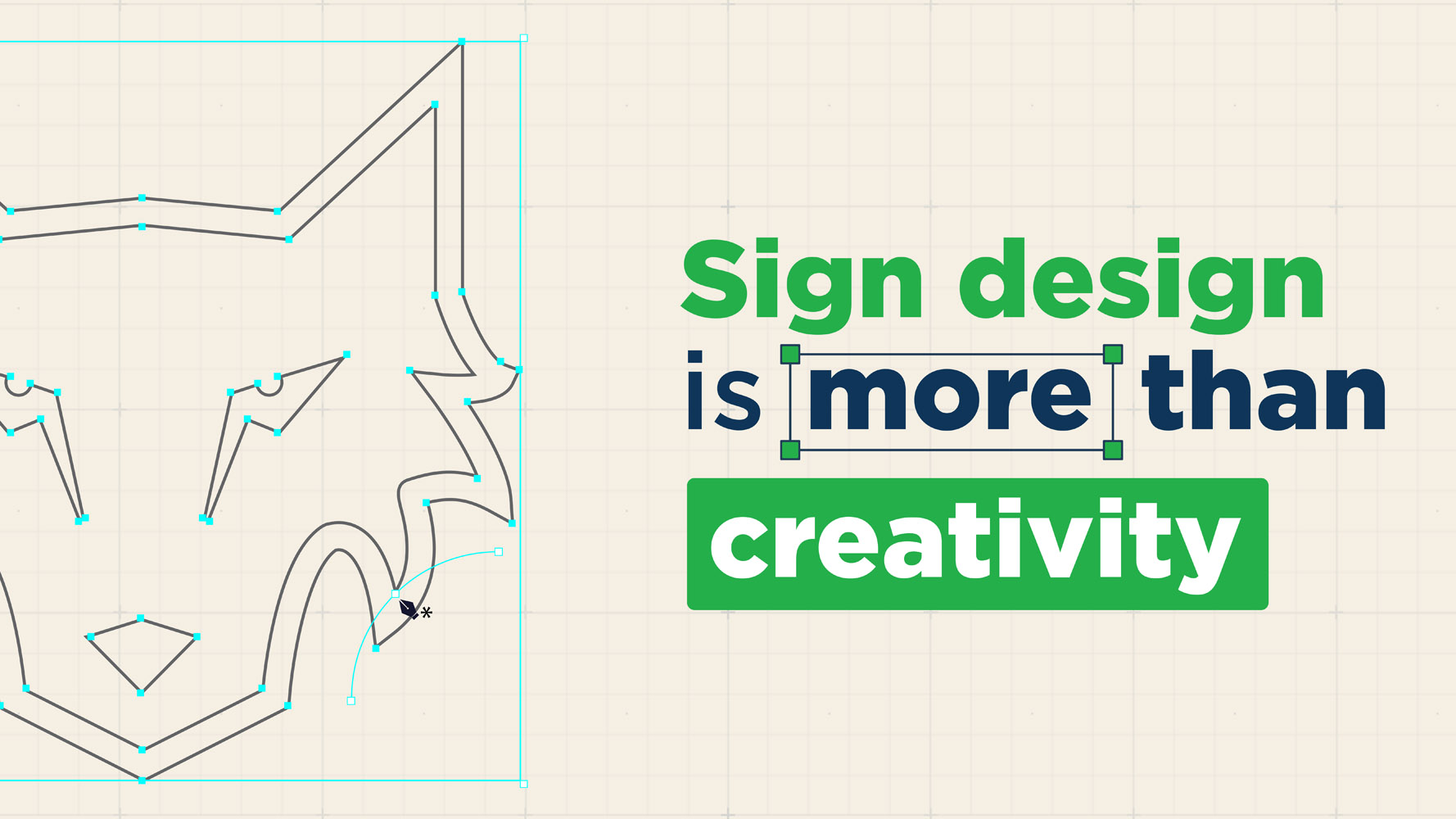
From attracting customers to producing physical signage, specialized sign design sits at the center of virtually every operational process within a sign franchise.
Investing in modern production equipment and software is important, but technology alone is not enough to create sustainable growth.
Without sufficient design capacity and professional expertise, even the most advanced production environment will struggle to operate efficiently.
Design plays a critical role throughout the entire project lifecycle.
- Design Drives Sales: Design should begin long before a contract is signed. Professional proof-of-concept presentations help prospective customers visualize the outcome and build confidence before the project enters production.
- Design Drives Production: Production cannot move forward without accurate design documentation. Every fabrication and installation team depends on design files that clearly communicate dimensions, specifications, materials, and construction intent.
- Design Supports Permitting and Technical Documentation: Sign permits often depend on the quality and accuracy of technical drawings. Well-prepared permit sets help streamline approvals, reduce delays, and improve project execution.
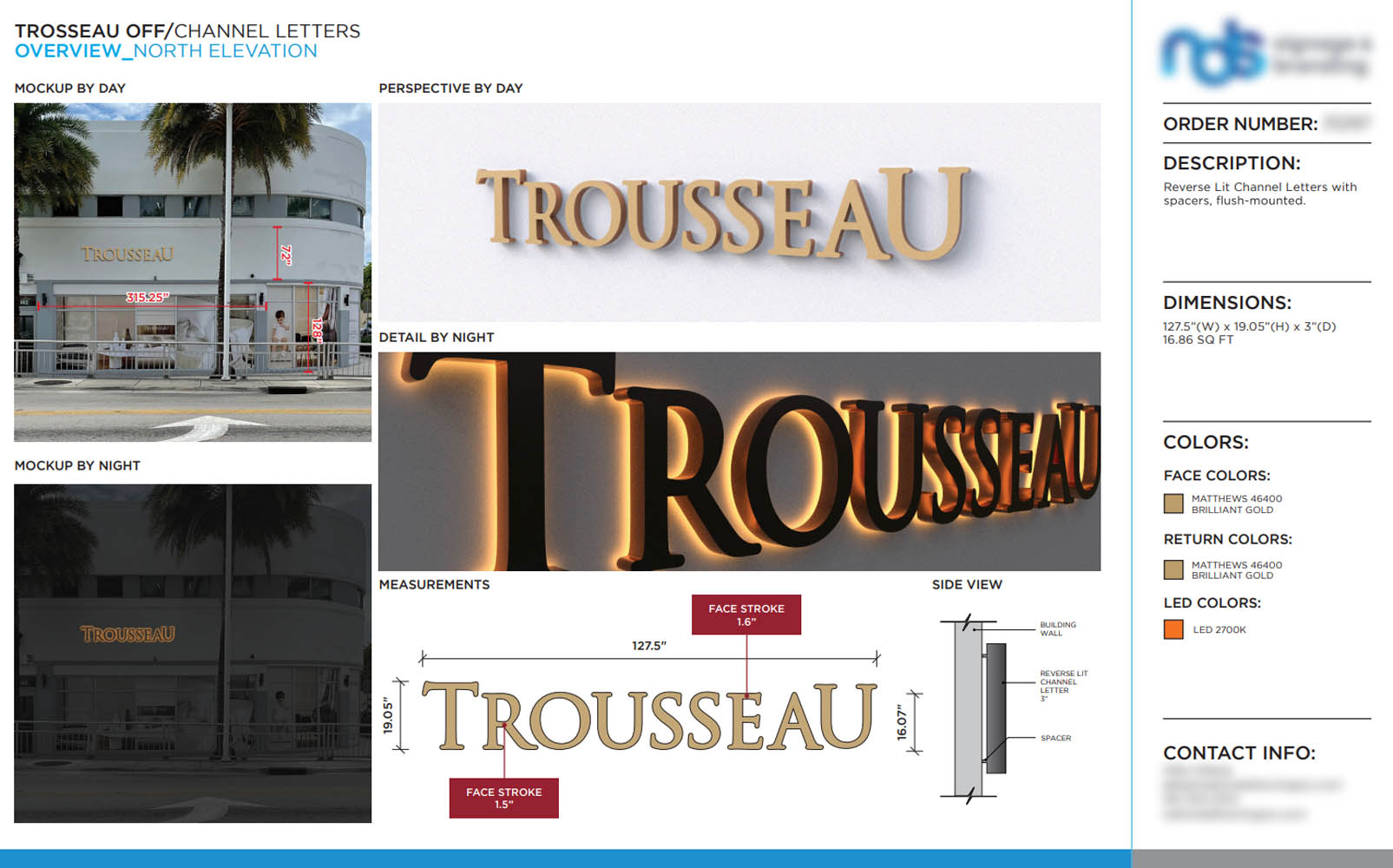
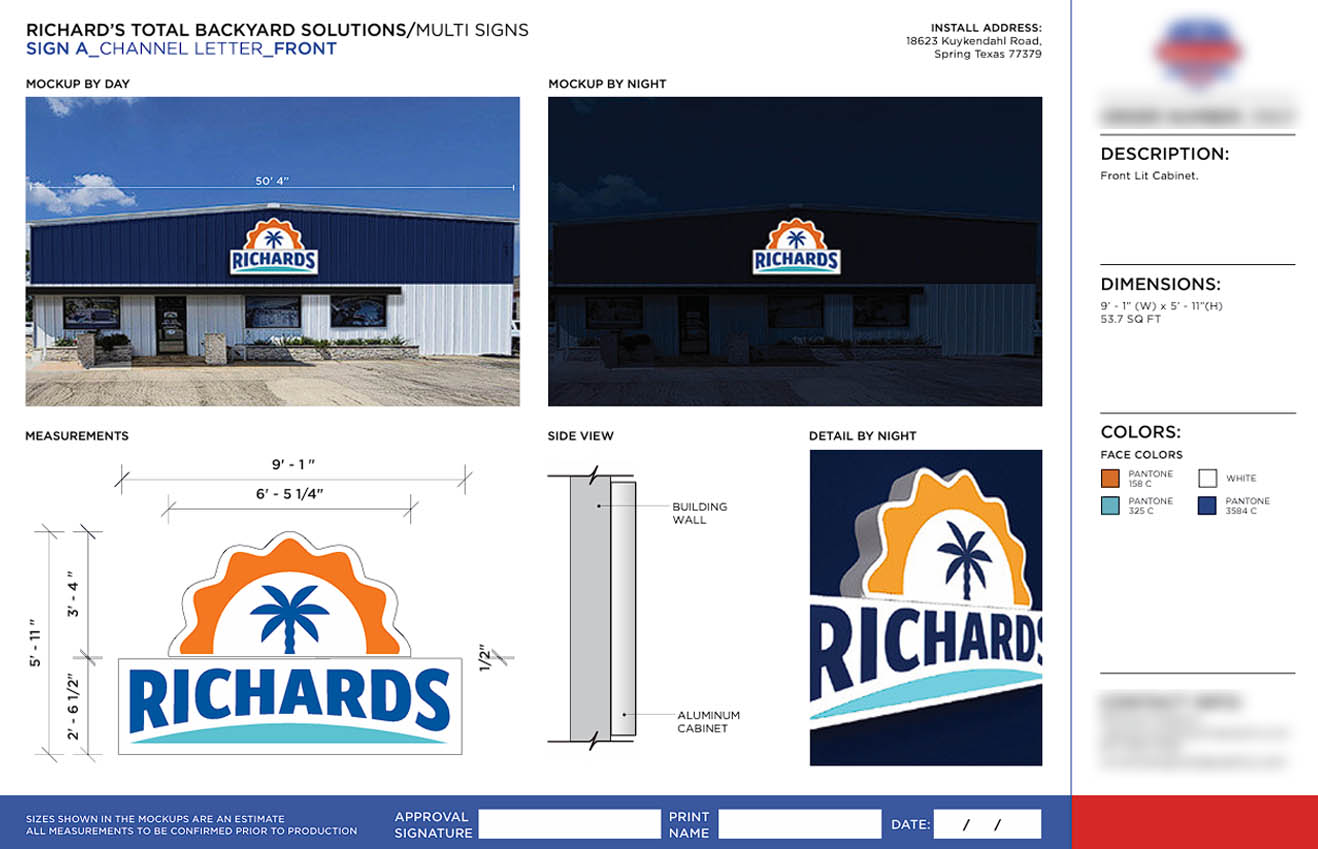
- Design Creates Production Files: Production-ready files contain the measurements, specifications, fabrication details, and implementation requirements needed to move a project from concept to installation. Without these files, production becomes vulnerable to errors and interpretation.
- Design Supports Continuous Refinement: Revisions are an unavoidable part of signage projects. Throughout the project lifecycle, design serves as the mechanism for refining details, accommodating client feedback, satisfying regulatory requirements, and aligning with production realities.
For this reason, design should not be viewed as a single project phase.
It is a continuous operational function that touches every stage of the customer journey.
Simply put, without design, a sign company cannot operate effectively.
Design is the foundation that supports everything from pre-sales visualization and project acquisition to technical drawings, permitting, fabrication, and installation.
It influences every operational layer of the business and remains one of the most important factors determining whether a sign company can scale successfully.
We’ll explore this topic in greater depth in our upcoming article, Why Sign Companies Can’t Scale Without Sufficient Design Capacity.
The Convergence of Physical and Operational Systems
As production technology continues to advance, the companies that benefit the most are not necessarily those with the newest equipment. They are the companies whose internal operations can keep pace with that technology.
These organizations have successfully aligned their production capacity with their design capacity, creating a stronger and more scalable operational foundation.
In practice, this means their physical and operational systems work together seamlessly to create:
- Standardized file structures
- Consistent design logic
- Built-in production rules
- Predictable workflows across teams and locations
By contrast, many sign companies have invested heavily in production technology without fully integrating the operational systems that support it.
As project volume increases, these businesses often find themselves under greater operational pressure. Teams become busier, communication becomes more complex, and bottlenecks begin to emerge in unexpected places.
Design capacity has become one of the most important operational assets within a modern sign company.
At the same time, workload demand in the sign industry remains highly dynamic. Some periods are relatively stable, while others bring sudden surges in project volume.
When companies respond by hiring additional designers, they also take on fixed monthly costs that remain regardless of workload fluctuations.
Adding to the challenge, employee turnover can be expensive. According to research published by Culture Amp, replacing an employee can cost anywhere from 30% to 200% of that individual’s annual salary.
This creates an important strategic question:
How can sign companies increase operational capacity without continuously increasing fixed overhead?
How to Create Alignment Between Physical and Operational Systems
Companies seeking a more effective balance between production technology and operational scalability should evaluate several critical decisions.
Among the most important are:
- Maintaining a lean internal team while keeping design capacity flexible enough to match production demand.
- Separating operational capacity from growth capacity so that each function can perform more effectively.
One practical way to accomplish this is by dividing responsibilities into two distinct categories.
1. Operational Capacity
Operational capacity focuses on recurring, process-driven work that is essential to project execution but not necessarily strategic in nature.
Examples include:
- Creating presentation-ready creative layouts
- Producing photorealistic 3D renderings
- Preparing standardized site survey reports
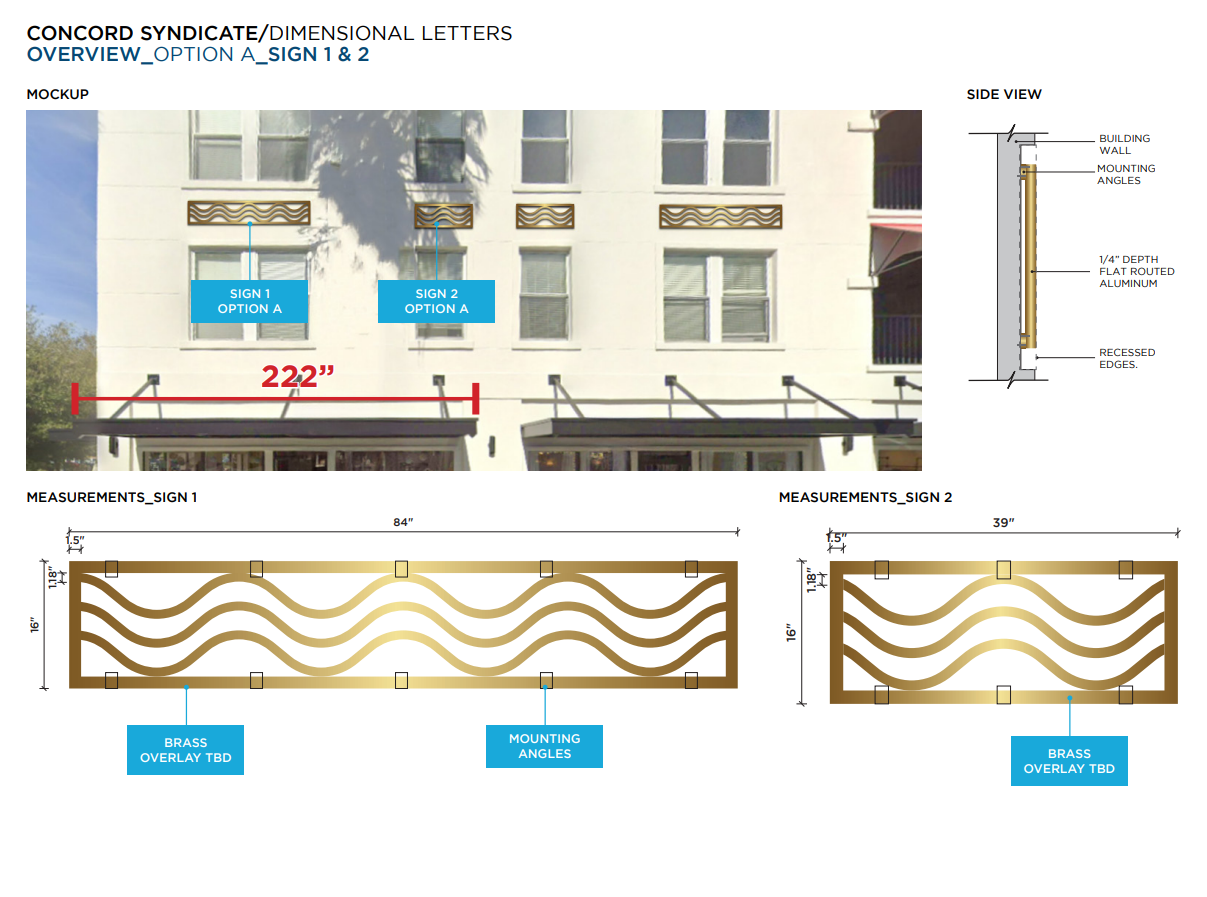
- Developing technical drawings and permit packages
Because these tasks are highly process-oriented, they can often be supported by specialized external partners.
Importantly, this approach is not about replacing your internal team.
Instead, external support functions as a capacity engine that allows the organization to scale operational output in line with production demand while maintaining workflow stability.
For many sign companies, this model is more financially efficient than continually hiring additional staff. Capacity can increase almost immediately without creating long-term payroll commitments.
2. Growth Capacity
Growth capacity focuses on the strategic work that directly influences the future direction of the business.
These responsibilities are best handled by internal team members because they require company-specific knowledge, client relationships, and leadership.
Typical responsibilities include:
- Coordinating with clients and external partners
- Reviewing design, documentation, and production deliverables
- Leading presentations for high-margin projects and strategic opportunities
- Prioritizing initiatives that contribute to long-term business growth
These are the activities that strengthen customer relationships, increase profitability, and create competitive differentiation.
They should remain at the center of your internal team’s focus.
Building a More Scalable Sign Company
When operational capacity and growth capacity are structured intentionally, sign companies can create a more stable and predictable operating environment.
Workflows become clearer. Throughput becomes more consistent. Internal teams spend less time managing bottlenecks and more time focusing on activities that drive revenue and growth.
Ultimately, this is what the convergence of physical and operational systems is all about.
The goal is not simply to invest in better technology. It is to build an operational model capable of extracting the full value from that technology.
As production capabilities continue to improve across the industry, the companies that grow most successfully will be those that pair advanced equipment with scalable operational systems, flexible design capacity, and disciplined execution.
If you’re interested in exploring this concept further, we invite you to read our companion article, How Sign Companies Scale Design Capacity Without Adding Headcount.
The Overlooked Growth Factor in Modern Sign Franchises
By now, we’ve explored some of the most essential technologies shaping growth in today’s sign franchise industry and the broader sign business landscape.
But if there’s one takeaway from this discussion, it’s that sustainable growth requires much more than production equipment, automation, software, AI, or any other tangible asset.
To operate at a high level and earn the trust of corporate clients and multi-location brands, sign companies must develop expertise in areas that go far beyond technology itself.
The most successful organizations understand that growth increasingly depends on capabilities such as:
- Technical knowledge that extends beyond creative design
- A deep understanding of zoning requirements, permitting processes, and signage regulations
- The ability to rapidly develop concepts and proof-of-concept presentations that help win new business
- The operational discipline to align design capacity with production demand and workload fluctuations
Yet many modern sign franchises still underestimate the importance of these factors.
As a result, they often encounter operational obstacles that limit scalability, reduce efficiency, and slow long-term growth.
Why The Sign Pack Built TSP Platform 3.0
This is exactly why we developed TSP Platform 3.0. The platform was designed specifically to address the operational challenges that technology alone cannot solve within the sign industry.
Our role extends beyond providing design services. We help modern sign companies strengthen the operational layer that supports growth, efficiency, and scalability.
In many organizations, skill gaps and capacity constraints cannot be solved simply by purchasing new technology or hiring additional staff. Then, The Sign Pack was built to fill that gap.
We are not a traditional design studio. We are a team of “sign people designing for sign people.”
Our perspective comes from firsthand experience managing sign shops, navigating demanding turnaround schedules, working through complex permitting requirements, and serving clients who expect exceptional results under tight deadlines.
Those realities shaped how we built our systems, our processes, and our team.
Why an Extended Design Team Has Become Essential for Modern Sign Franchise Growth
Over the years, The Sign Pack has earned the trust of more than 500+ sign companies worldwide, including franchise organizations such as Signarama, FASTSIGNS, and Image360, as well as national sign companies and independent sign shops.
As our team of signage specialists has grown, so has our role within the industry.
The reason extended design teams are becoming increasingly important is simple: they address some of the most significant growth constraints facing sign companies today.
1. Solving the Talent Shortage Without Increasing Fixed Headcount
The signage industry continues to face a significant shortage of specialized design talent.
Finding professionals proficient in 2D design, 3D visualization, ADA compliance, wayfinding systems, and permit-ready documentation is not only difficult but often expensive and time-consuming.
An extended design team provides access to specialized expertise without the delays, costs, and risks associated with traditional recruiting.
More importantly, capacity can be scaled up or down as business needs change.
2. Files Built Around Production Logic, Not Just Visual Appeal
At The Sign Pack, creativity is combined with technical expertise.
The goal is not simply to create attractive visuals. The goal is to create files that support fabrication, installation, permitting, and compliance requirements from the start.
With specialists in pre-press, print production, engineering-backed layouts, and architectural signage, our workflow is designed to produce more consistent deliverables while minimizing the risk of costly rework.
3. A Scalable System Rather Than Dependence on Individuals
Many sign companies rely heavily on one or two key designers. While that approach may work temporarily, it often creates a bottleneck as workload increases.
The Sign Pack takes a different approach.
Through TSP Platform 3.0 and the training infrastructure provided by TSP University, we have built a system designed around standardized file structures, consistent design logic, and repeatable production rules.
This allows design throughput to scale without sacrificing quality, even during peak production periods.
4. Keeping In-House Designers Focused on High-Value Work
An extended design team is not intended to replace your internal designers. Its purpose is to remove technical bottlenecks so your in-house team can focus on the work that creates the greatest business impact.
That includes:
- Client communication
- Project coordination
- Design reviews
- Strategic planning
- Business development opportunities
While your team remains focused on growth, we provide integrated design capacity that supports your existing workflows and operational objectives.
Our mission is straightforward:
Help sign companies increase production efficiency and operational scalability without constantly adding more designers.
Looking Ahead
As the sign industry continues to evolve, growth will increasingly be determined by how effectively companies align technology, operational systems, and design capacity.
The organizations that thrive won’t necessarily be those with the most equipment or the largest teams. They will be the ones that build scalable systems, maintain operational consistency, and create the flexibility needed to support growth without introducing new bottlenecks.
This is where an extended design team can become a meaningful advantage.
Not simply by reducing rework or clearing design backlogs, but by transforming design from an operational constraint into a driver of production efficiency, profitability, and long-term growth.
If you’re evaluating the future of your sign franchise, exploring ways to strengthen design capacity may be one of the highest-leverage decisions you can make.
Ready to Explore What’s Possible?
If you’d like to discuss how The Sign Pack supports sign companies with scalable design capacity, technical expertise, and operational systems built for growth, we invite you to connect with our team.
We’re always happy to share insights, discuss challenges, and explore whether there’s an opportunity to support your goals.