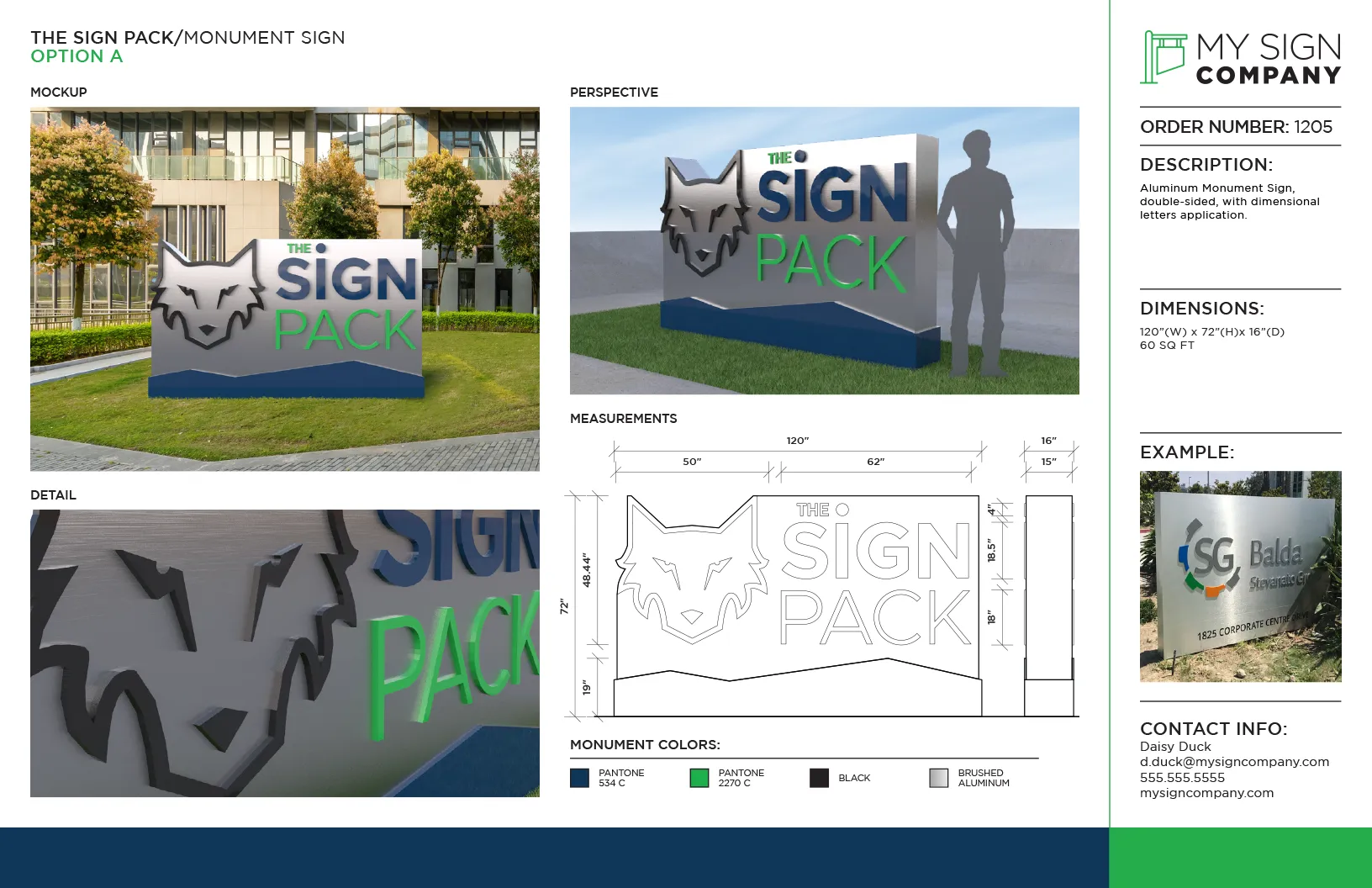
As sign companies expand, they face several common operational challenges. Five issues are especially widespread in the industry:
- Designer shortages combined with rising labor costs
- Skill mismatches and knowledge bottlenecks
- High designer turnover
- Inconsistent design file quality
- Design bottlenecks that slow down production and installation timelines
Many sign companies believe increasing headcount is the best way to address these challenges. However, the total cost of hiring a new employee can range from 30% to 200% of their annual salary when factoring in recruitment, onboarding, training, and ramp-up time.
Although hiring is often the default solution, it increases fixed overhead and can reduce profit margins. In many cases, adding designers does not resolve the underlying inefficiencies and may worsen workflow and quality problems.
Sign companies can achieve greater efficiency, consistency, and production throughput without hiring more designers. With the right strategies, existing staff can perform at a higher level while controlling costs.
This article presents strategies sign companies can use to significantly improve operational efficiency and accelerate production without hiring additional design staff.

Hiring Is Not a Scalability Strategy
When workload increases, sign companies often respond by hiring more staff, assuming that adding another designer will increase speed and scale.
However, hiring is not a sustainable solution for scalability. It often provides only a temporary fix, increasing operational burden without improving long-term efficiency. Therefore, hiring should not be the primary strategy for scaling or operational improvement.
Several key reasons explain this:
Hiring Is a Static Solution, While Work Demand Is Fluctuating
Many sign companies see hiring as the best response to increased workload. However, job volume fluctuates throughout the year, with slow periods and peak overload during certain seasons or project cycles.
A growing design backlog does not always mean there are too few designers. Often, it results from unclear workflows, inefficient processes, or poor handoffs between departments.
Before hiring a new designer, sign companies should consider the following points to avoid costly mistakes:
- Sign design demand is inherently fluctuating. Companies may experience slow months followed by sudden spikes in workload.
- Hiring increases fixed capacity and ongoing operational costs, regardless of whether demand is consistent.
- When fixed overhead grows while workload remains inconsistent, inefficiencies increase, and profit margins are reduced.
- Conversely, if capacity is not expanded and resources are overloaded with disorganized workflows, teams face constant firefighting, overtime, and higher labor costs.
If a sign company relies solely on adding designers is the only way to handle increased workload, it creates a business model dependent on headcount and manual labor. This leads to either overstaffing during slow periods or constant maximum capacity during peak times.
Hiring often becomes the default, despite being a lengthy and high-risk process. Companies must invest in onboarding, training, and adjusting workflows before realizing any productivity gains.
Skilled Sign Designers Are Rare and Difficult to Recruit
Skilled sign design talent is rare by nature. As a result, finding truly capable designers is a unique and ongoing challenge for sign companies across the industry.
Designers skilled in 2D and 3D signage, ADA-compliant signs, and wayfinding systems are increasingly difficult to find. Those who consistently deliver production-ready files are even rarer.
This raises an important question: why are professional sign designers so scarce?
Several factors contribute to this scarcity:
- Sign design requires a distinct skill set compared to general graphic design. Signage designers must blend visual design principles with technical expertise, fabrication constraints, and a strong understanding of codes and regulations.
- Signage expertise is not developed solely through formal education. Most sign designers acquire their skills through hands-on experience in real-world production, permitting, and installation environments.
- Experienced designers are often recruited by competitors or leave the industry entirely, further reducing the already limited pool of skilled signage professionals.
Recent data from Sign Media Canada (published in 2026) highlights the extent of the workforce gap. The report reveals that 73.4% of professional sign designers in Canada are over 50 years old, while none are under 24.
This points to a significant skills gap within the signage design workforce and underscores a concerning lack of generational renewal in the profession.
According to a survey conducted by Signs of the Times, recruiting and retaining staff has become the number one challenge for signage companies. In that survey, 42% of respondents identified labor shortages as the industry’s greatest obstacle.
We have explored this topic in depth in our article, Signage Industry Trends 2026.
Finding experienced sign designers is difficult, and training new talent requires significant time. The learning curve is steep due to technical, regulatory, and production-related complexities.
Assigning major responsibilities to inexperienced designers increases the risk of costly rework. Design errors can cause production issues, permitting delays, and installation problems.
Given these realities, hiring becomes only a temporary fix that leads to:
- Ongoing design rework
- Files that are not production-ready or permit-ready
- No structural solution to improve scalability
Therefore, before hiring, companies should first identify the true causes of their design backlog.
| Also Read: Sign Design Mistakes to Avoid for Smoother Projects and Higher Profit for Sign Companies |
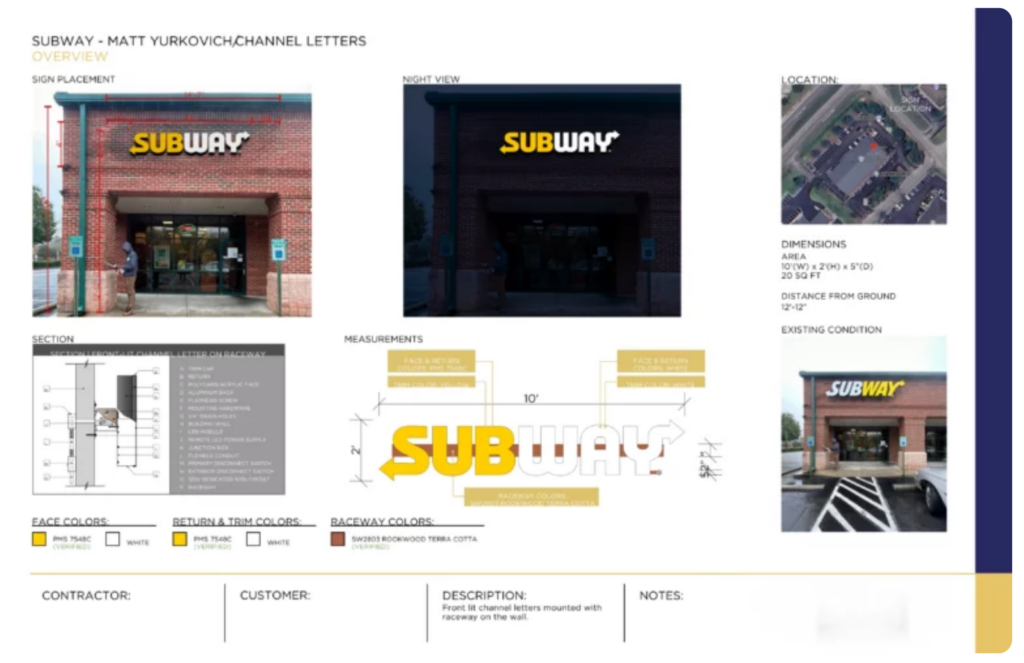
Shifting the Focus from Designer-Centric to System-Centric Operations
Many sign companies eventually tie their design output to one or two key designers, making overall performance dependent on specific individuals.
This type of dependency can lead to two major issues that put sign companies at risk:
- When a designer becomes overloaded, falls ill, or leaves the company, the workflow is immediately disrupted.
- The company’s overall capacity fluctuates based on the personal availability and performance of individual designers.
This individual dependency creates an operational model that is neither efficient nor scalable.
This risk should not be ignored. The solution is to fundamentally change how sign design work is structured and managed, rather than simply replacing key designers.
To reduce dependency on individuals and manual labor, sign companies should consider two critical aspects when rethinking their operations.
Viewing Design Capacity as a System
In the sign industry, design should be viewed as an operational layer within the broader production workflow, not just as an individual role.
Assigning all design responsibilities to individuals creates dependency, especially when one designer manages multiple critical functions, such as:
- 2D design drafting
- 3D visualization
- Creating production-ready files
- Preparing sign permit drawings
What happens when the designer responsible for all of these tasks leaves?
When a key designer leaves, they take valuable knowledge about materials, fabrication methods, internal processes, and client requirements that cannot be quickly or easily transferred.
This often triggers a chain reaction of negative consequences for sign companies, including:
- Loss of critical institutional knowledge related to design logic, production workflows, and decision-making
- The need for the sign shop to restart the learning and training process for a new designer
- Increased operational instability and growing design backlogs
- A sharp decline in throughput and service quality
- The perception that hiring is “never enough”
So, what is the most effective way to address this problem?
Sign companies should focus on building systems as a core part of their operations. This reduces dependency on individuals and ensures workflows continue even as staff changes.
A robust system keeps throughput flexible and responsive to workload demands. At a minimum, it should establish:
- Standardized file structures
- Consistent design logic
- Built-in production rules
With these elements, critical skills and knowledge remain within the organization, even with high turnover. A well-defined system guides workflows and enables more efficient, predictable operations.
Transitioning to a More Scalable System to Handle Diverse Operational Scenarios
Sign companies face fluctuating workloads and diverse challenges, but internal teams often lack the capacity or expertise to respond quickly and effectively.
This structural mismatch explains why hiring alone does not resolve persistent design backlogs.
In reality, sign companies frequently encounter scenarios such as:
- Peak Season Overload: Sign companies experience workload spikes for several weeks each year. When internal teams are unprepared, workflows quickly become disorganized and inefficient.
- Shortage of Experienced Designers: Sign shops struggle to find designers with expertise in ADA compliance, monument signs, or advanced 3D rendering for client presentations.
- Production Delays Caused by Design Backlogs: High-volume sign companies experience delays in fabrication and installation because design files are not completed on time.
- Skill Mismatch: A sign shop may have capable 2D designers but lack talent for 3D design, channel letters, or dimensional signage, preventing professional project delivery.
- Multi-Location Consistency Issues: Companies operating across multiple locations experience inconsistent file quality, leading to customer dissatisfaction and rework.
Poor Site Surveys Leading to Errors: Installers are forced to return to the site to clarify specifications, measurements, or missing drawings, increasing labor costs and delays.
Many of these scenarios cannot be solved simply by adding staff, as demand fluctuates rapidly while staffing levels cannot adjust as quickly.
The solution is to partner with experienced signage professionals who can function as an extension of your team and integrate seamlessly into your operations to address bottlenecks as they arise.
An extended sign design team provides immediate expertise without hiring, offering key benefits such as:
- On-demand support to increase design capacity whenever needed
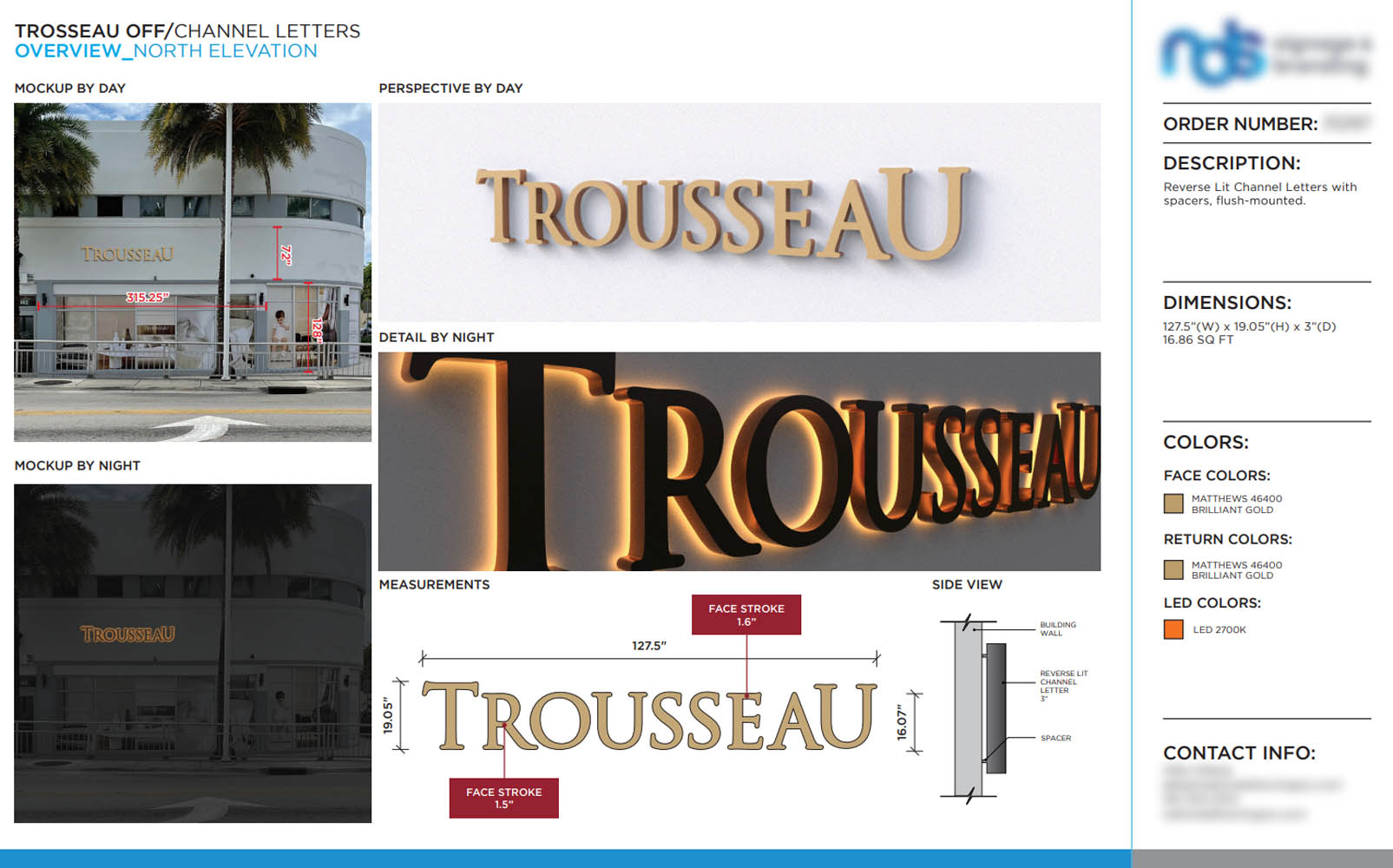
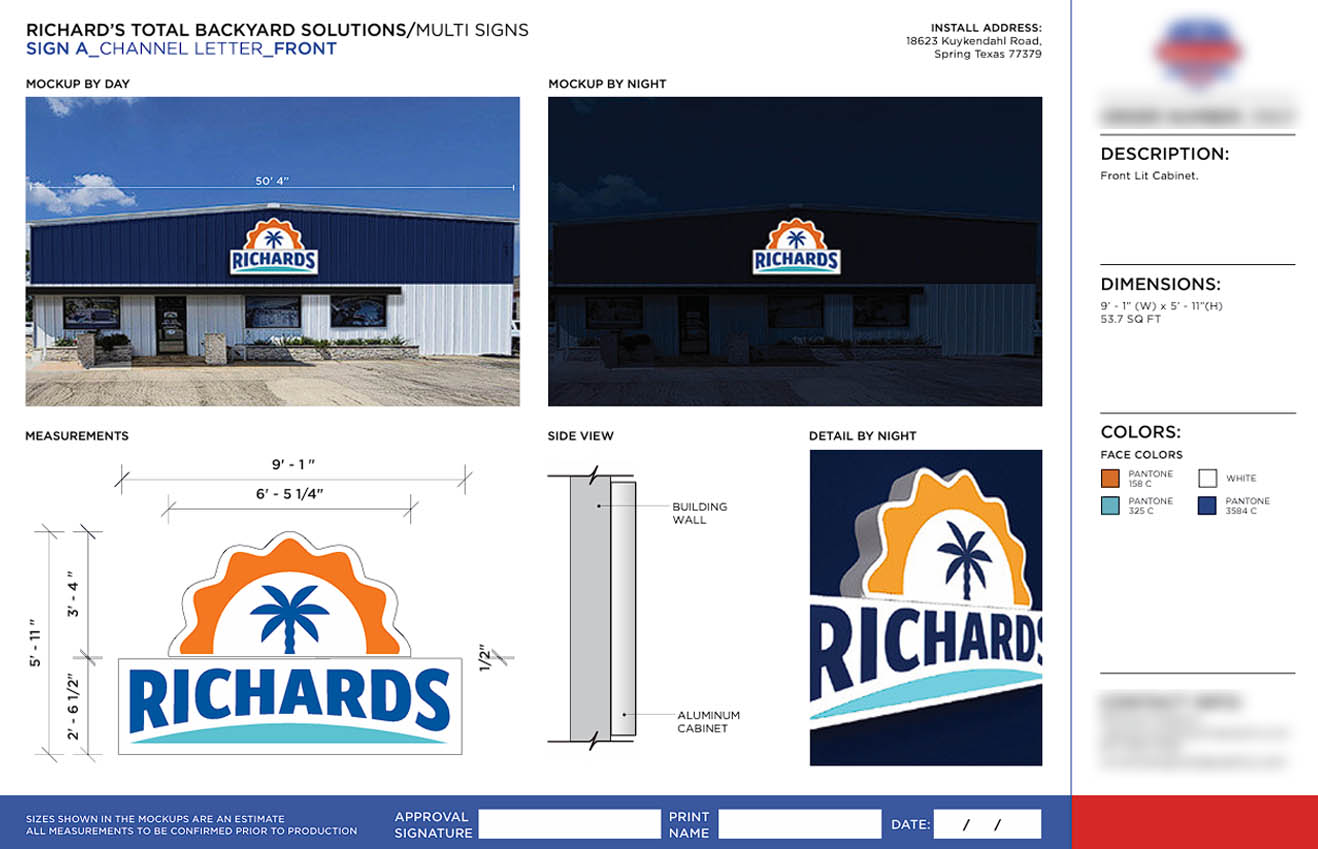
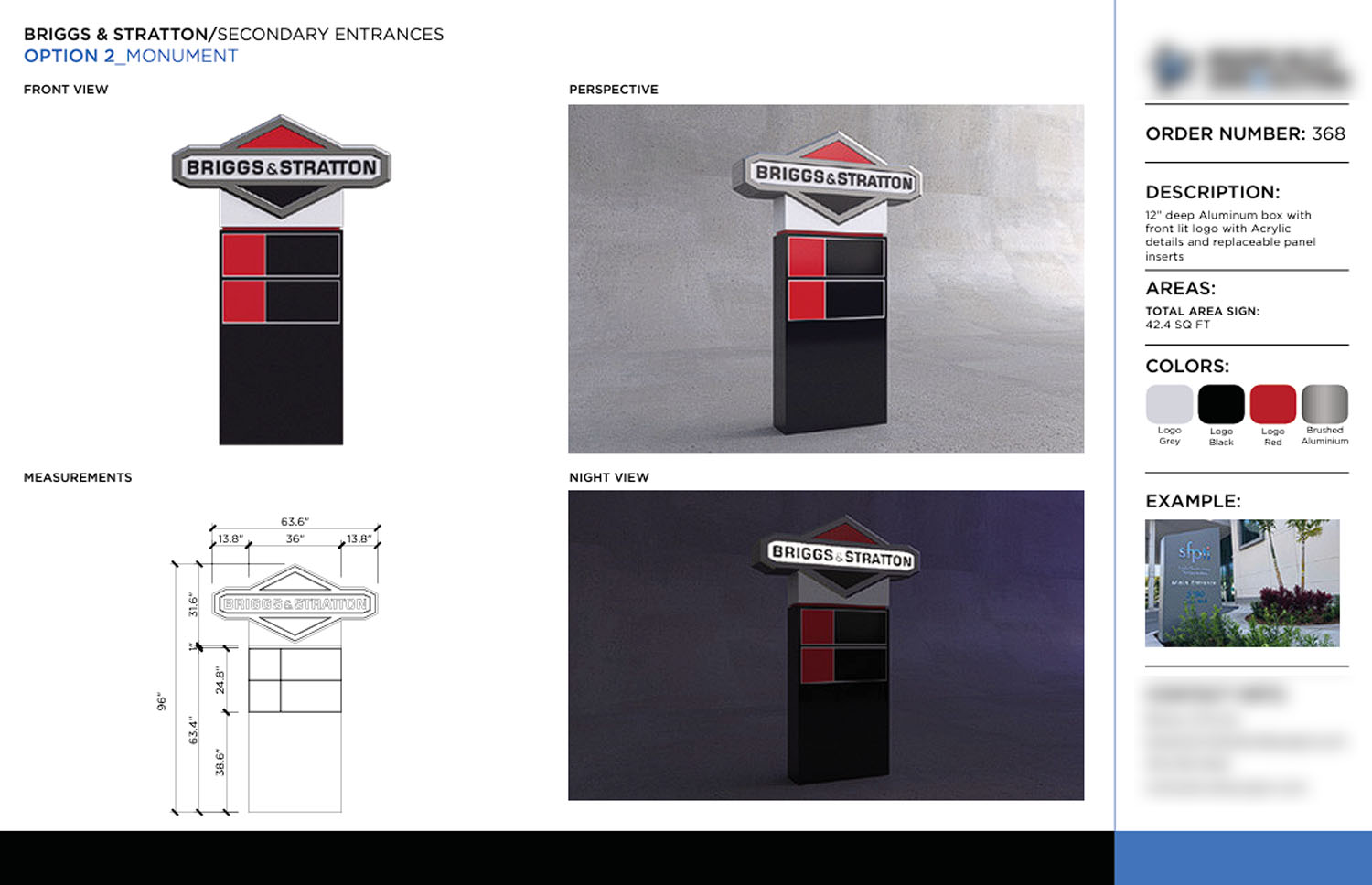
- Professional assistance for 2D, 3D, ADA, production-ready, and permit-ready designs, as well as complex signage projects
- Consistent design file quality and standardized workflows
- Elimination of hiring and turnover risks
With these benefits, sign companies can better predict design capacity, reduce backlogs, and maintain smooth, uninterrupted production.
| Also Read: How Local Sign Shops Can Design, Quote, and Deliver Faster |
How Sign Companies Are Rethinking Design Capacity
As mentioned earlier, increasing design capacity does not require time-consuming, costly hiring. Relying on individuals often creates operational instability and negative ripple effects, especially in high-turnover environments.
According to Culture Amp, the cost of employee turnover can range from 30% to 200% of an individual’s salary. These costs include job board advertising, candidate testing, the impact on other employees’ intent to leave, lost productivity, and other hidden expenses.
Instead of focusing on hiring more designers, sign companies should consider how to add reliable design capacity without new constraints or risks.
The Sign Pack offers a practical solution by integrating our TSP Platform 3.0 directly into your existing operations.
Here are several reasons why our system delivers reliable, scalable support for sign company operations:
- Access to consistent professional support for 2D, 3D, ADA, production-ready, and permit-ready designs, including complex signage projects
- Elimination of production delays from design backlogs, as capacity can be increased as needed, making workflows more predictable and keeping production on schedule
- The ability to handle peak-season overload through our network of hundreds of experienced sign design professionals
- A system based on standardized file structures, consistent design logic, and built-in production rules, allowing design capacity to scale on demand
With these benefits, sign companies can significantly improve productivity and efficiency without hiring more designers.
We do not replace your existing designers. Instead, we provide a scalable system that increases operational stability without disrupting your workflows. We focus on executing sign design projects with precision and consistency, allowing your in-house designers to concentrate on coordination, review, and higher-value work that supports your business’s long-term sustainability.
Eliminating Rework Potential = Increased Capacity
Gaining access to a scalable system helps your company avoid rework risks, which in turn automatically increases design capacity to the next level.
Revisions are normal in any design process, but in the sign industry, they can quickly become a serious operational issue.
Each design revision can impact multiple areas, such as:
- Consuming a significant amount of designer time on low-value, unproductive tasks
- Delaying fabrication and installation schedules
- Increasing hidden costs and reducing profit margins
- Causing the final design to drift far from the original concept due to permit rejections or incorrect permit calculations
On the other hand, when each project can move quickly into production thanks to production-ready and permit-ready files, the benefits are clear:
- Designers no longer need to work harder just to keep up
- Operations are no longer dependent on specific individuals
- Design capacity can scale up or down based on workload
These outcomes show the company has developed a healthy system with scalable throughput.
By minimizing rework, sign companies can move away from reactive (firefighting) operations and focus on:
- Sales
- Growing profits
- Operations
- Acquiring high-margin clients
The good news is that we provide a real, practical solution to achieve these goals.
The Sign Pack is a design support and workflow system built to address the sign industry’s most critical bottlenecks: designer scalability, inconsistent file quality, and errors in project information.
We help sign companies increase production efficiency without hiring new designers. We do not replace your existing designers. Instead, we eliminate costly and persistent technical design bottlenecks, making The Sign Pack a strategic solution for building stable, scalable workflows.

Conclusion: Building Sustainable Sign Company Operations
To build stable operations and predictable throughput, sign companies must reduce dependency on individuals. Finding skilled sign designers is a persistent industry challenge, and high turnover further disrupts operations and erodes profitability.
Successful sign companies implement scalable systems by partnering with experienced industry professionals. This helps avoid margin-draining problems such as:
- Design rework caused by files that do not align with production logic
- Permit delays resulting from non-compliance with sign codes or zoning requirements
- Production delays driven by design backlogs
- Inconsistent file quality that leads to customer dissatisfaction
Partnering with The Sign Pack delivers meaningful advantages without production risks. Output becomes more consistent, turnaround times improve, and design capacity increases without higher payroll costs.
We do not replace your in-house designers. Instead, we provide a scalable system that eliminates design bottlenecks and reduces operational risks at their source.
As your sign business grows, remember that relying on individuals for design capacity makes growth fragile. Doubling production efficiency comes from implementing a scalable system that resolves complex operational bottlenecks.
Contact our professional team to learn how The Sign Pack can empower your business. Achieve greater profitability and sustainable growth by implementing TSP Platform 3.0.