Most large-scale signage projects start small, with a clear and limited initial scope:
- A few building signs
- Several directional signs
- A monument sign at the main entrance
At first, the requirements seem simple and straightforward.
But as environments grow—a hospital adds a wing, a company expands, or a university breaks ground on new buildings—the signage program quickly becomes more complex.
What once required a handful of decisions now involves:
- Dozens of sign types
- Multiple locations across a single site
- More stringent regulatory and code requirements
- Closer coordination between architects, contractors, fabricators, and installers
At this scale, a sign-by-sign design approach is no longer sufficient. It becomes a liability.
Without a structured approach, signage programs become difficult to manage in predictable ways: design revisions multiply, documentation grows inconsistent, permit approvals stall, and fabrication teams are left interpreting incomplete specifications rather than executing against clear ones.
This is where signage system design becomes essential.
Rather than treating signage as a collection of individual elements, sign system design organizes the entire program into a structured framework that defines how each sign type functions within the broader environment and in relation to every other sign in the system.
With this approach, sign companies can manage complex projects more effectively, deliver consistent results across every touchpoint, and significantly reduce the operational risk that derails large-scale programs.
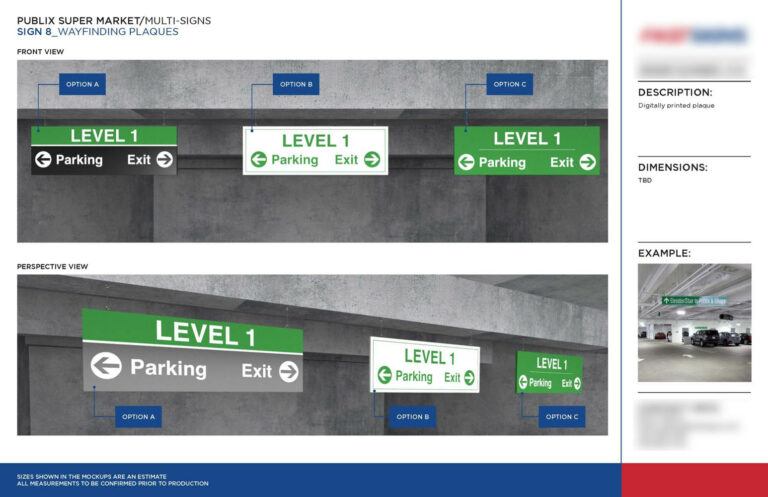
What Is Signage System Design?
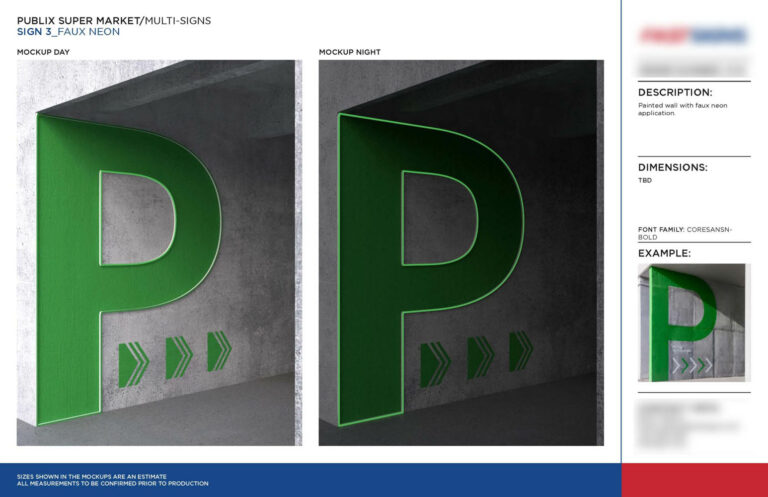
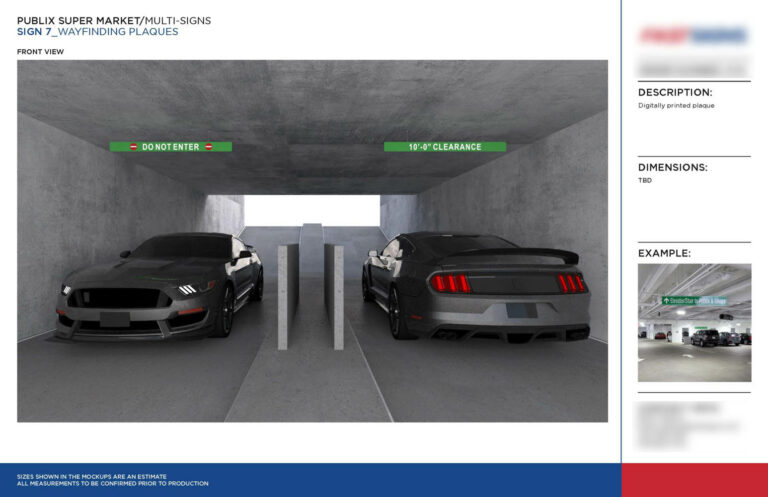
Signage system design is a structured methodology for planning, organizing, and standardizing signage across an entire project, ensuring consistency, scalability, and execution efficiency from design concept through final installation.
Rather than treating each sign as an isolated design task, a signage systems defines the relationships between sign families, establishes a clear visual hierarchy, and articulates the functional role each sign plays within the overall navigation experience.
A typical sign system design includes several core components:
- Clearly defined sign families and categories
- Consistent typography and iconography
- Standardized color coding and visual hierarchy
- Clear dimensional and fabrication guidelines
- Organized technical documentation for permitting and production
This structured framework is what allows sign companies to scale signage programs efficiently while maintaining visual and functional consistency across every sign type in the system.
Signage System Design Is More Than Visual Design
Signage system design is frequently mischaracterized as a purely creative discipline. In practice, it functions as an operational framework for managing complexity, reducing risk, and enabling efficient execution across large-scale signage environments.
It defines how every sign within a project connects, visually, functionally, and technically, into a coherent whole.
Within this approach, signage is not developed individually, but as part of a coordinated system. This allows signage to expand across an entire facility or campus while maintaining consistency.
As projects grow to include dozens of sign types and variations, this structure becomes increasingly important. It helps keep the program organized and manageable, while supporting smoother execution across teams.
A well-organized sign system also brings several practical advantages:
- Sign types remain organized as the project expands
- Visual consistency is maintained across categories
- Documentation becomes clearer for fabrication teams
- Design revisions and production errors are reduced
At its core, sign system design shifts signage from a collection of individual graphics into a coordinated system — one that supports how people move through and interact with a space.
Signage System vs. Branded Environment Signage Design
Signage System Design and Branded Environment Signage Design belong to the broader category of signage strategies, but each addresses the project from a different primary perspective. Clarifying these differences helps prevent confusion when developing an overall approach.
- Signage System Design is focused on the functional aspects of a signage program. Its main objectives are to enable smooth navigation, enhance usability for all users, and ensure operational clarity across every sign within an environment.
- Branded Environment Signage Design, in contrast, emphasizes the experiential element of signage. This approach centers on how a brand’s identity is communicated and reinforced within a space, weaving branding into the user’s physical experience.
In a branded environment, signage is woven into an overall experience. Here, signage supports not just navigation but also the expression of brand values, integrating seamlessly with architecture, interiors, and technology to create a holistic feel.
The distinction can be summarized as follows:
| Aspect | Signage System Design | Branded Environment Signage |
| Focus | Navigation | Brand experience |
| Purpose | Help people find their way | Express the brand within a space |
| Priority | Clarity & usability | Emotion & storytelling |
| Output | Wayfinding system | Immersive brand environment |
| Common Applications | Airports, hospitals, campuses | Retail flagships, HQs, museums |
The Design Extension for National Signage Programs
Turn complex brand guidelines into scalable real-world structures.
We partner with National Account and Program Managers to transform brand standards into permit-approved, fabrication-ready files. Maximize your project efficiency and margins while we handle the technical design complexity.
Why Complex Signage Projects Often Break Down
In large signage projects, breakdowns are rarely caused by a single mistake. They are systemic. They occur when there is no clear framework holding the program together across teams, phases, and deliverables.
Sign system design addresses this directly. It provides the structure needed to manage scale and intricacy, reduce risk, and sustain project momentum across every phase.
Without a defined system, even experienced sign companies can face challenges that grow over time as the project scales.
Below are some of the most common reasons why complex signage projects begin to lose alignment:
Inconsistent Sign Types Across the Project
When sign types are not clearly defined early on, signage is often developed case by case, based on immediate needs.
Over time, this produces discrepancies in typography, layout, materials, and mounting methods. What appear to be minor variations early on gradually create a fragmented signage environment that becomes increasingly difficult to manage and nearly impossible to standardize at scale.
Ongoing Design Rework
As projects evolve, new sign types are often introduced to accommodate changing requirements.
Without a defined system in place, each new addition triggers a review of previous designs to maintain visual coherence. This creates a compounding cycle of rework that slows progress and places mounting pressure on design resources.
Fabrication Uncertainty
Fabrication teams depend on clear and consistent technical drawings to move efficiently into production.
When design files lack standardized dimensions, complete specifications, or clear construction details, production issues are nearly inevitable. The result is delays, material waste, and cost overruns that proper upfront alignment would have prevented.
Delays in Permit Approvals
Exterior signage typically requires permit drawings before installation can proceed.
Incomplete or inconsistent documentation extends approval timelines. In large-scale projects, even modest delays at this stage can cascade into broader construction schedule impacts, creating friction with general contractors and project owners alike.
Installation Challenges On Site
Installation teams often encounter difficulties when mounting details, structural requirements, or placement coordinates are not clearly defined during the design phase.
In complex environments, these gaps can result in on-site adjustments, coordination challenges with other trades, and extended installation timelines.
In practice, these failure points rarely occur in isolation.
They compound. What begins as a manageable task becomes an operational bottleneck that affects timelines, drives up costs, and erodes project efficiency for all stakeholders.
For this reason, sign companies working on large or demanding environments don’t rely on isolated design decisions. They rely on a systematic approach to keep everything aligned from concept through installation.
| Also Read: Brand Signage Implementation: How Brands Maintain Signage Consistency Across Every Location |

How Sign Companies Manage Complex Signage Projects
Experienced sign companies understand that complex projects cannot be managed reactively. They don’t begin by designing each sign individually.
Instead, they begin by developing a sign system: a foundational framework that governs the entire program from the outset.
This system provides a clear structure that guides every design, technical, and implementation decision across the project.
With this approach, the process is no longer reactive to issues that emerge midway. Instead, designers establish a framework early on that can accommodate a wide range of sign types within a single, integrated system.
In practice, this process typically involves several key stages:
Understanding the Environment as the Foundation of the System
Designing a signage system for a complex environment requires a deep understanding of how that space functions as a whole.
Each environment—whether it’s a dense urban district, a large-scale campus, a healthcare facility, or a multi-story building—has its own characteristics, challenges, and wayfinding demands.
For this reason, designers don’t just identify where signs should be placed. They analyze how people actually move through and interact with the space.
Key factors typically include:
- Pedestrian and vehicular traffic flow
- Decision points along the navigation journey
- Visibility from different angles and viewing distances
The relationship between signage and surrounding architectural elements
For example, in a busy airport terminal, a signage system isn’t just expected to stand out visually — it must also simplify navigation within a highly demanding environment.
Information needs to be delivered in clear, progressive layers, allowing passengers to move toward their destination without confusion—even in a fast-moving, distraction-heavy setting.
Through comprehensive environmental analysis and a strong understanding of user behavior, designers can develop a signage system that not only integrates seamlessly with its surroundings but also reliably guides movement and orientation.
Conducting a Thorough Site Survey as an Essential Foundation
If there is a single phase that most directly determines the success or failure of a complex signage project, it is the initial site survey.
When surveys are skipped, rushed, or treated as informal checklists, problems surface later in the most costly ways: design revisions, fabrication errors, and installation delays that were entirely preventable.
In large-scale projects, a site survey is no longer just an administrative step. It becomes the data foundation that supports the entire sign system.
To ensure the survey delivers meaningful and reliable data, several key aspects need to be addressed:
- Measurement of installation points: Including wall dimensions, ceiling heights, and actual surface conditions—all of which directly impact design feasibility and installation methods.
- Visual documentation from multiple angles: Not limited to sign locations, but also capturing surrounding context such as sightlines, potential visual obstructions, and relationships with architectural elements.
- Material and surface condition identification: Including substrate types, structural capacity, and access to electrical infrastructure—especially for illuminated signage.
- Traffic flow analysis: Understanding how pedestrians and vehicles move through the space, and identifying key decision points that influence signage placement and messaging.
- Existing signage audit: Evaluating current on-site elements to determine what should be replaced, retained, or integrated into the new system.
- Access constraints and installation challenges: Such as equipment limitations, the need for specialized tools, overhead obstructions, and other site conditions that may impact installation.
- Local codes and permitting considerations: Including sign size restrictions, zoning regulations, and specific requirements in areas such as historic districts or commercial zones.
The approach may vary depending on the project type.
For renovation or replacement projects, teams can physically inspect and document site conditions firsthand.
For new construction, however, much of the work relies on architectural documentation, such as:
- Site plans for parking and entry signage
- Floor plans for interior wayfinding
- Building elevations for exterior signage placement and mounting strategies
This is where many sign companies underestimate the risk, and where projects begin to lose control.
Electrical capacity limitations, structural reinforcement requirements, or late-stage code conflicts often go unnoticed until much later—resulting in costly modifications and schedule delays.
A thorough site survey surfaces these issues early, before they escalate into change orders, schedule disruptions, or strained client relationships.
Even when working with external design teams for layout and pre-production, the data collected during the site survey remains the foundation for everything that follows.
Accurate dimensions, clear photos, and detailed site notes are what separate fabrication-ready designs from files that require endless revisions.
In practice, many teams also leverage specialized platforms like SignScope.pro to improve accuracy and streamline the transition from survey to production.
Building a Scalable Sign Family Structure
Once the environment has been fully understood through the site survey, the next step is to define the signage categories to be used across the project.
At its core, a sign family structure becomes the foundation for two critical outcomes:
- Scalability: The system can grow and adapt over time
- Standardization: Every element remains consistent, even when produced by different teams or vendors
At this stage, the focus shifts away from individual locations and toward the system structure—specifically, how each type of sign is grouped by function and role within the overall wayfinding strategy.
Each category carries a distinct responsibility in helping users navigate and understand the environment. For example:
- Directional Signage: Guides users through the space, helping them follow a clear path toward their destination
- Building Identification Signage: Identifies key buildings or primary zones within a larger complex
- Pathway & Wayfinding Connectors: Bridges routes and destinations, ensuring transitions between areas remain intuitive and seamless
- Regulatory Signage: Communicates rules, safety requirements, and operational restrictions
Organizing signage into clearly defined families is what creates a solid, scalable foundation for the entire program.
Without this approach, signs are often designed in isolation, leading to:
- Visual inconsistencies
- User confusion
- Repetitive design revisions
With a well-defined sign family structure, the outcome is fundamentally different:
- Each sign type follows a unified design logic
- New signage can be added without redesigning from scratch
- The system scales without sacrificing consistency
In practical terms, this means that instead of designing each sign independently, every new element is built on established system logic, reducing design time and eliminating unnecessary variation.
With a clear structure in place, a signage program doesn’t just address current conditions; it also addresses future needs. It becomes a platform built to support long-term growth and future expansion.
Applying Sign Hierarchy to Structure Information Flow
Sign hierarchy is what transforms a collection of individual signs into a system that actually guides people.
Through hierarchy, each sign plays a specific role in guiding users from their starting point to their destination.
At a fundamental level, the sign hierarchy defines:
- What information users see first
- What information comes next
- How that sequence is structured so users can move without confusion
In this context, sign hierarchy can be understood as a series of information layers—delivered progressively based on the user’s position within the environment and their intended destination.
As users move deeper into a space, the information becomes increasingly specific and targeted.
This approach ensures users are not overwhelmed with too much information at once, while still receiving the guidance they need at every decision point.
The following illustrates how information layers within a sign hierarchy are applied progressively across the user journey:
- Primary Signage (Main Identification): The first point of contact, such as monument signs, pylons, or entry markers. Its role is to answer the question: “Am I in the right place?”
- Secondary Directional Signage: Once inside the environment, users need guidance toward general destinations. This includes directional arrows, directories, and overhead signage. It answers the question: “Where should I go?”
- Tertiary / Department Identification: As users get closer, information becomes more specific, such as department names, zone identifiers, or floor directories. It answers: “Am I getting close?”
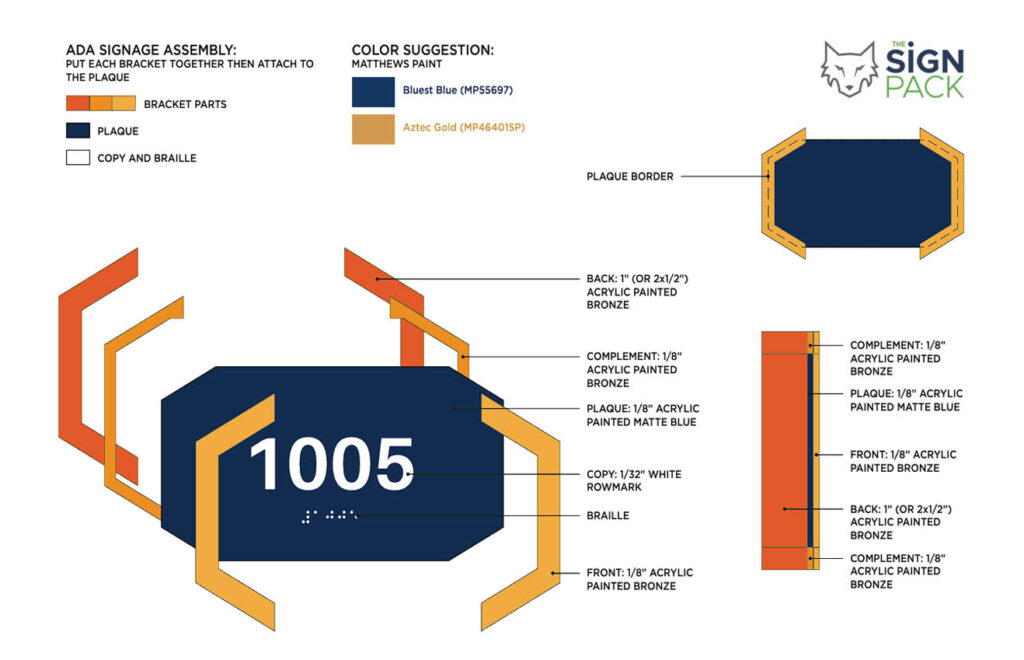
- Room-Level Identification: The final layer includes room numbers, office names, and ADA-compliant tactile signage. It answers: “I’ve arrived.”
Underlying all of this is one of the most important principles in sign system design: progressive disclosure.
This means information is only presented when it’s relevant to the user’s current position in their journey.
As a result, the system remains clear, intuitive, and easy to navigate—even in highly complex environments.
Consistency and clarity are equally non-negotiable.
Each sign type must follow the same visual rules—across typography, iconography, and placement logic—to avoid creating friction or confusion for users.
This is where a sign system begins to intersect with the concept of branded environment signage, which plays a critical role in creating immersive experiences.
At this level, each layer of information does more than provide direction—it consistently carries the brand’s visual identity across every touchpoint within the environment.
When executed properly, the system does more than help people find their way. It creates a cohesive, immersive environment where navigation and brand identity work as one.
| Also Read: Immersive Interactive Digital Signage That Creates Engagement and Memorable Brand Experiences |
Defining Visual and Functional Standards
With the sign family structure established and hierarchy clearly defined, the next step is developing the visual and functional standards that will hold the system together across every location, vendor, and production timeline.
At this stage, the signage system evolves from a conceptual framework into a fully executable design system, one that internal teams and external vendors can apply with equal reliability.
These standards serve as the primary reference point, ensuring that every sign—regardless of location or production timeline—remains part of a unified visual language.
The core components of these visual and functional standards typically include the following elements:
- Typographic Hierarchy: Defines how information is prioritized through type size, weight, and structure—allowing users to read and process information quickly and efficiently
- Iconography System: Establishes a consistent set of icons to support universal visual communication and reduce reliance on text
- Color Coding for Navigation: Uses color as a navigational tool to differentiate zones, floors, or functional areas within the environment
- Layout Structure: Determines the arrangement of elements within each sign type, including the placement of text, icons, arrows, and white space
- Material and Construction Guidelines: Specifies materials, finishes, and construction methods to ensure durability, legibility, and compatibility with the surrounding environment
These standards are intended not only to create a consistent visual appearance but also to ensure that each sign performs effectively within its specific context of use.
For example:
- Consistent typography improves readability across different viewing distances
- Standardized iconography accelerates comprehension across languages
- Structured layouts help users quickly locate key information without confusion
In this sense, visual consistency directly supports functional clarity.
At the same time, clearly documented standards ensure that implementation remains aligned — even when multiple vendors are involved or when the system expands over time.
They also form the foundation for developing technical documentation, such as permit drawings, shop drawings, and production files.
| Also Read: How to Fix the Sign Permit Drawing Bottleneck and Keep Projects Moving Forward |
Developing Technical Documentation
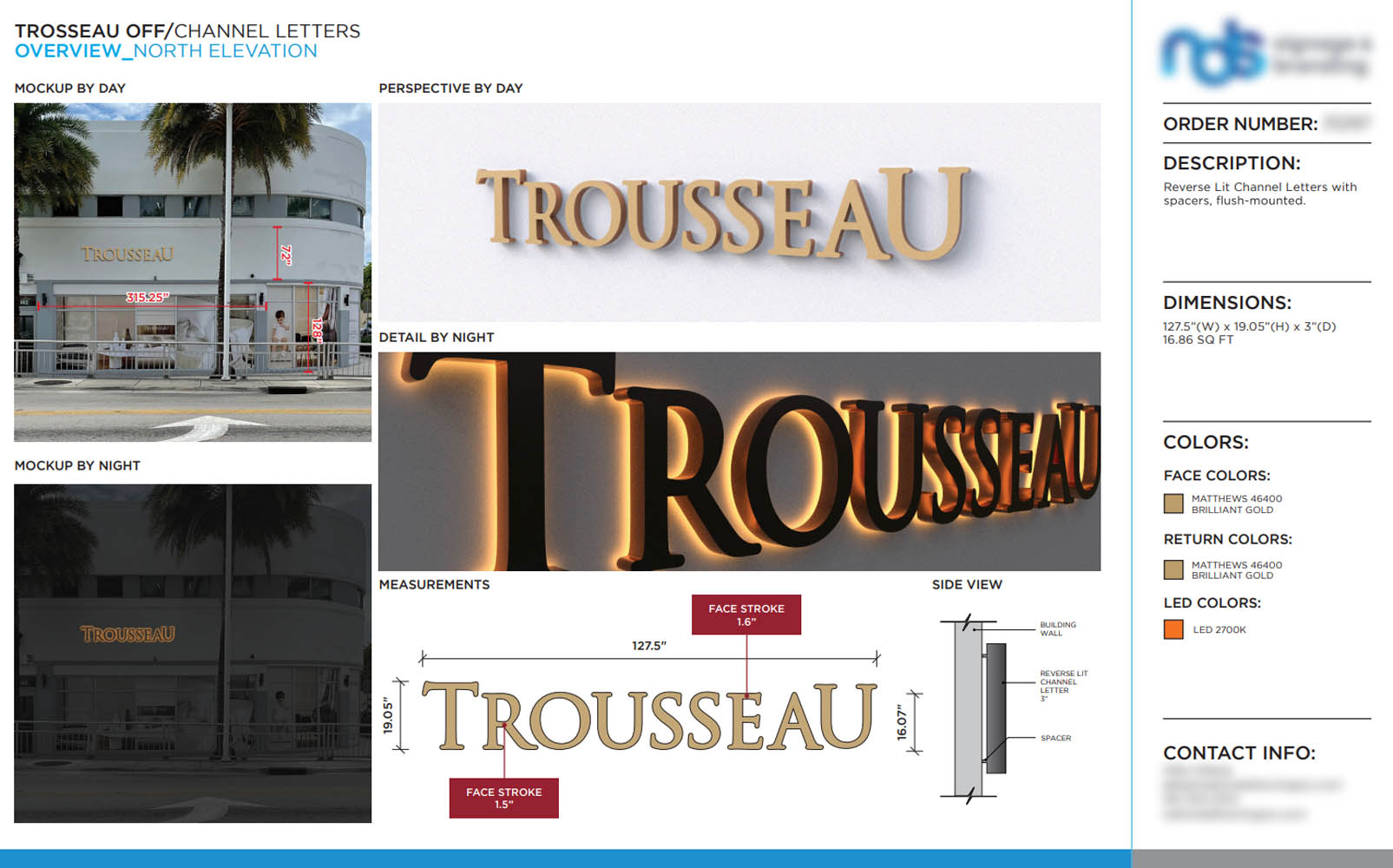
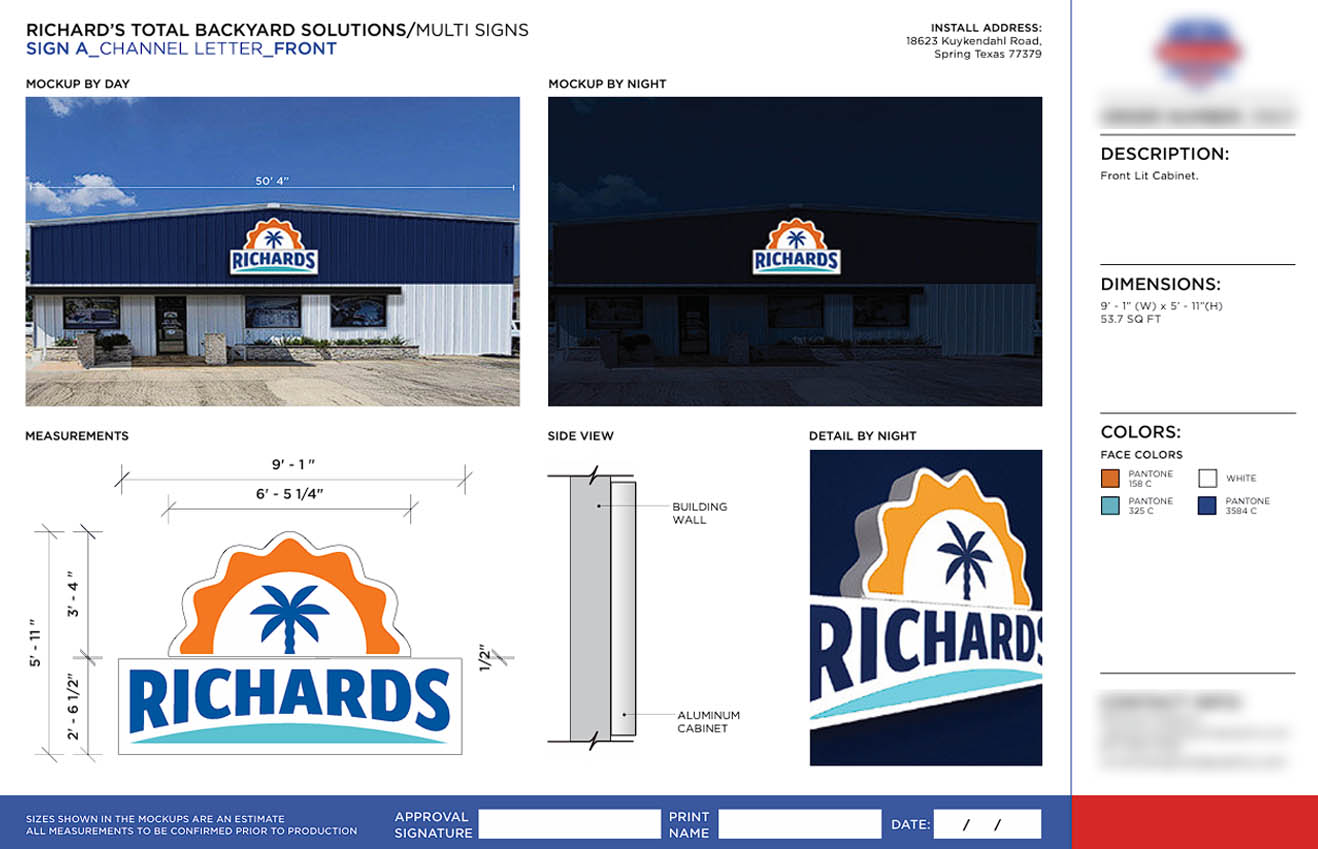
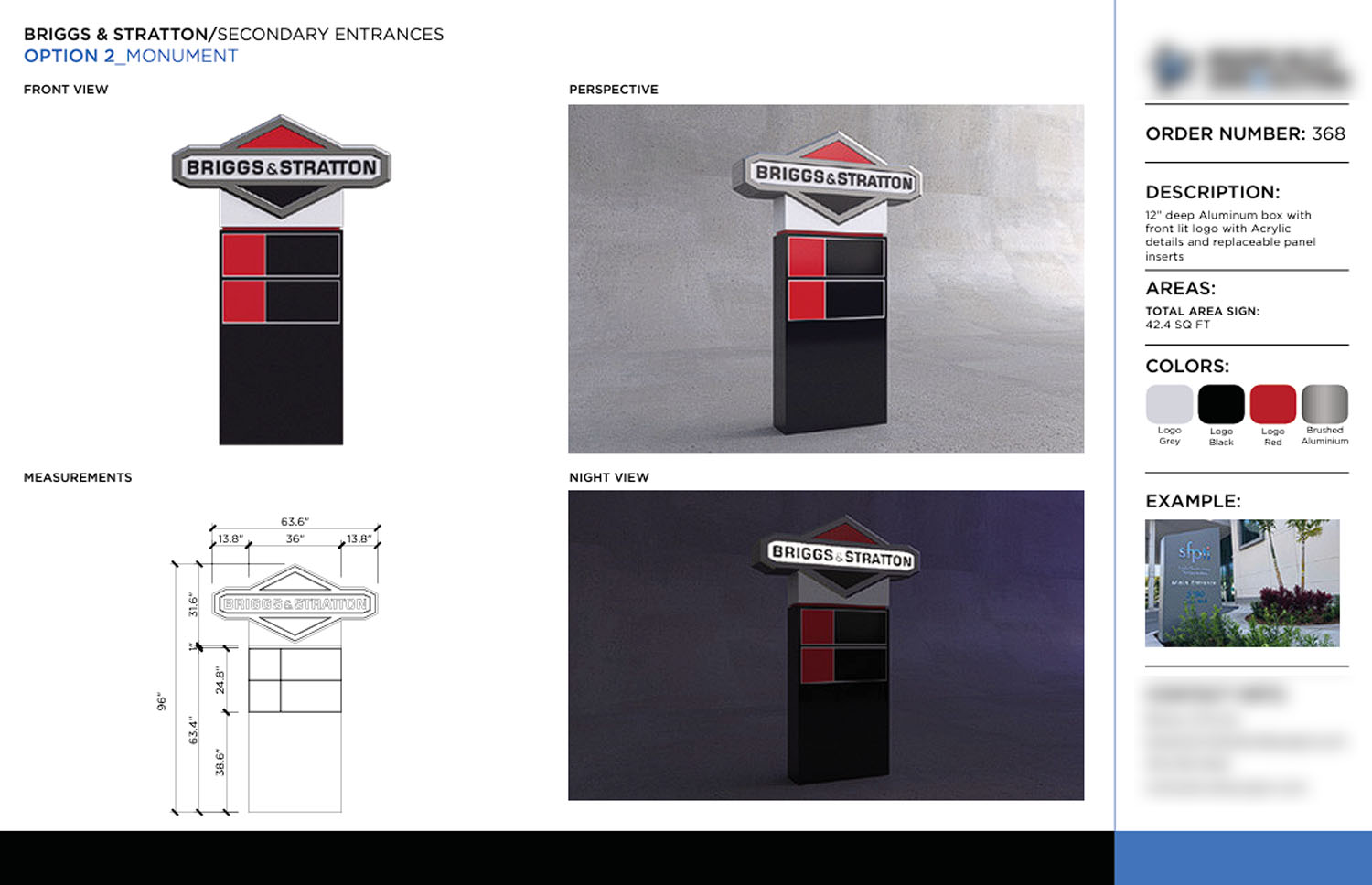
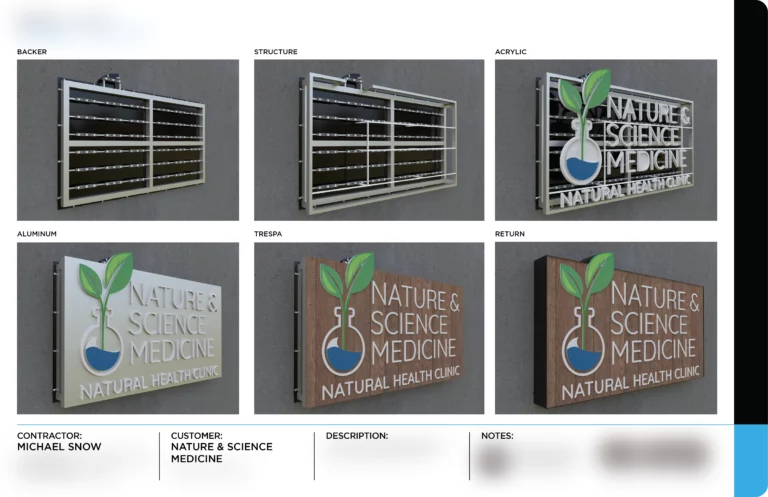
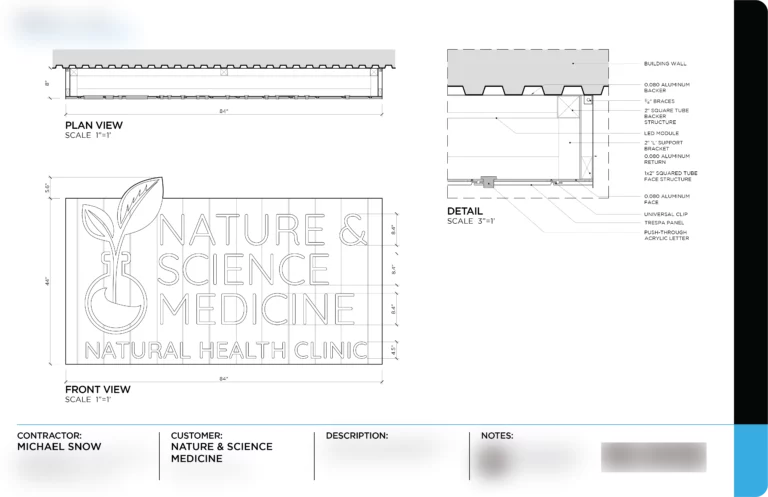
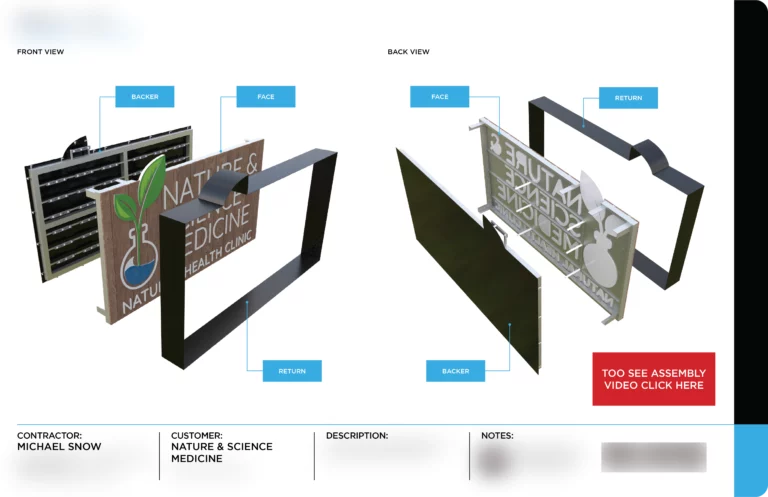
In complex signage projects, design concepts cannot remain as visual ideas. They must be translated into precise, build-ready technical documentation that leaves no room for interpretation in the field.
At this stage, the focus shifts from design intent to technical clarity—ensuring that every detail required for fabrication and installation is fully defined, documented, and unambiguous.
The key components of technical documentation for signage systems typically include:
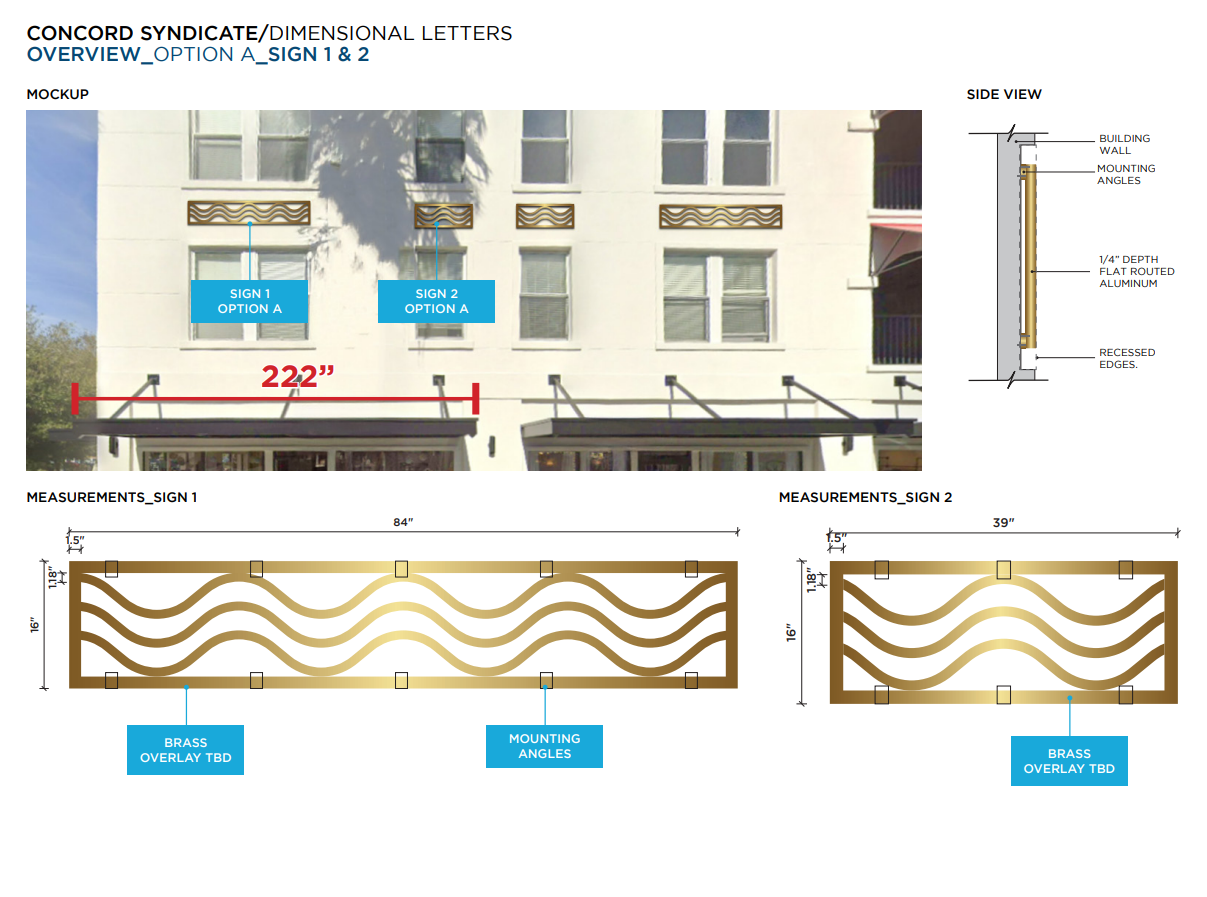
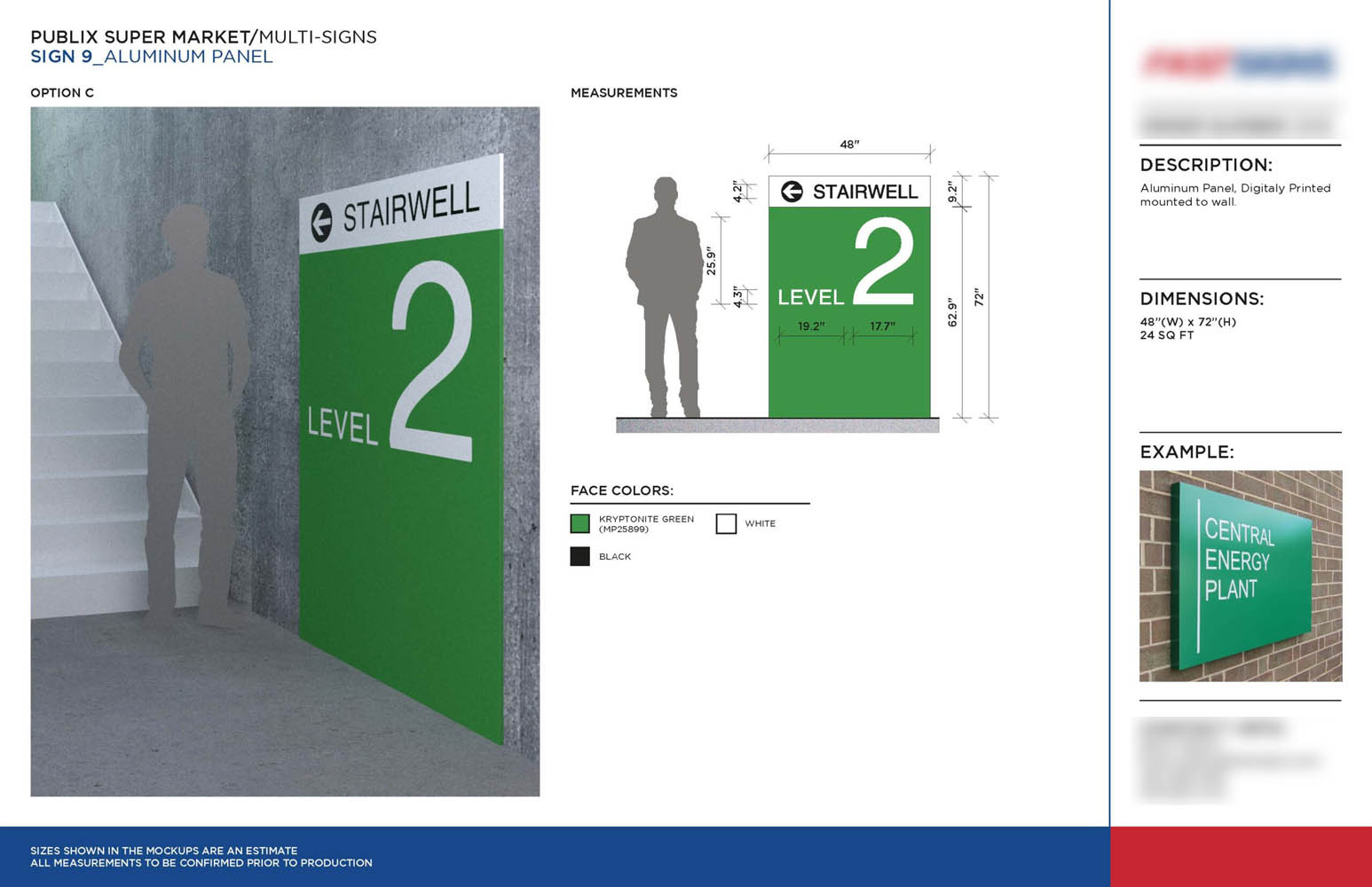
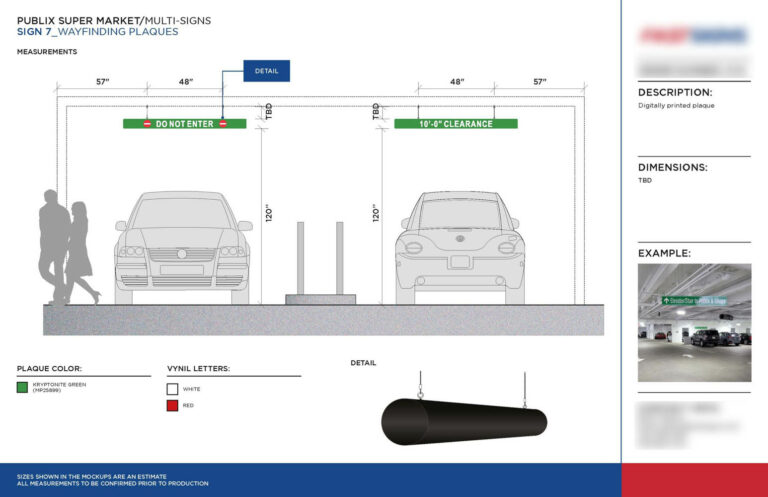
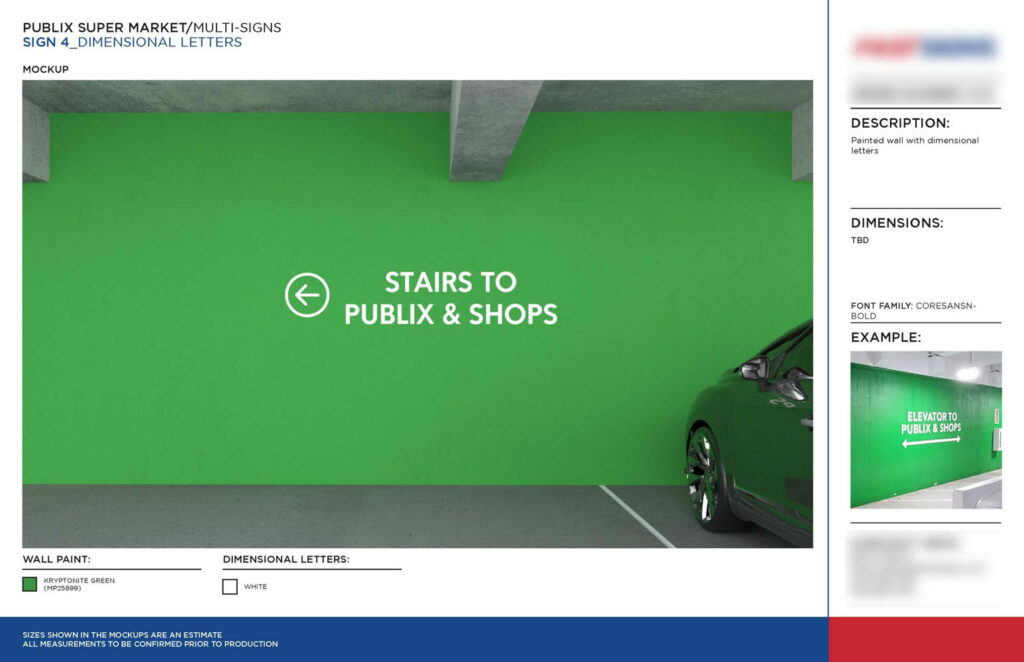
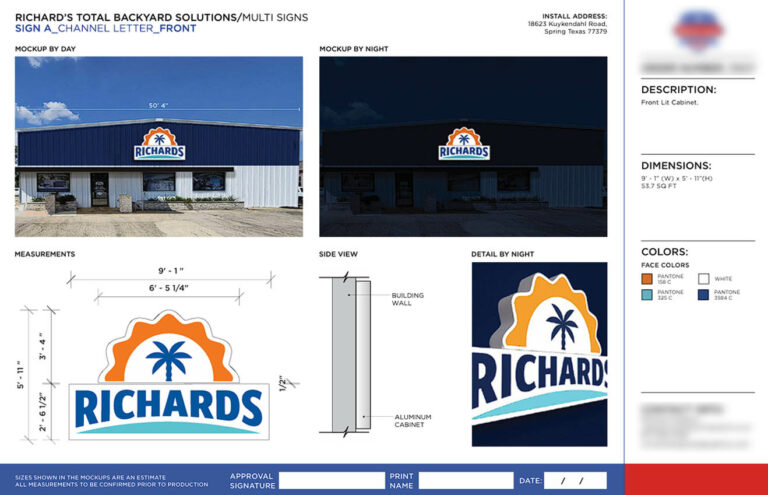
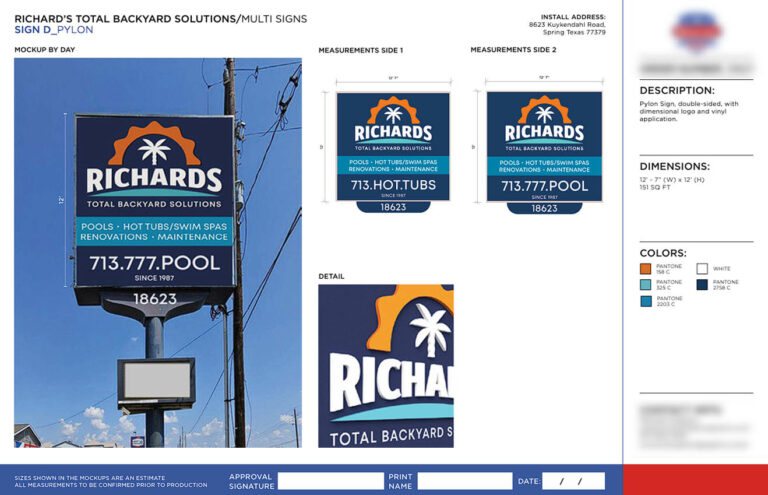
- Dimensioned Sign Drawings: Fully scaled drawings that define the exact size, proportions, and spatial relationships of each sign type
- Structural Details: Information on how each sign is engineered, including mounting systems, internal supports, and load considerations
- Material Specifications: Clear definitions of materials, finishes, and performance requirements to ensure durability and consistency
- Installation Methods: Step-by-step guidance on how each sign should be installed in the field, accounting for site conditions and constraints
- Electrical Requirements for Illuminated Signage: Detailed specifications for power supply, wiring, and integration with existing electrical systems
These documents serve as the critical bridge between design intent and physical reality.
Without this level of documentation, fabricators are forced to interpret incomplete information, installers make assumptions in the field, and inconsistencies accumulate across locations until they become impossible to ignore.
Technical documentation also plays a critical role in regulatory compliance—particularly for exterior signage, which often requires formal approval before fabrication and installation can begin.
Coordinating Fabrication and Installation
Once the signage system and technical documentation are complete, the project transitions to fabrication and installation with much greater clarity.
Production teams receive standardized files that clearly define construction details and material specifications.
Installation teams benefit from precise information regarding mounting methods, placement, and structural requirements.
Because the system has been established early in the project, coordination between teams becomes significantly more efficient.
That said, it remains critical to double-check every file and document before moving into the fabrication stage.
This ensures that no design-stage errors carry forward—issues that commonly lead to rework or production delays.
To better understand how these mistakes occur and how to prevent them early, refer to our guide, Sign Design Mistakes to Avoid for Smoother Projects.
Understanding the Anatomy of a Scalable Signage System
Behind every successfully executed large-scale signage project, there is an underlying system architecture that keeps hundreds of signs coherent, coordinated, and manageable.
This system typically includes several core components, such as the sign family structure, sign hierarchy, numbering systems, sign schedules and location plans, and technical documentation that supports fabrication and installation.
By defining these components early on, sign companies can ensure that the entire signage program remains organized, easy to coordinate, and protected from turning into a revision-heavy, error-prone process.
To see how these components come together within a structured system, explore our article on The Anatomy of a Complex Signage System: How to Avoid Project Failure.
It provides a deeper look into how sign systems are built to remain consistent, scalable, and production-ready from the start.
A Real-World Example of Sign System Complexity
To understand why sign system design matters, consider a typical large-scale signage project.
Imagine a regional hospital campus preparing for a new building expansion. The project requires a comprehensive signage program covering multiple floors, public areas, clinical departments, and exterior wayfinding.
At first glance, the scope may appear manageable. But as the project is fully defined, the signage program quickly expands into a wide range of sign types.
A project like this may include:
- Exterior building identification signage
- Parking and vehicular wayfinding signs
- Interior directional signage
- Department identification signage
- Room identification signs with ADA compliance
- Regulatory and safety signage
- Donor recognition displays
- Environmental graphics supporting the hospital’s brand
What initially appears to be a limited set of categories can easily grow into 80 to 120 individual sign types, each with multiple variations.
Based on this reality, there are several important considerations for sign companies when handling complex signage projects:
- Managing this level of complexity requires more than design talent. It requires systems thinking.
- Sign companies need a well-defined signage system to clarify how each sign type relates to one another — supported by standardized layouts and thorough specifications before moving into production.
- Without a clear structure guiding the process, the design phase can quickly become difficult to manage.
- Small layout adjustments can impact dozens of sign types, documentation becomes harder to maintain, and production teams are forced to repeatedly confirm specifications before fabrication begins.
With a well-organized sign system in place, however, large-scale signage projects become significantly more controlled and predictable.
Each sign type can be organized within its respective group, visual coherence is maintained across the system, and documentation flows more seamlessly from design to production.
For sign companies working in complex environments such as healthcare facilities, universities, or large corporate campuses, this kind of approach often determines whether a project runs efficiently—or leads to costly breakdowns.
Strategic Opportunities Behind Complex Signage Projects
The same complexity that makes large signage programs difficult to manage also makes them among the most strategically valuable opportunities in the industry.
Large facilities don’t need a handful of signs. They require comprehensive signage programs that span entire properties, often evolving over the years as organizations grow and change.
A new hospital campus, corporate headquarters, or university expansion may require dozens—if not hundreds—of coordinated signage elements.
When sign companies are able to manage these programs effectively, several key advantages emerge:
- Larger project scope and higher overall value: Complex signage projects typically involve broader scopes and greater total contract value compared to smaller, isolated jobs
- Long-term growth opportunities: Organizations that operate large environments continue to evolve over time—through new buildings, renovations, and departmental changes—creating ongoing signage needs
- Stronger position for future expansions: When a sign company develops the original sign system, it becomes significantly easier to support future additions while maintaining consistency
- Enhanced industry credibility: Successfully delivering complex signage programs strengthens a company’s reputation and demonstrates its ability to handle large-scale, system-driven projects
Sign companies that can consistently manage large signage systems position themselves as more than fabricators or installers.
They become trusted strategic partners, capable of guiding entire signage programs from initial concept through long-term implementation and future expansion.
| Also Read: How to Double Sign Production Efficiency Without Hiring New Designers |
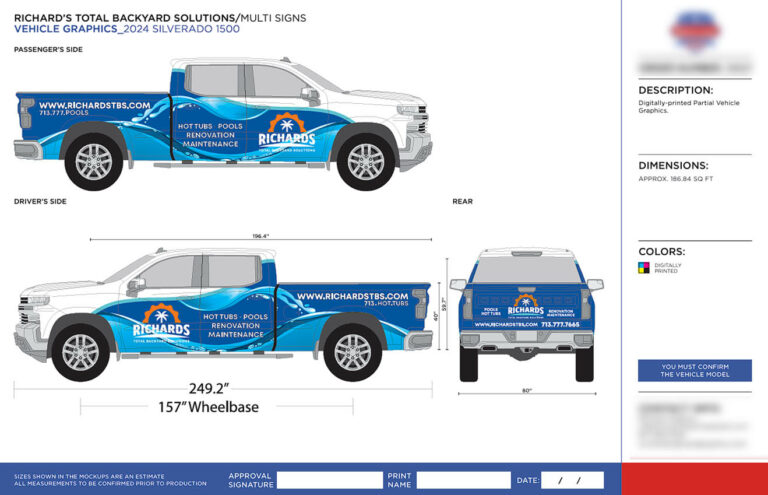
A Smarter Way to Execute Sign System Design
The most successful sign companies operating in complex environments share a common characteristic: they don’t improvise. They build systems.
The success of a complex signage program is never determined by design talent alone. What separates high-performing sign companies from those that struggle is the ability to connect every phase of a project, from initial survey through final installation, within a clear, well-defined system.
This approach is typically supported by:
- A consistent design structure
- Production-ready technical documentation
- Aligned coordination across design, fabrication, and installation
Without this foundation, project complexity quickly turns into risk—leading to repeated revisions, production errors, and avoidable cost overruns.
As built environments continue to grow in scale and complexity, and as clients demand greater accountability and consistency from their signage partners, the ability to deliver system-driven programs is no longer a differentiator. It is a baseline expectation.
To meet these demands without stretching internal resources, many sign companies are partnering with specialized teams like The Sign Pack to structure sign systems, strengthen documentation quality, and maintain alignment across large-scale programs.
With the right system in place, even the most complex signage programs can be executed with greater clarity, efficiency, and control. That is what professional-grade sign system design makes possible.
If your team is working on a complex signage program and looking for a more structured approach, we’d welcome the conversation.